How Ultra-thin Deep Groove Ball Bearings Can Benefit Robotics?

Robotic technology has developed rapidly in recent years. Robots are increasingly used in manufacturing and other industries because they are faster and more precise than human workers. However, one of the challenges of using robots is that they require high-precision components, such as ultra-thin deep groove ball bearings. Advances in ultra-thin deep groove ball bearings have driven the development of robotics.

Ultra-thin deep groove ball bearings are bearings designed to have very small bore diameters and thin cross-sections. This makes them ideal for robots where space is often limited and precise movements are required.

There are many benefits to using ultra-thin deep groove ball bearings in robotics. They can help increase the speed and accuracy of movement, and also reduce the overall size and weight of the robot.

Ultra-thin deep groove ball bearings can support higher speeds and loads with minimal friction. This makes them ideal for use in robotics applications. Bearings are also more resistant to wear, further extending their life. Applications of robotics can be found in various industrial and academic fields such as manufacturing, healthcare, logistics, etc.

Robotics

What are ultra-thin deep groove ball bearings?

Deep groove ball bearings are the most common type of bearing. Ultra-thin deep groove ball bearings offer many advantages over standard bearings. They are lighter, reducing the overall weight of the vehicle or machine. They also have a smaller footprint, which saves space.

They are widely used in many industries including automotive, aerospace, and mining. Ultra-thin deep groove ball bearings are used in a variety of applications where space is limited or smaller bearings are required. They are typically used in automotive and aerospace applications where weight is a critical factor. They are also used in applications where standard bearings cannot be installed, such as very small motors or other tight spaces.

The benefits of using ultra-thin deep groove ball bearings in robotics

The use of ultra-thin deep groove ball bearings in robotics offers many advantages over other types of bearings. First, they are far less likely to cause wear and tear on robotic components. Second, they require less electricity to operate, which helps extend the life of the robot’s battery. Third, they are less likely to overheat, which can be a major problem with other types of bearings. Finally, their movement is more precise, which can be a critical factor in some applications.

Why are precision bearings important for robotics?

Precision bearings are an essential part of robotics because they enable smooth and precise motion. Without precision bearings, robot motion would be unstable and inaccurate. This can cause the robot to operate incorrectly and possibly even damage the machine or the object it is handling.

Precise motion is essential for many tasks performed by robots, such as assembly line work or delicate surgery. Therefore, precision bearings are a key element in building reliable, precise robots.

healthcare

Why is minimizing weight important for robotics applications?

Robots are increasingly used in a variety of applications, from manufacturing and assembly to healthcare and search and rescue. In many cases, the success of robotic applications depends on the weight of the robot. For example, in search and rescue missions, robots often need to be able to navigate tight spaces. If the robot is too heavy, it may not be able to pass through openings or damage the structure. In healthcare applications, robots are often used to assist patients in physical therapy. If the robot is too heavy, it may be difficult for the patient to move or cause injury.

There are many reasons why weight reduction is important for robotic applications. In some cases, this is a security issue. In other cases, it’s an efficiency issue. In any case, it is important to consider the weight of the robot when designing.

One reason weight is important is because it affects the center of gravity. The center of gravity is the point where the weight of an object is evenly distributed. If the center of gravity is not in the middle of an object, it may be unbalanced and unstable. This is especially important for robots, as they often need to be able to balance on one or two legs.

To wrap things up

In conclusion, ultra-thin deep groove ball bearings can benefit robotics in a number of ways. They are more energy efficient than standard bearings, have a higher load capacity, and are less likely to overheat. Ultra-thin deep groove ball bearings also have a lower profile, which makes them ideal for space-saving applications.


Radial Bearings: What They Are & How They Work In Applications

A radial bearing is a rolling element bearing that uses rolling elements between the inner and outer rings to minimize friction. They are found in virtually all rotating shaft applications, from motors and pumps to compressors and fans

A radial bearing consists of four main parts: inner ring, outer ring, rolling elements, and cage. The inner and outer rings are usually made of steel, while the rolling elements are made of steel, ceramic, or plastic. Cages are made of steel, plastic, or brass.

Radial bearings are designed to support loads applied to rotating shafts. They are usually made of wear-resistant materials such as steel or nylon. The most common type of radial bearing is the ball bearing, which consists of a series of small balls arranged in a ring.

Rolling bearings are classified as radial bearings or thrust bearings according to the direction of the load they are designed to bear. Radial bearings can withstand radial and thrust loads in either direction. Radial bearings are designed to support radial loads acting along the bearing axis. Thrust bearings are designed to support loads acting perpendicular to the bearing axis.

Radial bearings are used in a variety of applications including automotive, aerospace, and construction. Different types of radial bearings are used for different purposes.

What are radial bearings

What are radial bearings?

A radial bearing is a rolling element bearing that uses rolling elements to support a shaft or journal. The rolling elements are usually balls or rollers, and the inner and outer rings are usually made of steel. Radial bearings can carry both radial and axial loads, making them ideal for a variety of applications. Their popularity is due to their simple design, durability, and ability to support radial and axial loads.

The types of radial bearings

Radial bearings are classified according to the motion they are designed to accommodate. The three main types of radial bearings are thrust bearings, radial roller bearings, and ball bearings.

Thrust bearings can accommodate axial loads or loads parallel to the shaft. Radial roller bearings can withstand radial loads or loads perpendicular to the shaft. Ball bearings, as the name suggests, use balls to carry radial and thrust loads.

The benefits of radial bearings

A radial bearing is a rolling element bearing that uses rolling elements (balls or rollers) to support radial loads on a rotating shaft. Radial bearings are the most common type of bearings and are used in a variety of applications from automotive to aerospace.

There are many benefits to using radial bearings. They are able to withstand high radial loads and high speeds with a low coefficient of friction. Compared to other types of bearings, radial bearings are also relatively easy to maintain and less likely to fail.

The drawbacks of radial bearings

Radial bearings are typically used in high-speed applications, but can also be used in low-speed applications. They are characterized by the movement of the load along the axis of rotation. Bearings of this type are designed to handle radial and thrust loads, and they are able to do so because of their rolling elements.

However, there are several disadvantages to using radial bearings. First, they are not as strong as other types of bearings and are more prone to damage. Also, radial bearings are not as precise as other types of bearings, which can lead to more vibration and noise. Also, radial bearings are more prone to failure than other types of bearings.

The drawbacks of radial bearings

What are some common applications for radial bearings?

Radial bearings are used in a variety of applications in industry and everyday life. Some common examples include:

● Electric motors and generators
● Pumps and compressors
● Fans and blowers
● Conveyor belts and escalators
● Machine tools
● Woodworking and metalworking machinery
● Paper Machinery
● Textile machinery
● Vehicles (cars, trucks, trains, etc.)

How to select the right radial bearing for an application?

Radial bearings are designed to support loads acting perpendicular to the shaft axis. They are commonly used in a variety of applications including automotive, aerospace and machinery. There are many different types of radial bearings, each with its own unique characteristics. So how do you choose the right radial bearing for your application?

There are three main criteria to consider when selecting a radial bearing: load, speed and environment. The type of load, whether static or dynamic, will determine the size and type of bearing you need. The speed of the application will also play a role in bearing selection, as some bearings are designed for high-speed applications while others are better suited for low-speed applications.

Finally, you need to consider the operating environment, as some bearings are designed for dirty or harsh environments, while others are designed for cleaner or benign environments.

Tips for radial bearing maintenance

Radial bearings are an important part of many machines and equipment. They are used in a variety of applications from automotive to aerospace. Given their importance, proper maintenance of radial bearings to ensure their longevity and performance is critical.

There are some key things to keep in mind when maintaining radial bearings. First, it is important to clean the bearings regularly and lubricate them as needed. In addition, radial bearings should be regularly inspected for damage and replaced if necessary. Finally, radial bearings should be stored in a clean and dry environment to prevent rust and corrosion.

By following these tips, you can help ensure that your radial bearing will last for years.

Tips for radial bearing maintenance

Conclusion

A radial bearing is a rolling element bearing that uses cylindrical rolling elements such as balls or rollers to support radial loads. Radial bearings are used in a variety of applications including automotive, aerospace, and industrial. Although radial bearings are relatively simple in design, they are critical components in many high-precision applications.

What you need to know about deep groove ball bearings

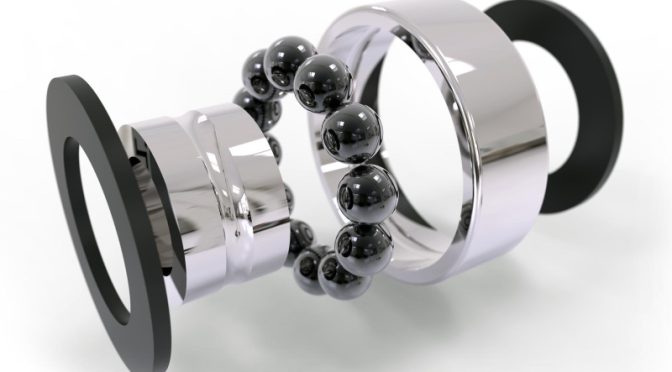
Deep groove ball bearings are a type of rolling bearing that is widely used in various industries and applications. They consist of an inner ring, an outer ring, a set of cages, and a set of balls.

The ball and cage roll between the inner and outer rings. The balls are guided by the cage and retain the grease in the bearing. The deep groove raceway of deep groove ball bearings is small and deep. They are the most common bearing type, accounting for more than 70% of all bearing applications.

What is a deep groove ball bearing?

Deep groove ball bearings are a type of bearing used in a variety of applications. These bearings have a deep groove in the outer ring, making them suitable for high-load and high-speed applications. Deep groove ball bearings are the most commonly used bearing type and are available in a variety of sizes and designs.

Deep groove ball bearings are available in a variety of materials including steel, stainless steel, and ceramic. These bearings have deep groove raceways on the inner and outer rings of the bearing. These bearings are typically used to support radial loads, but can also be used to support axial loads in both directions. The balls in the bearing are also specially designed to withstand high loads.

What is a deep groove ball bearing

Types and uses of deep groove ball bearings

Deep groove ball bearings are versatile and can be used in a variety of applications from automotive to aerospace. There are many different types of deep groove ball bearings, each with its own unique characteristics and advantages.

Over the years, manufacturers have improved the design of deep groove bearings, resulting in several different types. These types are usually more suitable for some specific applications.

Single-row deep groove ball bearings

Single-row deep groove ball bearings are typical deep groove ball bearings with a single raceway. They are generally strong and made of durable materials, ensuring that these bearings have a longer life.

Single-row deep groove ball bearings are also subdivided into other types, with bore diameters ranging from 3mm to 400mm, making them suitable for almost any application. Some manufacturers will also offer thin, narrow, wide, or miniature bearings depending on the customer’s needs.

Because deep groove ball bearings are required to withstand extreme conditions, manufacturers also offer ceramic-coated bearings to handle electrical pitting and high-temperature installations that can withstand up to 660 degrees Fahrenheit.

One of the latest developments in single-row deep groove ball bearings is the sensor bearing, which measures the condition of ball-bearing components. Simple to use, these units assist with speed sensing, angular position measurement, and steering, making them useful for electric motors, tractors, conveyors, and road rollers.

Single row deep groove ball bearing

Sealed deep groove ball bearings

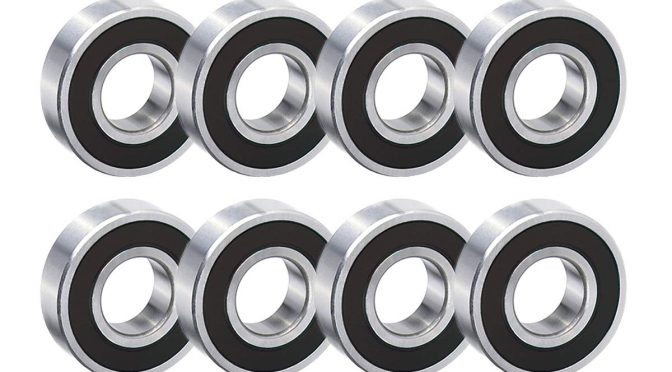
Sealed deep groove ball bearings are similar to single-row deep groove ball bearings except that they have an iron or rubber protective cover installed on one or both sides of the bearing. These seals are pre-greased to extend bearing life.

Many manufacturers use sealed ball bearings in contaminated environments that could otherwise affect bearing performance. The protective cover helps the bearing retain grease while also preventing any contaminants from entering the bearing itself.

Larger deep groove ball bearings can even use machined brass cages for high-speed applications, where the cage prevents unnecessary wear.

Sealed deep groove ball bearings

Flanged deep groove ball bearings

Some deep groove ball bearings have a flanged outer ring that works like a snap ring on a standard ball bearing. Flanges increase the operating efficiency of the bearing and are also easier to machine due to the simplicity of the housing bore.

Flanged deep groove ball bearings are ideal for axial loads, for example on pipe ends or belt guides. Some variants even have rotating housings to allow for slight misalignment and better axial loading.

Flanged deep groove ball bearings

Double-row deep groove ball bearings

The double-row design significantly increases load-carrying capacity while still maintaining the low friction characteristics of the bearing. Double-row bearings are generally slightly wider than single-row bearings and are almost as versatile and practical.

The main disadvantage of double-row deep groove ball bearings is that they have no seals or guards, although some may have cages. These cages facilitate installation and assembly but are susceptible to mechanical stress during operation. Selecting the correct type of cage for a specific application is critical, especially when certain cage materials are sensitive to specific lubricants.

Double row deep groove ball bearings

How do deep groove ball bearings work?

Deep groove ball bearings are commonly used in rotating applications such as motors, wheels, and pumps. But how do they work?

Deep groove ball bearings have a series of balls in the middle of the inner and outer rings, the balls can rotate freely in the rings, and they act as the contact point between the two rings. When the shaft turns, the inner ring turns with it.

This also causes the ball bearings to rotate. However, since ball bearings can rotate freely, they can also roll in grooves around the circumference of the inner ring. This rolling action helps reduce friction between the shaft and the bearing.

How deep groove ball bearings work

Deep groove ball bearings mainly bear radial load, and can also bear radial load and axial load at the same time. When only radial load is applied, the contact angle is zero. When the deep groove ball bearing has enough radial clearance, it has the performance of an angular contact bearing and can bear a large axial load. Deep groove ball bearings have a small friction coefficient and high limit speed.

Features of deep groove ball bearings

The deep groove ball bearing has a simple structure and is easy to use. Compared with other types of bearings with the same specifications as deep groove ball bearings, this type of bearing has a small friction coefficient and a high limit speed. But it is not shock resistant and not suitable for heavy loads.

After the deep groove ball bearing is mounted on the shaft, the axial displacement of the rod or housing can be limited within the axial clearance of the bearing, enabling it to be positioned axially in both directions. In addition, these bearings also have specific self-aligning capabilities. When tilted 2′ to 10′ relative to the bearing housing hole, it still works normally but has a special effect on bearing life.

Features of deep groove ball bearings

Structure of deep groove ball bearing

The manufacturing accuracy of deep groove ball bearings is easier to achieve than other types, so it is convenient for mass production, has low manufacturing costs, and is ubiquitous.

In addition to the main models, deep groove ball bearings also have various modified structures, such as deep groove ball bearings with dust caps, deep groove ball bearings with rubber seals, deep groove ball bearings with retaining grooves, and ball grooves. Mouth-deep groove ball bearings, etc. Large carrying capacity, double row deep groove ball bearings.

The advantages of using deep groove ball bearings

Deep groove ball bearings are characterized by versatility and durability. When selecting bearings for a specific application, it is important to consider the advantages and disadvantages of each bearing.

Deep groove ball bearings have several advantages over other types of bearings including:

  • Versatility

Because they can withstand radial and axial loads, they have wider applications in many industries. They are available with and without a dust cover and can be used in any environment.

  • Cut costs

Deep groove ball bearings generate less friction torque. This lowers the operating temperature, which extends the life of the bearings, and also reduces the energy costs of running the equipment.

  • Low friction

Deep groove ball bearings generate less friction than standard bearings, which can save costs in a number of ways. First, it reduces the operating temperature of the bearing, thereby extending the service life of the bearing. Operating machines with bearings also becomes cheaper due to increased efficiency and reduced maintenance requirements. Low friction also reduces noise and vibration, making these bearings ideal for high-rotation environments, and they use less lubrication than conventional bearings.

  • Easy to install

Deep groove ball bearings are easy to install, simplifying assembly and increasing load capacity. Many manufacturers take advantage of deep groove ball bearings and reduce the housing size of their machines, enabling smaller, lighter components. Deep groove ball bearings can also be installed in conventional housings, making it simple to replace conventional ball bearings with their superior counterparts.

  • Less maintenance

Due to their simple design, low operating temperature, and low friction, deep groove ball bearings have a longer expected shelf life than other bearings. They do not require additional lubrication after installation, which also means less downtime for maintenance.

In early 2021

Disadvantages of deep groove ball bearings

Deep groove ball bearings are less suitable for high-speed applications. They are also less suitable for applications with heavy or shock loads. Deep groove ball bearings can be damaged by misalignment and they are not suitable for applications requiring precision. Finally, deep groove ball bearings can be noisy, which can be a problem in some applications.

Common applications of deep groove ball bearings

Deep groove ball bearings are suitable for high speed applications. However, they are not suitable for heavy loads or applications involving shock or shock loads.

Some common applications for deep groove ball bearings include:

  • Industrial application

Like other types of bearings, deep groove ball bearings are used in a variety of different industrial machines, including gearboxes, industrial instruments, motors, pumps, internal combustion engines, agricultural machinery, construction equipment, and construction machinery.

Deep groove ball bearings are particularly important for the operation of electric motors and can also be used in various power tools, including angle grinders, electric hammers, electric picks, etc. Deep groove ball bearings can also be used in the financial industry, including automatic teller machines, money counters, etc.

Industrial application
  • Household appliances

No matter what your home looks like, you pretty much own appliances that use deep groove ball bearings. They are used in air conditioners, wall breakers, dishwashers, washing machines, vacuum cleaners, and many other appliances that are important to everyday life. These devices require bearings that are easy to operate, have low noise and vibration, and have a long service life.

Deep groove ball bearings are available in a variety of sizes and configurations. The most common type is the single-row deep groove ball bearing. Bearings of this type are capable of carrying radial and axial loads in both directions.

Deep groove ball bearings are also available with ceramic balls. Ceramic material improves wear resistance and allows operation in dusty environments. It also retains its size better at high temperatures, making it ideal for applications where heat may be an issue. Yuanhe aims to offer more deep groove ball bearings than standard, generally suitable for a variety of operating conditions and applications.

Home Appliance Drivetrains & Accessories

How to choose a suitable deep groove ball bearing

In many applications, deep groove ball bearings are ideal. They are widely used in machinery and equipment because they are inexpensive, durable, and require little maintenance.

However, there are different types of deep groove ball bearings to choose from, each with its own unique features and benefits. So how do you choose the right bearing for your application?

The following points need to be considered when selecting a deep groove ball bearing:

  • Size

The space allowed by the bearing is usually quite limited. In many cases, the shaft diameter or bearing bore diameter is determined by design requirements. Therefore, the type and size of the bearing must conform to the established specifications.

  • Accuracy requirements

The second biggest consideration when choosing a bearing is accuracy. Certain applications, such as bearings for CNC machine tools, require high precision. In other applications, such as scooter wheels, accuracy will not be a major issue.

  • Bearing load

The amount of load the bearing must carry will have a major impact on which type of bearing should be used for a particular application. Additionally, the various loads managed by the bearing can significantly affect sustained performance and must be carefully evaluated during the selection process.

Some bearings must withstand radial loads acting perpendicular to the axis of rotation. Some bearings must withstand axial loads acting parallel to the axis of rotation. If the loads on the bearings deviate from these shafts, moment loads are created.

The nature, magnitude, and direction of applied loads can be highly variable. In general, the basic load ratings shown in bearing dimension tables indicate load-carrying capacity. However, the load type should also be considered when deciding on the correct bearing type.

How to choose a suitable deep groove ball bearing In many applications, deep groove ball bearings are ideal. They are widely used in machinery and equipment because they are inexpensive, durable and require little maintenance. However, there are different types of deep groove ball bearings to choose from, each with its own unique features and benefits. So how do you choose the right bearing for your application? The following points need to be considered when selecting a deep groove ball bearing: Size The space allowed by the bearing is usually quite limited. In many cases, the shaft diameter or bearing bore diameter is determined by design requirements. Therefore, the type and size of the bearing must conform to the established specifications. Accuracy requirements The second biggest consideration when choosing a bearing is accuracy. Certain applications, such as bearings for CNC machine tools, require high precision. In other applications, such as in scooter wheels, accuracy will not be a major issue. Bearing load The amount of load the bearing must carry will have a major impact on which type of bearing should be used for a particular application. Additionally, the various loads managed by the bearing can significantly affect sustained performance and must be carefully evaluated during the selection process. Some bearings must withstand radial loads acting perpendicular to the axis of rotation. Some bearings must withstand axial loads acting parallel to the axis of rotation. If the loads on the bearings deviate from these shafts, moment loads are created. The nature, magnitude and direction of applied loads can be highly variable. In general, the basic load ratings shown in bearing dimension tables indicate load carrying capacity. However, the load type should also be considered when deciding on the correct bearing type.
  • Running speed

Each specific bearing has specified speed limits, all determined through empirical testing in a variety of routine applications. Permissible speeds may vary depending on bearing size, type, load level, lubrication, and temperature.

A key factor in a bearing’s high-speed performance is the type and amount of lubrication used. In general, deep groove balls and roller bearings are best suited for high-speed applications.

  • Durability

There are many factors to consider when it comes to durability, including stiffness and temperature tolerance. Bearing contact surfaces can deform under load, and deformation can be a serious problem in some applications. Due to the temperature difference between the region of use and the environment of use, the operating temperature range that the bearing can withstand should also be a major selection issue.

  • Maintain

Some bearing applications require periodic disassembly and reassembly for inspection and maintenance. In these applications, bearings with separable rings are most suitable.

How to prolong the service life of the bearing, thorough lubrication is also very important. Too much lubrication, too little lubrication, contamination, and mixed lubricants can all have an impact on bearing performance.

How to keep your deep groove ball bearings in good condition

How to keep your deep groove ball bearings in good condition

Deep groove ball bearings are essential components in many machines and equipment. They are used to support radial and axial loads and reduce friction in rotating systems. Because of their importance, it is crucial to keep deep groove ball bearings in good condition. Here are some tips on how to do this:

  • Handle with care

Bearings are complex and precise and therefore require proper handling and storage. If not, they risk being damaged. It is recommended to store the bearings horizontally in their complete packaging in a clean and dry environment. Avoid exposing the bearing to any contamination as much as possible, as a small piece of dirt in the raceway can cause premature bearing failure.

Under no circumstances should you hammer, tap, or apply direct force to the bearing. This can damage or dislocate the rolling elements inside, rendering them unusable. If the bearing is dropped or mishandled, it should not be installed as any small cracks or scratches will result in reduced performance.

  • Check housing and shaft

Before installing any bearing, it is important to inspect the housing and shaft for signs of damage to ensure its physical condition is in operating condition. Wipe the surface clean with a soft cloth, making sure to remove any marks or burrs.

  • Install correctly

Different types of bearings require different mounting methods, if you are using a bearing with a cylindrical bore, it is usually mounted using a press fit method, i.e. by pressing the bearing against the shaft, or a shrink fit method, in which the Heat is applied to enlarge the diameter of the bearing. If pressure is applied to the ring without a press fit, the raceways will be damaged and the bearing will not operate as intended.

  • Prevent direct heating or overheating

The maximum allowable temperature varies depending on the heat treatment of the bearing. If the temperature exceeds this temperature limit, it may cause permanent deformation or soften the bearing steel. When this happens, the load-carrying capacity is reduced and failures can occur.

  • Use the right tools

When you install bearings with general-purpose tools, they can cause unnecessary damage, resulting in unnecessary repair costs. That’s because they’re not designed to handle something as delicate as a bearing. Use special tools to maintain the condition of bearings when handling, installing, or removing them. Some examples of these specialized tools include:

      • Bearing puller
      • Bearing assembly kit
      • Injector kit
      • Hydraulic nut
      • Induction heater

These tools have been specially developed to ensure a smooth installation and removal process while minimising the risk of bearing damage.

  • Prevent corrosion

When bearings are exposed to moisture for a long time, they may rust or corrode. When this happens, the bearing fails prematurely, causing problems with machine performance and productivity. This will increase your operating costs.

It is important to wear gloves when handling bearings, as even hand sweat can cause bearing corrosion. It’s a good idea to use waterproof grease as a lubricant to form a protective barrier in wet environments. If you are dealing with a very corrosive environment, it is best to look into bearings made of different materials, such as ceramic bearings.

  • Watch out for danger signs

After the bearing has been installed, it must be kept abreast of it, being aware of any abnormality or poor performance. If you notice excessive noise, increased temperature, or unusual vibrations, there is a problem. If any abnormality is found, the bearing should be removed immediately and then analyzed.

By following these tips, you can ensure deep groove ball bearings stay in good shape and continue to function.

Overall, deep groove ball bearings are a good choice for most applications. They are durable and reliable. They are capable of bearing both radial and axial loads can operate at high speeds and are extremely durable. Additionally, deep groove ball bearings are relatively inexpensive, making them a popular choice for many applications.

There are many types of deep groove ball bearings and many uses. Each type has its own unique features and benefits. Knowing the above information can help you better understand deep groove ball bearings. If you have any questions, please contact us at sales@yuanhecd.com.

How to choose the right bearing for a hand-held power tool?

One of the most important components in a hand-held power tool is the bearing. There are several different types of bearings available for hand-held power tools. The most common type is the deep groove ball bearing. Bearings of this type are versatile and can be used in a variety of applications.

The handheld power tool industry is a multi-billion dollar market with a wide range of applications. These tools are used in a variety of industries, from woodworking to auto repair. A key component of these tools is deep groove ball bearings, as they can handle high radial and axial loads.

Deep groove ball bearings are also relatively simple to design and manufacture, they are durable, low maintenance, and affordable. If you’re looking for bearings for your next handheld power tool project, read on to learn more about deep groove ball bearings and their applications!

Bearings application For Sanders

What is a deep groove ball bearing?

Deep groove ball bearings are one of the most common bearing types in a wide range of applications. They are characterized by their deep-grooved raceways and high load capacity. They are used in a wide range of applications from bicycles to aerospace engineering.

Deep groove ball bearings are particularly suitable for high-speed applications. In hand-held power tools, deep groove ball bearings are used in motor and spindle assemblies. Bearings support the tool’s load and help keep the spindle properly aligned.

Deep groove ball bearings are available in a variety of sizes and designs to meet the needs of different applications. Some of the most common designs are open bearings, sealed bearings, and bearings with snap ring grooves.

6201-ZZ Small deep groove bearing oem - Yuanhe

How do deep groove ball bearings work?

Deep groove ball bearings work by providing smooth, low-friction motion in the application. Deep grooves on the inner and outer rings allow for deep, uninterrupted raceway grooves on both sides of the bearing for excellent load handling.

The advantages of using deep groove ball bearings are many, including the following:

Anti-dislocation

Due to their structure, deep groove ball bearings have a very low probability of dislocation compared to other types of bearings.

Compactness

Deep groove ball bearings are one of the most compact bearing types, making them ideal for use in space-constrained areas.

Durability

Deep groove ball bearings are designed for high speed, can withstand heavy loads, and are extremely durable.

Precision

The balls in deep groove ball bearings are perfectly spherical, which makes them run with very high precision.

Double row deep groove ball bearing

What is the role of deep groove ball bearings in hand-held power tools?

Globally, deep groove ball bearings are used in many hand-held power tools. In hand-held power tools, ball bearings are typically used in the spindle, where the shaft supports the tool’s cutting head or other attachment.

Deep groove ball bearings are used in hand-held power tools to support the rotational movement of the tool shaft. Bearings minimize friction between the shaft and the tool housing, which helps increase the efficiency of the tool and improves its overall performance.

How to choose the right deep groove ball bearing for your application?

There are a few things to consider when selecting a deep groove ball bearing for an application. First, determine the operating conditions of the bearing, such as load, speed, and lubrication. Next, select a bearing with the appropriate dimensions, such as bore, outside diameter, width, and clearance. Finally, choose a bearing with the right material and precision for the application.

The most common factor determining the load-carrying capacity of a deep groove ball bearing is its deeper raceway geometry. This significantly improves the bearing’s ability to handle radial and thrust loads in both directions.

The second criterion to consider is speed, or how fast the bearing can spin.

The third criterion has to do with operating temperature; deep groove ball bearings are often used in applications where ambient temperatures may be higher than usual, so it is important that they can withstand these conditions without failure.

A fourth criterion to consider is misalignment tolerance; some applications require full shaft and housing alignment, while others can tolerate a small amount of misalignment.

Bearings application For Drill Presses

Conclusion

Deep groove ball bearings are the right choice for hand-held power tools. They are durable and can withstand high speeds. They are also low maintenance and can operate in a wide range of environments. Yuanhe has rich service experience in the electric tool industry and can solve any problem with electric tool bearing selection for you. For more information, please feel free to contact us.

How to select deep groove ball bearings according to application?

Deep groove ball bearings are the most commonly used type of rolling bearings. The raceway of the deep groove balls and the steel balls have excellent tightness so that the deep groove ball bearings can withstand radial loads and axial loads even under high-speed conditions.

The deep groove ball bearing has a small friction coefficient and a high limit speed. It is a product of a sealed structure and does not require relubrication and maintenance.

In addition to the basic types, deep groove ball bearings also have the following deformation structures: deep groove ball bearings with dust cover, deep groove ball bearings with rubber seals, deep groove ball bearings with retaining grooves, and ball-filling Mouth deep groove ball bearings, stainless steel deep groove ball bearings, double row deep groove ball bearings.

6201-ZZ Small deep groove bearing odm - Yuanhe

Deep groove ball bearing with dust cover

The dust cover is used to prevent the leakage of grease in the bearing. It is divided into two structures: single-sided and double-sided. Bearings with dust caps are difficult to lubricate alone, it is inconvenient to install the lubricating oil path and check the lubrication condition, and the low friction torque and high temperature are required.

The grease filling amount of each set of bearings is usually 1/4~1/3 of the effective space of the bearing cavity, and the amount of grease filling can also be increased or decreased according to user requirements. The injected grease can usually keep the bearing running at -40°C ~+120°C. If users have higher requirements for bearings, Yuanhe will provide satisfactory solutions.

Bearings with dust caps are greased and can work effectively for a long time, and do not need to be greased during use. Deep groove ball bearings with dust cover are mostly used at both ends of rotors of small and medium generators and motors, automobiles, tractors, air conditioners, fans, and occasions with special requirements for bearing noise and vibration.

Deep groove ball bearings with rubber seals

For deep groove ball bearings with sealing rings, there are contact and non-contact sealing forms, as well as single-sided and double-sided. The contact seals can be designed as light contact, medium contact, and heavy contact according to different parts of use.

The performance, filling, and application of bearings with seals are basically the same as those of deep groove ball bearings with dust cover. The difference is that the bearing with dust cover has a large gap between the dust cover and the inner ring, while the gap between the sealing ring and the inner ring of the non-contact sealed ball bearing is very small, and the sealing lip of the contact sealing ring bearing. There is no gap with the inner ring, and the sealing effect is good, but the friction is increased.

Where low noise is required, 60 and 62 series of small-size deep groove ball bearings are often used. Whether open or closed bearings (with a dust cover or with a sealing ring), low noise and low vibration requirements can be put forward when ordering.

51103 Axial deep groove ball bearing 30X17X9mm

Deep groove ball bearings with snap grooves and snap rings

The structure of the outer ring with a stop groove, a stop ring, and a flange can realize axial positioning. It also simplifies the installation structure of the housing. Deep groove ball bearings with snap grooves and snap rings are mostly used in working parts such as automobiles and tractors.

Deep groove ball bearings with filling gaps

The main dimensions of deep groove ball bearings with ball notches are the same as the 62 or 63 series of deep groove ball bearings. Both the inner and outer rings have ball gaps, so the number of steel balls is more than that of ordinary deep groove ball bearings, and the rated dynamic load is 20% to 35% larger.

Stainless Steel Deep Groove Ball Bearings

The material is stainless steel, which can resist the corrosion of moisture and other media, and is mainly used in anti-corrosion environments, the food industries, etc.

Double-row deep groove ball bearings

The design is very similar to the one-line product structure, but with only one line. In addition to radial loads, it can also withstand bidirectional axial loads.

Deep groove ball bearings can be divided into:

  • Deep groove ball bearing (type 6000);
  • Deep groove ball bearing (type 6000N), the outer ring has a retaining groove;
  • Deep groove ball bearing (type 6000-ZN), with a dust cover on one side and a stop groove on the outer ring;
  • Deep groove ball bearing (type 6000-2ZN), with the dust cover on both sides, and stop groove on the outer ring;
  • Deep groove ball bearing with the dust cover on one side (type 6000Z);
  • Deep groove ball bearing with the dust cover on both sides (type 6000-2Z);
  • Deep groove ball bearing with a sealing ring on one side (type 6000-RZ);
  • There are seals on both sides of the deep groove ball bearing (type 66000-2RZ);
  • Deep groove ball bearing with flanged outer ring (type F6000);
  • One side flange deep groove ball bearing with dust cover (F6000-Z type);
  • Deep groove ball bearing (F6000-2Z type), with flanged outer ring on both sides, with dust cover.


Deep groove ball bearings are a type of rolling element bearing used in a variety of applications. These bearings can be differentiated according to their application and type selection. Application-specific models are designed for specific loads, speeds, and operating conditions, while general-purpose models can be used for a variety of applications.

When selecting a deep groove ball bearing, it is important to consider the specific application and operating conditions. If you have any technical questions, please contact us, and we will provide you with professional solutions!

The Car Transmission System: How It Works And Its Importance

An automotive Transmission is an essential part of any vehicle. It is responsible for the smooth running of the car and its performance. The Transmission consists of many components, including clutches, bearings, gearboxes, prop shafts, and differentials.

Each of these parts has a specific purpose and works together to keep the car running properly. The Transmission is an important part of a car, and it’s important to understand how it works. This understanding can help you solve problems and keep your car running smoothly.

The Car Transmission System

What is a car transmission system?

An automotive driveline refers to a system that helps to change the gear ratio of a vehicle. The system consists of several parts, including the clutch, gearbox, and differential. The Transmission helps transfer power from the engine to the wheels and also helps change the speed and torque of the vehicle.

What are the different types of transmissions?

There are several different types of transmissions: automatic, manual, and CVT. Everyone has their own strengths and weaknesses, so it’s important to understand their differences before making a decision.

Automatic transmissions are the most common type of transmission and they are usually found in cars. They’re known for being easy to use and maintain, and they’re often more fuel-efficient than manual transmissions. However, if they fail, repair costs can be higher.

Manual transmissions are not as common as automatic transmissions, but they are usually found in sports cars. They’re known for giving drivers more control over their cars, but they can be more difficult to use and maintain. They are also generally less fuel efficient than automatic transmissions.

CVT transmission is a new type of transmission that is becoming more common in automobiles. CVT stands for continuously variable transmission and it is a transmission that can dynamically change its gear ratio. This keeps the transmission in the optimum gear for the current driving conditions, improving fuel economy and performance.

What is a car transmission system

Why is a transmission system important system? 

The Transmission is an important system in a vehicle because it transfers power from the engine to the wheels. The transmission system consists of a transmission, drive shaft, drive axle, and wheels. A gearbox is a gearbox that changes the speed and torque output from the engine.

The driveshaft transmits power from the transmission to the driveshaft. The drive axle is connected to the wheels and uses gears to vary the speed and torque output from the engine. The wheels are connected to the drive shaft and rotate to generate motion.

Components of the transmission system

The transmission system consists of the following parts:

Engine

The engine of the transmission system is the heart of the matter. It needs to be strong and efficient in order to maintain the proper function of the transmission system.

Clutch

The clutch is an important part of the transmission system in a car. It helps to smoothly engage and disengage the engine from the transmission. This system is vital for a car to function properly.

There are two types of clutches: manual and automatic. Manual clutches are engaged and disengaged by the driver, while automatic clutches are engaged and disengaged by the car’s computer system.

The clutch is an important part of the transmission system and should be regularly checked to ensure that it is functioning properly.

Transmission

The transmission system is the link between the engine and the wheels of a vehicle. It is responsible for transferring the power from the engine to the wheels, and it also helps to change the gears of the vehicle. The transmission system is a key component of a vehicle, and it is important to make sure that it is properly maintained.

Transmission problems can be caused by a variety of factors, including poor maintenance, wear and tear, and even damage. If you are having transmission problems, it is important to take your vehicle to a qualified mechanic to have it checked out. Transmission repairs can be expensive, so it is important to make sure that the problem is properly diagnosed and repaired.

The engine powers the driveline through the crankshaft, while the clutch disengages and engages the driveline with the engine. The Transmission helps control the speed and torque of the engine, allowing the vehicle to move forward or backward, as well as to change gears.

How does a car transmission system work

How does a car transmission system work?

The car Transmission is responsible for transferring power from the engine to the wheels. The system uses a series of gears to increase or decrease the speed of the vehicle and power the wheels as the vehicle travels at different speeds.

How to keep your transmission system healthy?

Many factors can affect the health of your transmission system. Some of these factors include the quality of the transmission oil, the condition of the transmission filter, and the age of the transmission.

To keep your Transmission healthy, it is important to regularly check fluid levels and fluid conditions. You should also change the transmission filter every few years. If you notice any strange noises or symptoms, be sure to take your vehicle to a qualified mechanic for diagnosis and repair.

How to keep your transmission system healthy

Conclusion

The automobile transmission system is complex and important in the automobile. It is responsible for transferring power from the engine to the wheels. Without a functioning transmission system, the car would not be able to move.

There are many different types of transmission systems, each with its advantages and disadvantages. The most important thing is to ensure that the transmission bearing in your vehicle is properly maintained.

How Ball Bearings Reduce Friction In Machinery: Basic Principles You Need To Know

The frictional force is defined as the force resisting the relative motion of two surfaces in contact with each other. It is an essential evil in machinery because it is the very force that enables us to move machine parts to each other. However, friction can also cause machine parts to wear out, resulting in reduced efficiency and shortened service life.

One way to reduce friction is to use ball bearings. A ball bearing is a metal ring that contains freely rotating balls. These balls reduce friction by rolling instead of sliding, and they are also extremely durable.

In this article, we will explain the fundamentals of how ball bearings reduce the mechanical friction. We will also cover the different types of ball bearings and their uses.

What is machinery friction?

Mechanical friction is the force that resists the movement of two surfaces that are in contact with each other. This force causes mechanical components to wear out over time and can also cause energy loss that affects mechanical efficiency.

Friction is a necessary force – without it, a machine cannot function. However, too much friction can cause problems. To reduce the effects of friction, engineers need to carefully design machinery to minimize the amount of friction generated.

Mechanical friction application

The Fundamental Principles of Friction

Friction is the force that resists the relative motion of two contacting surfaces. The term can also refer to the force resisting the movement of an object through a fluid. The three types of friction are static friction, sliding friction and rolling friction.

Static friction is the force that resists the motion of an object that is not yet moving. Sliding friction is the force that resists the motion of an object that is already in motion. Rolling friction is the force that resists the rolling of a wheel.

All three types of friction depend on the surface of the contacting object. The rougher the surface, the greater the friction. These three types of friction also depend on the force that presses the surfaces together. The greater the force, the greater the friction.

Generally speaking, friction is the force acting between two objects that are in contact with each other. This force is the opposite of the relative motion of objects. In other words, friction is the force that resists the motion of an object as it slides over another surface.

The Dangers of Excessive Friction In Machinery

Friction is a natural force that occurs when two objects rub against each other. It is an important force because it allows us to interact with our environment. For example, without friction, we would not be able to walk or even pick up a pencil.

However, friction can also be dangerous. When friction is too high, it can lead to mechanical overheating and failure. This could result in an accident or even injury. This is why it is important to ensure that there is sufficient lubrication in the machinery to prevent excessive friction.

Excessive friction is just one of many dangers that can arise from improperly maintained machinery. That’s why it’s important to regularly inspect and service your machine to prevent accidents and injuries.

ball bearing various application

Types of ball bearings

There are many different types of ball bearings, each with unique characteristics and applications. The most common types of ball bearings are:

Angular Contact Ball Bearings

Angular Contact Ball Bearings are designed to support axial and radial loads. They have contact angles that allow them to withstand high loads.

Deep groove ball bearings

Deep groove ball bearings are the most common type of ball bearing. They are designed to handle radial and axial loads.

Self-aligning ball bearings

These bearings are designed to handle radial loads and misalignment.

Tapered Roller Bearings

Tapered Roller Bearings are designed to carry radial and axial loads. They have tapered inner and outer rings for higher loads.

ball bearing application

The Advantages of Using Ball Bearings

A ball bearing is a rolling element bearing that uses balls to maintain separation between the bearing races. The purpose of ball bearings is to reduce rotational friction and support radial and axial loads. Ball bearings are used in a variety of applications, from car engines to roller coasters.

There are several advantages to using ball bearings. First, they are versatile and can be used in a variety of applications. Second, they are very durable and can last for years with proper maintenance. Third, they are very efficient and can help reduce energy costs.

How Are Ball Bearings Able to Reduce Friction?

Ball bearings are often used in machinery to reduce friction. They work by using small balls that rotate between different surfaces. This reduces the amount of contact between the surfaces, which reduces friction. Ball bearings are especially effective in high-speed applications where other methods of reducing friction, such as lubrication, are ineffective.

So how do ball bearings work? With a little knowledge of the basics of friction and physics, we can understand how ball bearings can reduce friction and help keep our machines running smoothly.

Mechanical friction

How to Properly Maintain Your Ball Bearings?

Maintaining the ball bearings is very important to keep the machine running smoothly. Proper maintenance will extend the life of your bearings and save you money in the long run.

There are a few simple things you can do to keep your bearings in good condition. First, make sure they are kept clean. Dirt and grime can build up on bearings and cause them to wear prematurely. Second, keep lubricated. Lubricating bearings will help reduce friction and wear. Third, keep it properly. Store bearings in a cool, dry place to prevent rust and corrosion.

By following these simple tips, you can be sure your ball bearings will last for years.

Conclusion

Overall, ball bearings are an important part of reducing mechanical friction. By understanding the fundamentals of how they work, you can ensure your machines run efficiently and smoothly.

The Various Applications of Bearings in Electric Tools

Bearings in power tools serve a variety of purposes. They can be used to support the weight of the tool, provide a smooth sliding surface for the tool, or reduce friction between the tool and the work surface.

The three main bearing types used in power tools are ball bearings, roller bearings, and sleeve bearings. Each type of bearing has its own advantages and disadvantages. Ball bearings are the most common type of bearing in power tools. They are easy to install and maintain and provide a smooth, consistent surface for the tool to slide on.

Roller bearings are another type of bearing used in electric tools. They are more durable than ball bearings and can handle heavier loads. However, they are more difficult to install and maintain.

Sleeve bearings are the third type of bearing used in electric tools. They are the most durable type of bearing, but they are also the most difficult to install and maintain.

The Various Applications of Bearings in Electric Tools

What are Bearings?

A bearing is a mechanical part that helps support and reduce friction between moving parts. They are commonly used in wheels, axles, and other rotating applications. There are many different types of bearings, each with its own unique advantages and disadvantages.

Some of the most common bearing types include ball bearings, roller bearings, and sleeve bearings. Ball bearings are the most common type of bearings and are usually made of steel. Roller bearings are also common, and they are often used in high-load applications. Sleeve bearings are less common, but they offer a lower friction alternative to the ball and roller bearings.

No matter what type of bearing you need, choosing the right bearing for your application is important. Bearings are designed to support specific loads and speeds, so it is important to match the bearing to your application requirements

Different types of Bearings

There are many types of bearings, each designed for different uses and applications. The most common bearing types are ball bearings, roller bearings, and needle bearings.

Ball bearings are the most common bearing type and have a wide range of applications. Roller bearings are designed for heavy loads and can be found in industrial applications. Needle roller bearings are designed for high-speed applications and can be used in automotive and aerospace applications.

Each type of bearing has its own specific advantages and disadvantages, so it is important to choose the right type of bearing for your application.

Different types of Bearings

How do Bearings work in electric tools?

Bearings are important components in many power tools. They help reduce friction and make the tool run smoother. There are two main types of bearings: ball bearings and roller bearings. Ball bearings are the most common type of bearings and are usually made of steel. Roller bearings are also made of steel, but they have a cylindrical shape.

Bearings work by reducing friction between two moving parts. This allows parts to move more smoothly and with less wear. Bearings can be found in a variety of power tools, including drills, saws, and routers.

What are the benefits of using Bearings in electric tools?

Bearings are used in power tools because they reduce friction and wear and also increase the efficiency of the tool. By reducing friction, bearings help tools run cooler and last longer. By increasing the efficiency of the tool, bearings can help extend the life of the tool’s battery.

There are many different types of bearings, each with its own advantages. But overall, bearings help make power tools more durable and efficient.

Are there any drawbacks of using Bearings in electric tools?

Bearings are commonly used in power tools to reduce friction and improve performance. However, there are some potential disadvantages to using bearings in power tools. A potential downside is that bearings can generate noise, which can be disruptive or even dangerous in some cases. Another potential disadvantage is that the bearings generate heat, which reduces the life of the power tool.

Overall, bearings can be beneficial in power tools, but there are some potential disadvantages to consider. If you use a power tool with a bearing, it is important to understand these potential drawbacks and take steps to mitigate them.

Applications of Bearings in Electric Tools

Applications of Bearings in Electric Tools

A bearing is a mechanical component that supports and reduces friction in rotating systems. electrical tools. In power tools, bearings are used to support the rotating armature and allow it to rotate smoothly. This helps to increase the efficiency of the tool and improve its performance.

Bearings are also used to make electric motors. Bearings allow the rotor to spin freely while minimizing friction and wear. This helps to extend the life of the motor and increase its efficiency.

Overall, bearings are an important part of power tool design and function. They help improve the performance of the tool and extend its lifespan.

Bearings application For Drill Presses

Bearings application For Drill Presses

A drill press is a machine that uses a rotary drill to drill holes in various materials. Drill presses are commonly found in workshops and are often used to make large, precise holes.

Most drill presses have a table on which the material to be drilled is mounted. Then move the table up and down to adjust the depth of the drilling. The drill bit is mounted on a spindle that is attached to the head of the drill press. The head is usually mounted on a post that allows the drill to move up and down.

To ensure accurate drilling, the drill press must be level. This can be achieved by using bearings. Bearings are devices that help reduce friction and allow for smooth motion. By using bearings in the drill press, the drill bit can move up and down along the axis of the drill press. The drill is held in place by a chuck that is tightened or loosened to loosen or tighten the handle on the drill.

Bearings application For Lathes

Bearings application For Lathes

Machine tools such as lathes often have several sets of bearings to support various rotating axes. Each set of bearings must be carefully aligned to function properly. This process is called “setting the bearing”.

There are two main types of bearings that can be used in lathes: roller bearings and ball bearings. Roller bearings can handle heavier loads but are more difficult to set up than ball bearings. Ball bearings are less likely to fail under heavy loads, but more difficult to maintain alignment.

The first step in setting up a bearing is to clean all parts that will be used. Next, the outer ring of the bearing must be placed on the shaft. The inner ring of the bearing can then be placed on the shaft.

Bearings application For Rotary Tools

Bearings application For Rotary Tools

There are many different types of rotary tools, each with its own specific requirements for the bearings used in its construction. The main types of rotary tools are air tools, power tools, and air tools. Each type of rotary tool has its own set of requirements for the bearings used in its construction.

The most common type of bearing in rotary tools is the ball bearing. Ball bearings are used in air tools, power tools, and air tools. Ball bearings are also used in many other types of machinery, including automotive applications. Ball bearings are available in a variety of sizes and styles and can be customized to meet the specific requirements of any application.

The second most common type of bearing used in rotary tools is the roller bearing. Roller bearings are used in applications with high radial loads, such as electric motors and gearboxes. These bearings are designed to withstand radial and axial (thrust) loads and can operate at high speeds. Roller bearings are usually made of hardened steel or brass and come in a variety of sizes.

Bearings application For Sanders

Bearings application For Sanders

The use of bearings can be found in many sanding applications. Sanders is used in a variety of industries including woodworking, metalworking, and automotive. Bearings are used in sanders to help the tool operate smoothly and with precision. without bearings, sanders would be much less effective at doing their job.

There are two main types of bearings that are used in sanders: ball bearings and roller bearings. Ball bearings are the most common type of bearing and are typically made of steel. Roller bearings are also made of steel, but they have a higher load capacity than ball bearings.

Both types of bearings are essential to the proper functioning of a sander. bearings help the sander to run smoothly and with precision, making the tool more effective at doing its job.

Bearings application For Saws

Bearings application For Saws

Saw blades, whether hand-operated or power-driven, are designed to cut materials such as wood, metal, or stone. The cutting action of a saw blade is achieved by the application of bearings. Depending on the type of saw and the materials being cut, different types of bearings may be used.

Some of the most common types of bearings used in saws are ball bearings, roller bearings, and thrust bearings. Ball bearings are the most popular type of bearing used in saws. They are typically made of steel and can be either single- or double-rowed. Roller bearings are also made of steel, but they have a cylindrical shape. Thrust bearings are flat and are designed to support the weight of the saw blade.

Conclusion

In conclusion, bearings play an important role in electric tools. They help to reduce friction, improve efficiency, and increase the lifespan of the tool. There are many different types of bearings, each with its own advantages and disadvantages. The type of bearing that is best for a particular application depends on the specific requirements of the application.