Bicycle bearings: everything you need to know

Bearings are often overlooked components that actually bring life to your bike. Without bearings, you can’t steer, roll, pedal, or have a functioning drivetrain. They allow the wheels to spin freely and provide a smooth and comfortable ride.

The most common types of bicycle bearings are cartridge bearings, cup bearings, and loose ball bearings. Each type has its advantages and disadvantages, so it’s important to choose the right type of bearing for your bike.

In this guide, we’ll take a look at the different types of bearings commonly used on bicycles. It also discusses why one bearing is better than another and how to maintain it.

The different types of bearings used on a bike

The different types of bearings used on a bike

There are many different types of bearings used on bicycles. Deep groove ball bearings are used in the wheels and pedals as well as the bottom bracket and headset. Needle bearings are primarily used in hubs and bottom brackets, as well as headsets. Cartridge bearings are used in brakes and derailleurs. Here we explain how each bearing is different.

Bushings

Bushing, sometimes referred to as a bush or sleeve bearing, is a type of simple bearing commonly used in shock mounts, pulley wheels, and shifters. This device works by forming a sleeve between two surfaces for decreased friction and guided movement.

Loose ball bearings (also known as ‘cup and cone bearings)

Loose ball bearings are used on many entry-level bikes, and although traditional in design, can feature superior performance when tuned optimally. These components can be found in hubs, bottom brackets, and headsets. At the high end, most brands have opted to use tapered bearings instead of loose bearings. However, some companies still utilize loose ball bearings for their pedals.

Loose ball bearings utilize corner contact points but often require maintenance to ensure they perform at maximum efficiency. To keep these individual parts separate and secure, retainers or ‘cages’ made of pressed steel are used – hence the name ‘cage bearing’.

Cartridge bearings

Cartridge bearings are the most widely used type of bearing, apart from the cheapest ones. As manufacturing technology has become more advanced and tolerances in hub, frame, and component bores have gotten better, their popularity has grown because of their precision.

A typical cartridge bearing is a single-piece unit that usually gets pressed into the bearing bore, composed of an outer race, an inner race, ball bearings, a cage/retainer to keep the bearings in place, and two seals on either face to keep out dirt. Unfortunately, these bearings can’t be adjusted or disassembled.

Needle bearings

Needle bearings

Needle roller bearings, which are also known as roller bearings, have largely been replaced in the cycling industry by cheaper and more reliable technologies such as multiple rows of cartridge bearings. Needle bearings feature cylindrical rollers instead of ball bearings and can provide exceptionally smooth movements and stable platforms when used correctly. However, if not mated properly, they may fatigue quickly, thereby diminishing their potential benefits. Therefore, it is important to ensure proper mating surfaces with needle-bearing applications to maximize performance levels.

Radial vs angular cartridge

The choice between radial and angular cartridge bearings depends on the specific application and system load requirements. If the system is primarily loaded in the radial direction, radial cartridge bearings would be more suitable. If the system bears radial and axial loads at the same time and emphasizes axial loads, angle clip bearings will be more suitable.

Radial bearings

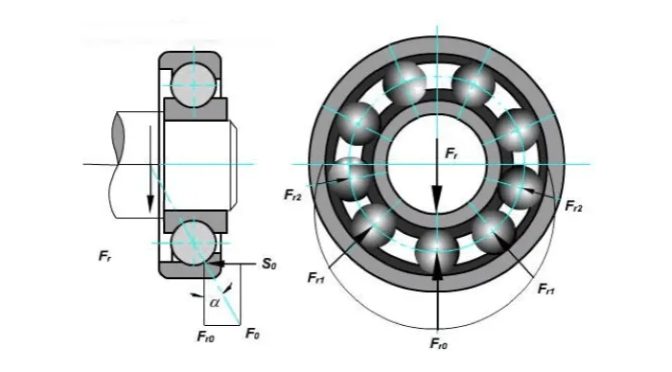
A radial bearing is a rolling bearing designed to support radial loads, which are loads acting perpendicular to the shaft or axis of the bearing. They are commonly used in a wide range of industrial applications including machinery, automotive systems, and power transmission equipment.

Radial bearings usually consist of an inner and outer ring separated by a number of rolling elements such as balls or rollers. The rolling elements are held in place by cages or separators, keeping them evenly spaced and preventing them from touching each other.

When a radial load is applied to the bearing, the rolling elements roll along the raceway and distribute the load evenly on the bearing. This helps reduce friction and wear, extending the life and performance of the bearing.

There are many different types of radial bearings, including ball bearings, roller bearings, and needle bearings. The choice of bearing type depends on the specific application and the load and speed requirements of the system.

Angular contact bearings

Angular contact bearings are a type of rolling bearings designed to support radial and axial loads. They are typically used in high-speed applications that require precise control of rotary motion, such as machine tools and automotive systems.

Angular contact bearings usually consist of an inner and outer ring separated by a number of rolling elements such as balls or rollers. The rolling elements are held in place by cages or separators, keeping them evenly spaced and preventing them from touching each other.

The raceways of angular contact bearings are at an angle to each other, called the contact angle, and can range from 15 degrees to 40 degrees or more, depending on the specific design of the bearing.

When an axial load is applied to an angular contact bearing, the rolling elements are forced to slide along the raceways, creating a force perpendicular to the axis of rotation. This force can be used to control the rotational motion of the shaft, allowing precise control and high-speed operation.

What are bearings made from?

What makes a high-quality bearing?

There are many factors to consider when selecting a quality bearing. The first is load-carrying capacity, which is the maximum weight the bearing can bear. This is followed by the maximum speed, which is the highest speed at which the bearing can run trouble-free. Other factors to consider include abrasion resistance, resistance to sudden shocks, and the ability to operate in extreme temperatures.

What are bearings made from?

Bearings are made from a variety of materials, but the most common material is steel. Other materials that are used to make bearings include brass, bronze, and ceramic. The material that is used to make a bearing will depend on the application it will be used for. For example, bearings that will be used in high-speed applications will be made from materials that can withstand high speeds and friction.

How to maintain bearings?

Bearing maintenance is critical to keeping machines running smoothly and reducing wear. There are a few simple things you can do on a regular basis to extend the life of your bearings and keep them in good shape.

Here are some tips for bearing maintenance:

Keep bearings clean and free of debris.

Lubricate the bearings regularly.

Check the bearings for signs of wear or damage.

Replace bearings when they show signs of wear or damage.

By following these tips, you can keep your bearings in good condition and extend their life.

Also, if you’re using angular contact bearings, the seals are a different color for a reason – black seals are meant to face the centerline, while red should face out.

Conclusion

In summary, bicycle bearings play a vital role in the performance and longevity of bicycle components. When selecting a bearing, it is important to consider factors such as load capacity, friction, and durability, as well as the specific requirements of your bike and riding style. Regular cleaning and lubrication will help extend bearing life, while proper mounting and adjustment will ensure optimum performance.

What Are the Symptoms and Signs of a Bad Wheel Bearing?

Wheel bearings are an important part of a vehicle’s suspension system. They allow the wheels to spin smoothly and are built to last. However, over time, wheel bearings can wear out, leading to many symptoms and signs of wheel bearing failure.

Wheel bearings can fail for a number of reasons. The most common cause is dirt and debris getting into the bearing and wreaking havoc. Bearings can also fail if they are improperly lubricated or overloaded.

In this blog post, we’ll outline the signs and symptoms of wheel bearing damage. Additionally, we’ll explore how to diagnose damaged bearings and when they need to be replaced.

How to choose a suitable deep groove ball bearing In many applications, deep groove ball bearings are ideal. They are widely used in machinery and equipment because they are inexpensive, durable and require little maintenance. However, there are different types of deep groove ball bearings to choose from, each with its own unique features and benefits. So how do you choose the right bearing for your application? The following points need to be considered when selecting a deep groove ball bearing: Size The space allowed by the bearing is usually quite limited. In many cases, the shaft diameter or bearing bore diameter is determined by design requirements. Therefore, the type and size of the bearing must conform to the established specifications. Accuracy requirements The second biggest consideration when choosing a bearing is accuracy. Certain applications, such as bearings for CNC machine tools, require high precision. In other applications, such as in scooter wheels, accuracy will not be a major issue. Bearing load The amount of load the bearing must carry will have a major impact on which type of bearing should be used for a particular application. Additionally, the various loads managed by the bearing can significantly affect sustained performance and must be carefully evaluated during the selection process. Some bearings must withstand radial loads acting perpendicular to the axis of rotation. Some bearings must withstand axial loads acting parallel to the axis of rotation. If the loads on the bearings deviate from these shafts, moment loads are created. The nature, magnitude and direction of applied loads can be highly variable. In general, the basic load ratings shown in bearing dimension tables indicate load carrying capacity. However, the load type should also be considered when deciding on the correct bearing type.

What is a wheel bearing?

A wheel bearing is a deep groove ball bearing that supports the weight of the vehicle’s hub and helps secure the wheel to the vehicle. Wheel bearings are usually made of steel or ceramic and wear out due to the elements and weight of the vehicle. Over time, they will need to be replaced to keep the vehicle running smoothly.

How does a wheel bearing work?

Wheel bearings help the wheels spin smoothly by reducing friction between the wheel and the axle. The wheel bearing is located between the wheel and the axle and consists of two parts, the inner ring, and the outer ring. The inner ring is usually made of steel, while the outer ring is made of steel or aluminum.

Wheel bearings help keep the wheels and axle aligned when the vehicle is moving. This alignment is necessary to ensure that the vehicle moves smoothly and without much friction. Without wheel bearings, the friction between the wheel and the axle would eventually cause the wheel to stop rolling.

What are the symptoms and signs of a bad wheel bearing?

Symptoms of a damaged wheel bearing can vary in severity and the type of vehicle you own. Here are some common signs to look out for:

Loud humming or grinding noise: One of the most common symptoms of bad wheel bearings is a loud humming or grinding noise from the wheel or hub assembly. The noise generally increases with vehicle speed and may change pitch when cornering.

Wheel Vibration or Wobble: Damaged wheel bearings can cause the wheels to vibrate or vibrate, which can be felt either in the steering wheel or in the vehicle itself. This can also cause the brake pedal to pulsate.

Uneven tire wear: If the wheel bearings are worn, it can cause uneven or premature tire wear. This can lead to bald spots or other irregular wear patterns on the tires.

Loose steering wheel: Bad wheel bearings can also cause the steering wheel to feel loose or wobbly. This can make the vehicle difficult to control and dangerous.

Wheel bearings

ABS warning light: In some cases, failing wheel bearings can trigger the ABS warning light on the instrument panel. This is because the ABS system relies on information from the wheel speed sensors located in the wheel hub assemblies.

How long does a wheel bearing last?

Wheel bearings are an important part of a vehicle’s suspension and they can last anywhere from 30,000 to 100,000 miles. However, many factors can affect the life of your vehicle’s wheel bearings, including driving habits, road conditions, and even the type of vehicle you drive.

How to diagnose a bad wheel bearing?

In addition to making us aware of the signs of wheel bearing wear (squeaking noises, loose car, hot wheels, and steering wheel pull), there is a very simple maneuver that anyone can do at home to see if it’s a broken wheel bearing on our car.

The procedure is to jack up the car so that one wheel is in the air, then we can move the wheel and check for grinding noise or excessive resistance to rotation. But even if it were easy, this action can only be done correctly on the axis opposite to the propulsion force. The difference will make it harder to continue doing this.

Therefore, the best and most recommended way to inspect your hub bearings is to have them inspected for you by a professional who will have the necessary knowledge and equipment to do them properly.

When do you need to replace the wheel bearings?

Replacing wheel bearings is a relatively simple and inexpensive process, so it’s important to replace any problems as soon as you notice them. Doing so will help keep your vehicle running safely and smoothly. A common doubt is when one wheel bearing fails, do we need to replace the other, but it is not mandatory.

If a wheel bearing fails early in its life, it is okay to replace a single bearing, as the cause is most likely not related to the other wheel bearing. However, if our car has many miles on the clock, then it is advisable to check the other wheel bearing. They have the same mileage as the one that broke down, and they’re probably in a similar condition.

Renewable Energy

Conclusion

Bad wheel bearings can cause a variety of symptoms and signs, including noise, vibration, and increased wheel play. If you notice any of these symptoms, be sure to have your vehicle inspected by a professional as soon as possible. Ignoring these symptoms could seriously damage your vehicle’s suspension and steering system, and could even cause the wheels to come off the vehicle while driving.

Yuanhe is a leading manufacturer of customized high-precision ball bearings. Our bearings are widely used in agriculture, industry, automobile, automotive, and household appliance industries. If you have any questions about our products, please feel free to contact us at sales@yuanhecd.com.

Ball Bearing Uses in Everyday Life

Bearings are found in your computer mouse, your skateboard wheels, and your car engine. They are everywhere, and they play a vital role in keeping our world running smoothly.

Their main advantage is that they reduce friction between two moving surfaces. This helps to improve machine efficiency and extend its service life. In this blog post, we will explore the different uses of ball bearings in everyday life.

Transportation

Ball bearings play a vital role in logistics equipment, keeping vehicles running smoothly and efficiently while minimizing wear and tear on moving parts. Proper maintenance and lubrication of ball bearings are also critical to ensure their longevity and performance in these demanding applications.

The following are some of the main applications of ball bearings in transportation:

Automotive Industry Aerospace industry

Automotive Industry

Aerospace industry

Ball bearings are widely used in automobiles, they contribute to the smooth operation of wheels, transmissions, and engines. They are used in wheel bearings, steering systems, suspension systems, and various other components. Ball bearings are used in applications such as aircraft engines, landing gear, and control systems. They are critical components that keep aircraft running smoothly and efficiently and contribute to their safety and reliability.
Railway Industry Marine Industry

Railway Industry

Marine Industry

Ball bearings are used in railway vehicles such as locomotives and rolling stock where they contribute to the smooth and efficient operation of wheels and axles. They also help reduce friction, wear, and noise Ball bearings are used in ship propulsion systems, steering systems, and other equipment on ships. They are used in propeller shafts, rudder assemblies, and various other components that require smooth and efficient rotation.

Household equipment

Ball bearings are used in a variety of household applications due to their ability to reduce friction between moving parts. This keeps the equipment running more smoothly with less wear and tear. Additionally, ball bearings are relatively inexpensive and easy to replace, making them a popular choice for many household applications.

Following are some of the main applications of ball bearings in household appliances:

☆ Home Appliances: Ball bearings are used in a variety of home appliances such as washing machines, clothes dryers, refrigerators, air conditioners, and vacuum cleaners. They are used in motors, fans, and other components that need to rotate smoothly and efficiently.

☆ Power Tools: Ball bearings are used in power tools such as drills, saws, and grinders. They are used in motors, gearboxes, and other moving parts that require smooth and efficient rotation and contribute to the power and speed of the tool.

☆ Furniture: Ball bearings are used in furniture such as drawer slides, door hinges, and swivel chairs. They help ensure that moving parts move smoothly and efficiently, making them easier to use and more durable.

☆ Sports Equipment: Ball bearings are used in sports equipment such as bicycles, skateboards, and roller skates. They are used in wheels and other components that need to rotate smoothly and efficiently, helping to increase the speed and performance of equipment.

Personal equipment

Ball bearings are also used in personal equipment to facilitate smooth and efficient operation while minimizing wear and tear on moving parts. Ball bearings allow these devices to rotate freely and smoothly.

Here are some examples of ball-bearing applications in personal equipment:

Electronic Equipment: Ball bearings are used in electronic equipment such as computer hard drives and CD/DVD players. They are used in spindle motors and other moving parts that require smooth and efficient rotation.

Musical Instruments: Ball bearings are used in musical instruments such as electric guitars and basses. They are used in tuners and other components that require smooth and precise rotation.

Personal Care Products: Ball bearings are used in personal care products such as electric shavers and hair clippers. They are used in electric motors and other moving parts that require smooth and efficient rotation.

Toys: Ball bearings are used in various types of toys such as RC cars, helicopters, and drones. They are used in wheels and other parts that need to rotate smoothly and efficiently, helping to increase the speed and performance of the toy.

Angular Contact Ball Bearing - Yuanhe

Manufacturing and industry

Ball bearings are essential components in many manufacturing and industrial applications. Their main function is to reduce friction between moving parts, which helps increase the efficiency of the equipment.

While ball bearings are most commonly used in rotary applications, they can also be used in linear motion applications. In linear applications, ball bearings help reduce equipment wear and improve motion precision.

Following are some of the major applications of ball bearings in manufacturing and industry:

Machinery Robotics
Ball bearings are used in various types of machinery such as conveying systems, pumps, compressors, and machine tools. They are used in electric motors, gearboxes, and other moving parts that require smooth and efficient rotation. Ball bearings are used in robotic applications such as robotic arms, grippers, and joints. They are used in moving parts that require smooth and precise rotation, helping to improve the precision and repeatability of robots.
Agriculture Energy Production
Ball bearings are used in agricultural equipment such as tractors, harvesters, and irrigation systems. They are used in electric motors, gearboxes, and other moving parts that require smooth and efficient rotation, helping to improve equipment performance and durability. Ball bearings are used in energy production equipment such as wind turbines, water turbines, and generators. They are used in rotating parts that require smooth and efficient rotation, helping to improve the energy efficiency and reliability of equipment.

Conclusion

In conclusion, ball bearings are an essential part of modern technology and play an important role in our daily life. The correct type of ball bearing must be selected for a particular application and properly maintained through regular lubrication and maintenance. The use of high-quality ball bearings can significantly improve the performance and service life of the equipment and contribute to a more sustainable and efficient use of resources.

How Angular Contact Ball Bearings Improve Efficiency in Machinery?

Angular contact ball bearings are a common type of rolling bearing designed to support radial and axial loads. Machines that use angular contact ball bearings are more efficient than those that do not because the bearings allow the parts to rotate smoothly and quickly.

Angular contact bearings have a ring shoulder removed from the inner or outer ring. This allows more ball replenishment, providing greater load capacity and higher speed capability than comparable deep groove bearings.

They are commonly used in applications requiring high precision and high speed, such as aircraft, automobiles, dental drills, and power tools. Angular contact ball bearings perform well in demanding applications such as pumps, compressors, and machine tool spindles – often at high speeds, with poor lubrication, and contamination.

This article will introduce the types, advantages, and working principles of angular contact bearings. It also discusses the steps to install it.

What are the types of Angular contact bearing

What are the types of Angular contact bearings?

Angular contact bearings’ choice depends on specific application requirements such as load capacity, speed, accuracy, and space constraints.

There are several types of angular contact bearings, including:

Single Row Angular Contact Bearings

These bearings have a single row of balls and are designed to accommodate radial and axial loads. They are used in a variety of applications such as machine tool spindles, pumps, and gearboxes.

Double Row Angular Contact Bearings

These bearings have two rows of balls and are designed to accommodate heavy radial and axial loads. They are typically used in applications requiring high radial and axial stiffness, such as machine tool spindles and printing presses.

Four-point contact bearing

These bearings are uniquely designed to accommodate radial and axial loads in any direction. They are typically used in applications requiring high axial loads and limited space, such as robotics and medical equipment.

Thin Section Angular Contact Bearings

These bearings have a thin section and are designed for applications where space is limited. They can accommodate radial and axial loads and are commonly used in aerospace and defense applications.

Features & Benefits of Angular Contact Bearings

Angular contact bearings can provide greater radial support than typical deep groove ball bearings. The following are some key features and benefits of angular contact bearings:

High Load Capacity:
Angular contact bearings are designed to accommodate radial and axial loads, which makes them ideal for applications requiring high load capacity.
Axial stiffness:
These bearings have high axial stiffness, which means they maintain their position even when subjected to high axial loads.
High Speed:
Angular contact bearings can operate at high speeds, making them suitable for applications requiring high rotational speeds.
Precision:
These bearings are designed to provide high precision and accuracy, which makes them suitable for applications requiring tight tolerances and precise positioning.
Versatility:
Angular contact bearings are available in a variety of sizes, shapes and designs, which makes them suitable for a wide range of applications.
Durability:
Made of high-quality materials, these bearings are designed to withstand high loads and harsh operating conditions, so they are durable.
Low friction:
Angular contact bearings have a low coefficient of friction, which means they generate less heat and consume less energy.


Overall, the features and benefits of angular contact bearings make them a popular choice for applications requiring high load capacity, high speed, precision, and durability.

Radial Ball Bearings Versus Angular Contact Ball Bearings

Radial ball bearings and angular contact ball bearings are two types of ball bearings that are commonly used in various applications. Although both types of bearings are designed to support radial and axial loads, there are some differences between them.

Features & Benefits of Angular Contact Bearings

The features of Radial ball bearings

Primarily designed to support radial loads perpendicular to the axis of rotation.

Designed with deep grooves for stability and support.

The load-carrying capacity is lower than that of angular contact ball bearings.

Usually have a lower operating speed than angular contact ball bearings.

May not be suitable for applications requiring high axial stiffness.

The features of Angular contact ball bearings

Designed to support radial and axial loads, which makes them suitable for applications requiring high load capacity.

Have a more complex design enabling them to handle radial and axial loads.

Has a higher load capacity than radial ball bearings.

Can run at higher speeds than radial ball bearings.

Offer high axial stiffness which makes them suitable for applications requiring precise positioning and precision.

In summary, radial ball bearings are suitable for applications that mainly require radial loads and are simpler in design, while angular contact ball bearings are suitable for applications that require both radial and axial loads and are more complex in design, providing higher load capacity and Higher performance, speed capability. Bearing selection depends on the specific requirements of the application.

How do angular contact bearings work?

Angular contact bearings work by using a series of balls positioned at an angle to the axis of the bearing. When a load is applied to the bearing, the balls roll between the inner and outer ring raceways, distributing the load evenly across the bearing, providing high load capacity, high speed capability and high axial stiffness, which means that they Holds its position even under load. This makes them suitable for applications requiring precise positioning and accuracy.

Radial Ball Bearings Versus Angular Contact Ball Bearings

How to select the right angular contact bearing?

When selecting an angular contact bearing, the main considerations revolve around speed, load type, load magnitude, seal type, tolerances, and bearing size:

Speed: When choosing an angular contact ball bearing, it is important to consider the operating speed needed, lubrication method, and load capacity. Speed capabilities vary depending on these factors. When reviewing bearing options, be sure to evaluate each aspect closely in order to select the option that best meets your needs.

Load: Angular ball bearings boast impressive durability, enabling them to withstand both radial and axial loads. End users should evaluate the requirements of the application when selecting between single-point, double-point, or four-point angular ball bearings; factors such as type, direction and amount of load must be taken into account. Additionally, static and dynamic radial load capacity should also be considered in order to arrive at the best solution.

Lubrication and Seal Type: Relubrication is the process of applying oil or grease to an open or shielded seal. For oil and grease, a pre-lubrication phase is typically used with shielded or hermetic seals. Solid lubricants can also be used, usually in closed designs that are based on polymers.

Size: Select the bearing size based on load type, load capacity, shaft size, or housing size.

How to install an angular contact ball bearing?

Installing angular contact ball bearings involves several steps to ensure proper installation and prevent damage to the bearing.

The following are the general steps for installing angular contact ball bearings:

Clean Surfaces: Before installing bearings, ensure that the surfaces of the shaft, housing, and bearings are clean and free of any debris or contamination.

Install The Bearing: Carefully install the bearing onto the shaft, making sure it is properly aligned and seated.

Apply Lubricant: Apply an appropriate lubricant to the bearings to ensure smooth operation.

Tighten Locking Mechanism: If the bearing has a locking mechanism, such as a lock nut or lock washer, tighten it to the recommended torque specification.

Verify Fit: Verify proper fit by inspecting bearings for any signs of misalignment, play, or excessive play.

Test Turn: Turn the bearing to make sure it runs smoothly without any excessive noise or vibration.

Securing Bearings: If necessary, secure bearings with retaining rings or other fasteners to keep them from loosening during operation.

Summing it Up

Angular contact ball bearings are a type of bearings that help improve mechanical efficiency. They are designed to support high radial loads and axial loads in both directions. Angular contact ball bearings are often used in applications requiring high precision and speed.

Thrust ball Bearings: How They Work and What Their Applications Are

Thrust ball bearings are rolling bearings designed to support axial or thrust loads. They consist of two hardened steel rings with a steel ball in between. There are other types of thrust bearings as well. In addition to thrust ball bearings, there are also cylindrical thrust bearings. Cylindrical thrust bearings have cylindrical rollers pointing toward the axis. However, of all the different types, none is more popular than ball thrust bearings.

Thrust ball bearings are commonly used in applications involving high axial loads, such as logistics equipment, gearboxes, and power tool. Additionally, thrust ball bearings are not suitable for applications requiring high speeds, as the balls may slide rather than roll smoothly.

In this blog, we will describe the various types of thrust ball bearings, their applications, and their advantages and disadvantages. We will also explore factors that affect the performance of thrust ball bearings, such as load capacity, speed, and temperature.

conveyor belt

How Do thrust ball bearings Work?

The inner ring of a thrust ball bearing is mounted on the shaft, while the outer ring is usually mounted in a housing. The balls are held in place by cages that maintain their relative position and ensure that they roll smoothly.

When a load is applied to the bearing, the balls transmit the force from the outer ring to the inner ring, causing the shaft to rotate while resisting the axial force. The direction of the load determines which race is stationary and which is rotating.

Most thrust bearings use balls to support the machine they are used with. These are called “thrust ball bearings” and contain many small metal balls in a band around the perimeter. Thrust ball bearings such as these are used in applications where axial loads are applied by moving parts of machines. By aligning the balls, they are able to assist in the rotation of the machine’s moving parts.

What is the purpose of thrust ball bearings?

The purpose of thrust ball bearings is to provide low friction and smooth rotational motion while supporting high axial loads. They are designed to withstand high stress and are extremely durable, making them ideal for applications requiring high reliability and long service life.

Thrust ball bearings are commonly used in applications such as automotive transmissions, machine tool spindles, and gearboxes. They are also used in pumps, compressors, and other rotating machinery where axial loads are present.

Thrust ball bearings play an important role in a variety of industries and applications requiring high axial load support and smooth rotational motion. They are essential components in many machines and equipment, and their proper selection and maintenance are critical to ensuring reliable and efficient operation.

power tool

What are the benefits of thrust ball bearing?

Thrust ball bearings are rolling element bearings that can withstand axial loads in one direction.

Here are some benefits of using thrust ball bearings:

  • High Axial Load Capacity: Thrust ball bearings can accommodate high axial loads in one direction, making them ideal for applications requiring high load-carrying capacity.
  • Low Friction: Thrust ball bearings have a low coefficient of friction, which means they can operate at high speeds with minimal energy loss.
  • Ease of Installation: Thrust ball bearings are designed for easy installation and minimal maintenance.
  • Compact Design: Thrust ball bearings are compact in design for applications where space is limited.
  • Versatility: Thrust ball bearings are available in a variety of sizes and configurations, making them suitable for a wide range of applications.

What are the applications of the thrust ball bearing?

Thrust ball bearings are versatile components used in a variety of industries requiring axial load support and rotational motion. Their high durability, reliability and efficiency make them ideal for applications requiring high performance and long service life.

Some common applications of thrust ball bearings are:

Automotive industry

Automotive industry


Thrust ball bearings are used in automotive transmissions and gearboxes to support axial loads and provide smooth rotation.

Machine Tools

Machine Tools


Machine tool spindles use thrust ball bearings to support axial loads and provide smooth rotation. They are also used in mills, lathes, and other machine tools.

Industrial Pumps and Compressors

Industrial Pumps and Compressors


Thrust ball bearings are used in pumps and compressors to support axial loads and ensure smooth operation.

Agricultural machinery

Agricultural machinery


Thrust ball bearings are used in various agricultural machineries such as cultivators, seeders, and harvesters to support axial loads.

Marine Industry

Marine Industry


Thrust ball bearings are used in ship propulsion systems to support axial loads and ensure smooth rotation.

Aerospace Industry

Aerospace Industry


Thrust ball bearings are used in aerospace applications such as turbine engines, flight control systems, and landing gear to support axial loads and provide smooth operation.

Mining and construction machinery: Thrust ball bearings are used in various mining and construction machinery such as bulldozers, excavators, and cranes to support axial loads.

Tips for choosing the right thrust ball bearing

Selecting the correct thrust ball bearing is critical to ensuring the reliable and efficient operation of equipment or machinery. Here are some tips for choosing the right thrust ball bearing:

Load carrying capacity

The load-carrying capacity of a thrust ball bearing is a key factor to consider when selecting a suitable bearing. It is necessary to determine the maximum axial load that the bearing can withstand, which should be equal to or greater than the expected axial load of the application.

Rated speed

The rated speed of the bearing is also important, especially in applications that require high-speed rotation. The rated speed of the bearing should be equal to or greater than the expected speed of the application.

Bearing Size

The bearing size should match the shaft diameter of the application. The outer diameter of the bearing should also be considered as it affects the space available for mounting the bearing.

Cage Material

Cage material is another important factor to consider as it affects bearing durability and performance. Plastic and brass cages are suitable for low to medium loads, while steel cages are suitable for high-load applications.

Lubrication

Proper lubrication is critical to bearing life and performance. It is important to choose bearings that can withstand the expected operating conditions and that can be effectively lubricated.

Operating Conditions

Operating conditions such as temperature, humidity, and environment should be considered when selecting a suitable thrust ball bearing. Bearings that can withstand harsh conditions such as high temperatures or corrosive environments should be selected.

What Causes Thrust Bearing Failure and How to Avoid Them

Thrust bearings are essential components in a variety of applications that require axial load support and rotational motion. However, thrust-bearing failures can occur due to various factors such as improper installation, insufficient lubrication, excessive loads, and wear.

To avoid thrust bearing failure, the correct bearing must be selected for the application, installed correctly, and maintained properly. Regular inspection and maintenance help identify and resolve potential problems before they lead to failure. Proper lubrication, proper load handling, and contamination prevention are also critical to ensure the reliable and efficient operation of thrust bearings.

Conclusion

Thrust ball bearings are a type of rotary bearing used in a variety of applications. They work by using a set of hardened balls held in place by cages. The balls rotate freely within the cage and provide a smooth surface for the shaft to rotate. Thrust ball bearings are used in a variety of applications requiring high speed and low friction.

The mysterious world of radial clearance, axial clearance and contact angle

Do you know what is radial clearance, axial clearance, and contact angle? These concepts are relatively unfamiliar to ordinary people, but they are actually quite important in the engineering world.

Simply put, radial clearance is the radial distance between the inner and outer rings of a bearing. Axial clearance is the axial distance between the inner and outer rings of a bearing. The contact angle is the angle between the radial plane and the axial plane.

But what exactly do these concepts mean, and why are they important? Read on to find out!

What is radial clearance

What is radial clearance?

Radial clearance is the distance between the outer and inner rings of a bearing. This clearance is necessary to accommodate possible misalignment between the two rings during operation. The amount of radial clearance required for a bearing depends on the type of application and the amount of misalignment expected.

In general, bearings with greater radial clearance can tolerate greater misalignment than bearings with less radial clearance. However, bearings with excessive radial clearance will generate noise and possibly reduce accuracy. Therefore, it is important to select a bearing with the proper amount of radial clearance for the application.

What is axial clearance?

Axial play is the small amount of space between the axis of a rotating shaft and the housing or bearing that supports it. This clearance is necessary to allow for thermal expansion of the shaft, as well as other factors such as manufacturing tolerances. Too much axial play can cause excessive vibration and wear, while too little play can cause the shaft to seize and possibly fail. Shock journal bearings and ball bearings are usually designed with a specific amount of end play in mind.

Contact angle: the key to efficient bearings?

The contact angle is the angle between a bearing surface and the shaft it is mounted on. It is a crucial factor in determining the efficiency of a bearing, as it affects the amount of friction between the two surfaces.

Bearing surfaces with a small contact angle are more efficient than those with a large contact angle. This is because a smaller contact angle results in less friction between the bearing and the shaft, which means the bearing can spin more freely.

While it is important to have an efficient bearing, it is also important to make sure that the contact angle is not too small. If the contact angle is too small, then the bearing will not be able to stay mounted on the shaft and will eventually fall off.

The optimum contact angle for a bearing depends on a number of factors, such as the type of material the bearing is made from.

How do these concepts come together to create the perfect bearing?

In order for a bearing to work perfectly, all its parts must also fit together perfectly. The most important part of a bearing is the ball, which must be perfectly spherical. The track the ball sits on must also be very smooth, and the cage that holds everything together must be made of the right material.

All these parts must be assembled with high precision. Even tiny defects can cause bearing failure. But when everything is just right, you have a perfect bearing that will work flawlessly for years to come.

General: radial play, axial play, and contact angle

Radial and axial play are the two main types of play a shaft can have. Radial clearance is the gap between the shaft and the housing bore, while axial clearance is the gap between the shaft and the housing face. Both clearance types can be measured in inches or millimeters. The contact angle is another important factor to consider when installing the shaft in the housing. This angle describes the angle of the shaft surface relative to the housing bore. When installing a shaft in a housing, there are three factors to consider – radial play, axial play, and contact angle.

Radial clearance, axial clearance, and contact angle all play an important role in the performance of the shaft in the housing. By understanding these clearance types and how they affect each other, you can ensure that your shaft will perform properly.

How do radial and axial clearances affect the contact angle?

Both radial and axial clearances affect the contact angle. Radial clearance is the distance between the center of the contact zone and the edge of the journal. Axial clearance is the distance between the journal and the bearing. Generally speaking, the influence of radial clearance on contact angle is greater than that of axial clearance.

Radial clearance affects the contact angle because it determines the amount of space between the journal and the bearing. This space allows lubricant to flow into the contact area, reducing friction and wear. On the other hand, axial play affects the contact angle because it determines the amount of space between the journal and the bearing. This space allows lubricant to flow into the contact area, reducing friction and wear.

Why are radial and axial play important?

Radial and axial clearance are important criteria when evaluating bearings. Radial clearance is the percentage of the total bearing width that exists between the bearing’s inner and outer rings, while axial clearance is the percentage of the total bearing width that exists between the bearing’s inner and outer rings along the axis of rotation.

Clearance is important because it allows the bearing to function properly. If the clearance is too small, the bearing will not rotate smoothly. Conversely, if the clearance is too large, the bearing will have excessive play and may generate noise.

Strive to maintain proper radial and axial clearance in our bearings to ensure proper operation and long life.

Conclusion

Radial clearance, axial clearance, and contact angle all affect the overall performance of a bearing. Each plays a vital role in keeping the bearing running smoothly and efficiently. Without proper clearance, bearings can suffer from a number of problems including poor lubrication, excessive wear, and premature failure. If you have more questions about bearings, please contact us at sales@yuanhecd.com!

How Angular Contact Ball Bearings Work: The Definitive Guide

The inner and outer raceways of angular contact bearings are slightly offset from each other, causing the balls to be mounted at an angle. Due to this offset, they are suitable for radial and axial loads. The main benefit of bearings arranged at an angle is that the axial load capacity increases as the angle of the bearing balls increases. This angular placement also increases the service life of the bearing.

Rotating applications utilize bearings to reduce friction and increase machine efficiency, even under heavy loads. Angular contact bearings provide higher operating speeds and better durability. They can be used where high precision, high speed, radial, and axial loads are present.

Angular Contact Ball Bearings

Styles of seals and materials

Bearing arrangements typically include shafts, bearings, housings, lubricants, associated components, and seals. Seals are critical to lubricant cleanliness and bearing life. The purpose of the seal is to retain the lubricant and prevent any contaminants from entering the controlled environment.

There are several basic seal types for angular contact bearings:

  • Non-contact sealing

Non-contacting radial shaft seals create a narrow gap between stationary and rotating components. The gaps can be arranged axially, radially, or in combination. Non-contact seals, from simple gap seals to multi-stage labyrinth seals, do not wear.

  • Contact seal

Seals that are in contact with sliding surfaces are called contact seals and are used to seal passages between machine parts that move linearly or circularly relative to each other. The most common contacting seal is the radial shaft seal, which is installed between a stationary part and a rotating part.

  • Static sealing

A seal between stationary surfaces is called a static seal. Their effectiveness depends on the radial or axial deformation of the cross-section during installation. A gasket is a typical example of a static seal.

A typical rolling bearing consists of an inner ring, an outer ring, balls or rollers as rolling elements, and a cage.

Yuanhe offers a variety of bearing types with seals or shields on one or both sides. Bearings that are capped on both sides are filled with grease at the factory. Offers an economical and space-saving solution compared to external sealing.

Angular contact bearings are available in exotic materials including stainless steel, plastic, and ceramic hybrids. They can also be plated; common plating materials are cadmium and chromium.

Angular contact ball bearing components and terminology

Angular contact bearings have an inner and outer raceway and a set of balls that roll between the raceways. The axis of the bearing forms an angle at the point of contact between the balls and the raceway. The inner and outer rings are asymmetrical, with one wall thicker than the other. Angular contact ball bearings can accommodate a combination of radial and axial loads and are capable of operating at much higher speeds than deep groove ball bearings.

The following technical terms are associated with angular contact ball bearings:

Inner Ring

The inner ring is the inside of the bearing. It is the part that fits directly on the shaft.

Outer Ring

The outer ring forms the outside of the bearing. Since it doesn’t usually move like the inner ring, its main job is to house and protect the internal components.

Radial Load

Radial load measures the maximum vertical force a bearing can withstand. This force results in rotational motion.

Axial Load

Axial load measures the maximum force applied in the same line as the shaft. It causes turning motion.

Balls

Balls rotate along raceways to reduce friction in motion in bearings.

Cages: Cages are dividers within the raceways that help keep the balls evenly distributed.

Full Complement

Full complement bearings have no cage, instead, the open space is completely occupied by the bearing balls.

Raceway

The inner and outer raceways are the outer portion of the inner ring and the inner portion of the outer ring, usually consisting of grooved paths for the proper movement of the balls.

Bearing Preload

Preload is a non-applied axial load applied to a bearing to establish optimum load-carrying capacity, reduce slippage and improve running accuracy.

Nominal contact angle: The contact angle is the inclination of the intersection of the ball and the raceway along the radial plane. Angular contact ball bearings have a slight tilt of 15-25 degrees, depending on axial load requirements. The contact angle can be adjusted to accommodate any axial load.

Lubrication

Bearings are made of rollers and bearing rings. During operation, the rollers slide within the rings. This makes it a source of friction and a common point of failure. By applying bearing lubricant between these surfaces, the heat generated by friction is reduced, ensuring longer bearing life.

Sealed Bearings

Bearings can be fully open, partially enclosed, or fully enclosed. Fully open bearings provide less protection for parts but do allow for ease of lubrication and maintenance. Partially enclosed bearings have a retainer that protects the bearing balls from damage. Fully enclosed bearings are completely immune to parts, however, they are not easy to maintain and if they reach the end of the cycle they need to be replaced rather than repaired.

Sealed Bearings

How Angular Contact Bearings Work

Angular contact bearings are a type of rolling bearings that can withstand high radial loads and axial loads in both directions. These bearings are often used in applications requiring high precision, such as machine tool spindles and robotics.

So how do angular contact bearings work? Angular contact bearings have two rows of balls or rollers spaced at an angle. The inner row is slightly narrower than the outer row and contacts the inner and outer rings of the bearing.

When a load is applied to the bearing, the balls rotate and support the load. The angle of the ball helps to distribute the load evenly, preventing premature failure. This enables the bearing to withstand radial and axial loads. The contact angle of the bearing determines the axial load that the bearing can bear.

Angular contact bearings are available in a variety of sizes and designs and can be customized to meet your specific application needs. Angular contact bearings are rolling element bearings that use angular contact to support axial and radial loads. These bearings are typically used in high-speed applications such as electric motors and pumps. Angular contact bearings are able to accommodate higher loads than standard radial bearings, making them ideal for high-speed applications.

What are angular contact bearings used for?

Angular contact bearings are found in a variety of industrial applications and machine locations. They are commonly used in pump and turbine applications, as well as for main shaft and gearbox supports. Angular contact bearings in these applications offer performance superior to other bearing types.

Some advantages of angular contact bearings include their ability to handle high loads, low noise and vibration levels, and their ability to operate at high speeds. Additionally, angular contact bearings are often used in applications where space is limited, such as turbine housings.

Angular contact bearings are commonly used in many high-precision applications, such as aircraft and rocket engines, where reliability and long service life are critical. In these industries, bearings must be able to withstand extreme temperatures and high loads. Therefore, angular contact bearings are usually made of special materials, such as high-strength steel or titanium.

There are many different types of angular contact bearings, each designed for a specific industrial application. Some common examples include ball bearings, roller bearings, and thrust bearings.

How Angular Contact Ball Bearings Work

Angular contact bearing types and their advantages

Single Row Angular Contact Ball Bearings

Single-row angular contact ball bearings are designed with a certain contact angle, so they are suitable for bearing axial loads in one direction or combined loads.

The bearing will generate axial component force after bearing radial load, so angular contact ball bearings are generally used in pairs, or more than two pairs are used in double connection. Single-row angular contact ball bearings can be preloaded to increase rigidity, so they are suitable for machine tool spindles with high rotational accuracy, etc.

The advantages of single-row angular contact ball bearings include:

  • High loads can be accommodated due to the high number of balls in the bearing.
  • The excellent running ability for fast acceleration and deceleration of the bearing.
  • high carrying capacity
  • The lower shoulder packs a large number of balls into the bearing, giving it a relatively high load-carrying capacity.
  • good running characteristics
  • Rapid acceleration and deceleration are possible.
  • Easy installation of universally matched bearings
  • No need to adjust for correct internal play or preload.
  • Single-row angular contact bearings are generally used in industrial pumps, compressors, material handling, electric motors
Single Row Angular Contact Ball Bearings

Double Row Angular Contact Ball Bearings

Double row angular contact ball bearings are similar to two single row bearings arranged back to back. In addition to radial and axial loads, they are also able to absorb tilting moments.

The advantages of double-row contact bearings include:

  • While generally more expensive than single-row bearings, double-row bearings can be more economical in the long run.
  • Takes up less axial space, which is useful when two single-row bearings take up too much space
  • Can withstand radial and axial loads as well as tilting moments
  • Axial space is smaller
  • Can be used in applications where two single-row angular contact ball bearings arranged back to back take up too much axial space.
  • Can withstand radial and axial loads in either direction
  • Adapt to tilt moment
  • rigid bearing arrangement
Double Row Angular Contact Ball Bearings

Four-point contact ball bearings

Four-point contact ball bearings generally consist of an outer ring and two half inner rings or an inner ring and two half outer rings, which can bear axial loads from two directions. The contact angle is 35°, and the axial load capacity is large, which is suitable for bearing pure axial load or synthetic load with large axial load. Four-point contact ball bearings often use copper alloy car-made cages.

The advantages of four-point contact ball bearings include:

  • The split inner raceway of the four-point contact ball bearing facilitates mounting and dismounting of the bearing for maintenance.
  • The grooves in the inner raceway allow better oil flow.
  • These bearings work similarly to double-row or two single-row mounted angular contact bearings, but take up less space.
  • Axial and radial loads are allowed.
  • Compared with other ball bearings, the number of balls is relatively high, so the load-carrying capacity is high.
  • Withstands axial loads in both directions
  • Less Axial Space These bearings take up much less axial space than double-row bearings.
  • high carrying capacity
  • Containing a large number of balls gives the bearing a high load-carrying capacity.
  • separable design
  • The split inner ring makes the mounting and dismounting of the bearing easier. the
  • improve oil flow
  • Limited inner ring deformation when subjected to high clamping forces
Four point contact ball bearings

What is the difference between angular contact bearings and ball bearings?

Angular contact bearings and ball bearings are both types of bearings used in a variety of applications. Bearings are used to help reduce friction between two moving parts, and they come in many different types and sizes. Angular contact bearings are usually used for high-load applications, while ball bearings are usually used for low-load applications.

How to choose the right angular contact bearing for your application

When looking for angular contact bearings, the main considerations revolve around speed, load type, load magnitude, seal type, tolerances, and bearing size:

Speed

The speed at which an angular ball bearing can operate depends on various factors such as ball angle, type of lubrication, and bearing size. When selecting a bearing, compare your operating speed needs, the type of lubrication required, and the desired load capacity to determine the bearing’s speed capability. Keep in mind that grease runs at slower speeds than oil, and a smaller ball angle will also enable higher speeds at the expense of load-carrying capacity.

Loading

Important operating specifications to consider when looking for an angular contact bearing include rated speed, static radial load, and dynamic radial load.

The Grease-lubricated bearings have lower speed ratings than oil-lubricated bearings. the Static radial load is the maximum radial load that a bearing can withstand without excessive permanent deformation.

The dynamic radial load is the calculated constant radial load that a set of identical bearings with a stationary outer ring can theoretically sustain for a rating life of 1 million revolutions of the inner ring.

Lubrication and Sealing Type

Choose between lubrication, typically an open or shielded seal design for oil and grease; pre-lubrication, typically a shielded or closed seal design for oil and grease; or solid lubrication, typically with Polymer-based solid lubrication in closed design.

Size

Select the bearing size based on load type, load capacity, shaft size, or housing size.

The bearing design of angular contact bearings can be one-way thrust, two-way thrust, double row, double row angular contact, double thrust, and four-point contact.

Common FAQs

What angles do standard angular contact bearings have? What material are the cages made of?

The contact angles of standard products are 15°, 25°, and 40°. The bearing cages with 15° and 25° contact angles are mostly made of bakelite, and the bearing cages with 40° contact angles are made of copper, nylon, and steel plates.

In which direction do angular contact bearings provide load capacity?

Single-row and tandem ball bearings provide unidirectional thrust for axial loads. The contact angle guides the direction, which also determines the gradient of the combined load.

Do angular contact bearings need to be preloaded?

To remove excess play during bearing installation, the user is subjected to a load pressure known as preload. Angular contact bearings require preload because they must operate in a predefined direction to accommodate axial loads.

Angular contact bearings are important components in many precision instruments. If you have any demand for angular contact bearings or other types of bearings, please contact our sales team at sales@yuanhecd.com.

Ball Bearings Selection Guide: Types, Features, Applications

A ball bearing is a rolling element bearing that uses balls to maintain separation between the bearing races. The purpose of ball bearings is to reduce rotational friction and support radial and axial loads. It does this by using at least two raceways to accommodate the balls and transfer the load through the balls. This makes them ideal for applications requiring high speed and low friction, such as electric motors, bicycles, and roller skates.

Selecting the correct ball bearing for an application is critical to its success. There are many different types of ball bearings to choose from, each with its own unique characteristics and applications. This guide will provide an overview of the different types of ball bearings and their applications.

electric motors

What are ball bearings?

A ball bearing is a rolling element bearing that uses balls to maintain separation between the bearing races. The purpose of ball bearings is to reduce rotational friction and support radial and axial loads. It does this by using at least two raceways to accommodate the balls and transfer the load through the balls.

Types of ball bearings

A ball bearing is a mechanical device that uses balls to support and reduce friction between moving parts. Balls are usually made of metal and they sit in grooves or races that hold them in place. As the part moves, the balls roll and help reduce friction. This allows parts to move more smoothly and with less wear.

There are several different types of ball bearings, each with its own advantages and disadvantages. The most common types are roller bearings, ball thrust bearings, and self-aligning ball bearings. Roller bearings are the most common type and can handle heavy loads. Ball thrust bearings are designed for high-speed applications and can handle radial and thrust loads. Self-aligning ball bearings are used in applications where misalignment is a concern and can handle radial and thrust loads.

Features of ball bearings

What are ball bearings and how do they work? Ball bearings are small metal balls placed between two moving surfaces to reduce friction. They are commonly used in industrial and automotive applications.

There are two types of ball bearings: roller bearings and thrust bearings. Roller bearings are designed to handle radial loads while thrust bearings are designed to handle axial (left and right) loads. Ball bearings can also be classified by contact angle. The contact angle is the angle between the inner and outer rings.

Ball bearings are used in a variety of applications. Some common examples include:

– Wheel Bearings: Wheel bearings are used to support the weight of the vehicle and allow the wheels to rotate freely.

– Pulley Bearings: Pulley bearings are used in various industrial applications. They are used to support pulleys in power transmission and conveying systems.

bicycles

Applications of ball bearings

Ball bearings are one of the most versatile components in machinery. They are used in everything from bicycles to jet engines and are vital to ensuring smooth, efficient operation.

There are many different types of ball bearings, each with its own unique application. Some of the most common applications for ball bearings include reducing friction, supporting loads, and providing smooth and precise motion.

How to select the right ball bearing?

There are many factors to consider when choosing the right ball bearing for your application. The type of load, required lifetime, operating environment and required tolerances are just some of the factors that must be considered.

With so many different types and sizes of ball bearings to choose from, choosing the right one can be a daunting task. But with a little knowledge, you can narrow down your options and choose the perfect ball bearing for your needs.

When selecting ball bearings, please note the following:

– Type of load: The type of weight and force that will be exerted on the ball bearing must be considered.

– Expected life: The expected life of the ball bearing must be considered.

– Operating Environment: The operating environment of the ball is a set of conditions that determine how the ball behaves. The operating environment includes the physical environment, such as temperature and pressure, and the chemical composition of the air. The operating environment also includes wind speed and direction.

roller skates

Conclusion

This guide provides an overview of the different types of ball bearings, their properties, and their applications. When selecting ball bearings, it is important to consider operating conditions such as load, speed, and environment. For more information on choosing the right ball bearing for your application, please contact our engineering team.