The Significance Of Cylindrical Roller Bearings In Industry And Everyday Life

Cylindrical roller bearings play an important role in both commercial and industrial machinery. They feature cylindrical rollers that help distribute the load evenly and smoothly across the bearing surface. Despite their simple construction, these bearings can handle high radial and axial loads while maintaining low friction.

They are commonly used in machine tools, gearboxes, automotive, and many high-speed applications where accuracy and reliability are critical. In addition to industrial uses, cylindrical roller bearings can also be used in a variety of everyday items, such as washing machines and fans.

What are cylindrical roller bearings

What are cylindrical roller bearings?

A cylindrical roller bearing is a rolling-element bearing that uses cylindrical rollers to maintain separation between the moving parts of the bearing, i.e. the inner and outer rings can be separated. Rollers are usually arranged in a single row, but double and multi-row designs are also available.

Bearings can withstand radial and thrust loads, and they are typically used in applications requiring high speeds and low noise levels. It is also used in applications with high radial loads, such as heavy-duty gearboxes and electric motors.

The different types of cylindrical roller bearings

Cylindrical roller bearings are one of the most common bearing types in a variety of industries. Cylindrical roller bearings are used in a variety of applications such as automotive transmissions, pumps, and compressors.

They are designed to support heavy loads and be able to travel at high speeds. Cylindrical roller bearings are available in a variety of designs including single row, double row, and multiple rows.

Single row cylindrical roller bearings

Single row cylindrical roller bearings are the most common type. These bearings have a row of rollers held in place by two races, one on the inner ring and one on the outer ring. They can withstand radial and axial loads in either direction.

Double Row Cylindrical Roller Bearings

These bearings have two rows of rollers that are held in place by four races. Double row cylindrical roller bearings can withstand radial loads and bidirectional axial loads.

Multi-row cylindrical roller bearings

Multi-row cylindrical roller bearings consist of multi-row rolling elements, an outer ring with two movable retaining rings, and an inner ring without ribs. Can withstand radial and axial loads in multiple directions.

How do cylindrical roller bearings work

How do cylindrical roller bearings work?

A cylindrical roller bearing is a rolling-element bearing that uses cylinders (rollers) to maintain separation between the moving parts of the bearing. The bearing consists of an inner ring, an outer ring, and a set of rollers.

The rollers are oriented perpendicular to the bearing axis and they roll on the inner and outer rings. The arrangement of the cylinders enables them to roll in a linear motion and they are often used in heavy-duty applications where high radial loads are present.

What are the benefits of using cylindrical roller bearings?

Cylindrical roller bearings are rolling element bearings that are widely used. Roller bearings usually consist of two bearing rings (one inner and one outer ring), a set of rolling elements (cylindrical or needle rollers), and a cage (cage) to keep the rolling elements evenly spaced.

The advantage of using cylindrical rollers is that they have a higher radial load capacity than ball bearings, while still having a relatively low coefficient of friction. Cylindrical roller bearings offer many advantages over other types of bearings, including:

  • higher carrying capacity
  • greater stiffness
  • higher accuracy
  • reduce wear
  • reduce friction
  • Reduce vibration and noise
cylindrical roller bearings improve efficiency and productivity in industry

How do cylindrical roller bearings improve efficiency and productivity in the industry?

Cylindrical roller bearings are rolling element bearings used in a variety of industrial applications. Typically, these bearings are designed to reduce friction between two moving surfaces (eg, shaft and bearing surfaces) and can support high radial and axial loads in both directions, improving efficiency in a variety of industrial settings and productivity.

Cylindrical roller bearings have many advantages over other types of bearings that make them ideal for use in many industrial applications. For example, they can support higher radial and axial loads in both directions, have higher stiffness and can help improve efficiency by reducing friction and therefore less energy required to operate the machine.

What are some of the most common applications for cylindrical roller bearings

What are some of the most common applications for cylindrical roller bearings?

Cylindrical roller bearings are particularly suitable for applications involving high radial loads and/or high speeds. Cylindrical roller bearings are commonly used in heavy industrial applications such as construction, mining, and manufacturing. Some of the most common applications include:

  • Wheels and Axles
  • Turboshaft
  • Conveyor Roller
  • Pulley
  • Cart
  • Crane
  • Excavator
  • Pump

This article explores the importance of cylindrical roller bearings in industry and everyday life. We have seen that these bearings play a vital role in machines and equipment and they are used in a variety of applications.

We have also seen that cylindrical roller bearings are reliable and durable and have many advantages. If you have any questions, please feel free to contact us. Our email address is sales@yuanhecd.com.
The Advantages of Tapered Roller Bearings

A tapered roller bearing is a type of rolling bearing that uses tapered raceways and tapered rollers. The purpose of tapered roller bearings is to distribute the load evenly on the rollers, minimizing bearing wear. Additionally, they can handle radial and axial loads in both directions, making them suitable for high-speed applications.

There are many advantages to using tapered roller bearings in certain industrial applications. Compared with other bearing types, tapered roller bearings have the following advantages:

Shock and Vibration Resistance

Tapered roller bearings can withstand high levels of shock and vibration, making them ideal for use in machines that are subject to a lot of stress.

High load-carrying capacity

Tapered roller bearings can withstand large radial and axial loads and are ideal for heavy-duty applications.

Handle high radial and axial loads

Bearings have rolling elements, such as balls or rollers, that contact the inner and outer races. The rolling elements distribute the load evenly around the bearing, which allows the bearing to handle large loads.

30202 Tapered Roller Bearings parts supplier - Yuanhe

Tapered Roller Bearings

A tapered roller bearing is a rolling-element bearing that uses tapered rollers so that they gradually widen towards the outer end of the bearing. The taper of the taper allows the tapered roller bearing to withstand a combination of radial and thrust forces.

The steeper the cone, the greater the bearing’s ability to handle thrust loads. This design gives the bearings a higher load-carrying capacity than flat roller bearings, while still allowing them to operate at relatively high speeds. Tapered roller bearings are used in a variety of applications, including automotive.

Tapered roller bearings are commonly used in automotive, mining, and industrial applications where high radial and thrust loads are present. They are also used in gearboxes, pumps, and other machinery where high radial loads are present.

Types of Tapered Roller Bearings

Tapered roller bearings are the most common type. They are typically used in automotive applications. Cylindrical tapered roller bearings are less common, but they are commonly used in aerospace and industrial applications.

There are four main types of tapered roller bearings: tapered, cup, double cone, and double cup.

Tapered bearings have tapered inner and outer rings with tapered raceways between them. Cup bearings have a cup-shaped outer ring and a tapered inner ring with a tapered raceway between them. Double tapered bearings have two tapered inner rings and two cupped outer rings with tapered raceways between them. Double cup bearings have two cup inner rings and two tapered inner rings.

How does Tapered Roller Bearings work

How do Tapered Roller Bearings work?

A tapered roller bearing is a rolling-element bearing that uses tapered rollers (cylindrical rollers with tapered ends) to maintain the spacing between the bearing races. Tapered roller bearings work by changing the force exerted on the bearing. This allows the bearing to handle radial and thrust loads.

Tapered roller bearings are designed so that there is a line of contact between the rollers and the raceways. This line of contact is tapered, hence the bearing’s name, and they can roll on tapered or spherical raceways without slipping.

The tapered design of the bearing enables it to handle radial and thrust loads. The steeper the angle of a tapered roller bearing, the greater the bearing’s ability to withstand thrust loads. The shallower the angle, the greater the power.

The Advantages of Tapered Roller Bearings

The Advantages of Tapered Roller Bearings

Tapered roller bearings are one of the most common types of bearings in mechanical equipment. They are commonly used in automotive and industrial applications and are available in a variety of sizes and designs.

Tapered roller bearings offer several advantages over other types of bearings, including:

Increased load capacity

Tapered roller bearings can withstand higher radial and axial loads than other types of bearings. This is partly due to their design allowing more contact between the rolling elements and raceways.

Increased Durability

Tapered roller bearings are designed to withstand heavy loads and high speeds.

Reduced Friction

Tapered roller bearings have a lower coefficient of friction. This is again due to their design, which allows the rolling elements to “roll” on the raceways instead of sliding.

How to Choose the Right Tapered Roller Bearing

How to Choose the Right Tapered Roller Bearing

There are many factors to consider when choosing the right tapered roller bearing for your application. The first is the type of load, speed, and vibration that the bearing will be subjected to. Tapered roller bearings are designed to handle radial and thrust loads, but some are better for one or the other.

The next thing to consider is the operating environment. Tapered roller bearings are designed to withstand a certain amount of heat and contamination, but if the bearing will be exposed to extreme conditions, it is important to choose the right bearing for the task.

Finally, consider size and weight as well as the power requirements of the application. Some other factors to consider are the type of housing, lubrication, and the environment in which the bearing will be used.

Compared with other types of bearings, tapered roller bearings have many advantages. They are more durable, require less maintenance, and are easier to install. They also operate more efficiently and can handle heavier loads. If you are looking for reliable and efficient bearings, tapered roller bearings are a good choice.

How Needle Roller Bearings Improve Efficiency In Machinery

Needle roller bearings are bearings that use small cylindrical rollers to reduce friction between moving parts. These bearings are longitudinal in nature, which means they are designed to handle loads acting along the axis of the shaft.

Needle roller bearings are commonly used in automotive and aerospace applications where high radial loads are present. In machinery, needle roller bearings are particularly suitable for applications requiring high speed and low friction, increasing efficiency by reducing friction between moving parts.

What are needle roller bearings

What are needle roller bearings?

Needle roller bearings are bearings that use small cylindrical rollers to provide low friction, high load-carrying rolling surfaces. Unlike other types of bearings, such as ball bearings, needle roller bearings do not have spherical outer surfaces. Instead, they have a cylindrical outer surface, usually with grooves or rivets.

Needle roller bearings are used in a variety of applications including automotive and aircraft engines, pumps and compressors, and rolling mill equipment. Their unique design makes them ideal for applications where space is limited or where high speed and low friction are required.

The benefits of using needle roller bearings

If you are designing a machine or application that requires high-capacity bearings, needle roller bearings may be the best choice. These bearings are also ideal for applications requiring high speed, such as automotive and aerospace applications. And because needle bearings are smaller, they also help you save design space.

Compared with other types of bearings, needle roller bearings have several advantages, such as:

Reduced friction

Compared to other types of bearings, needle roller bearings have a smaller contact area, which reduces friction and heat generation.

High load capacity

The small contact area of needle roller bearings means they can carry higher loads than other types of bearings.

Improved accuracy

Needle roller bearings are more accurate than other types of bearings, which makes them ideal for precision applications.

needle roller bearings improve efficiency in machinery

How do needle roller bearings improve efficiency in machinery?

Needle roller bearings are rolling bearings that use cylindrical rollers. These bearings are called “needle” roller bearings because the rollers are thin and needle-like. They are used in a variety of applications including automobiles, pumps, and robotics.

Needle roller bearings are ideal for applications requiring high speed and low torque. They are also capable of withstanding high radial and axial loads. In addition, needle roller bearings are very compact, making them ideal for use in tight spaces.

Overall, needle roller bearings increase mechanical efficiency by providing high-speed and low-torque solutions that can support high radial and axial loads. They are also very compact, making them ideal for use in tight spaces.

Are there any disadvantages to using needle roller bearings?

Using needle roller bearings has several advantages over other types of bearings, such as increased load capacity and higher speed capability. However, there are some disadvantages to using needle bearings.

  • More fragile than other types of bearings and more prone to damage due to misalignment or improper installation.
  • Not very suitable for high-speed applications.
  • Requires more frequent maintenance and lubrication.
  • Can be noisy, which can be a problem in some applications.
  • May be more expensive than other types of bearings, so cost may be a consideration.

How to maintain your needle roller bearings

One of the most important aspects of maintaining needle roller bearings is keeping them clean and free of debris. Bearings can be cleaned using a variety of methods, such as solvent cleaning or ultrasonic cleaning. It is important to dry the bearings thoroughly after cleaning to prevent rust.

Another important aspect of maintaining needle roller bearings is to regularly inspect them for wear and damage. Bearings should be replaced if they show signs of excessive wear or damage.

In conclusion, needle roller bearings increase mechanical efficiency by reducing friction and wear. This allows the machine to run smoother with less maintenance. Needle roller bearings are critical components in many types of machinery, and their importance will continue to grow as machinery becomes more complex.

Everything You Need To Know About Deep Groove Ball Bearings

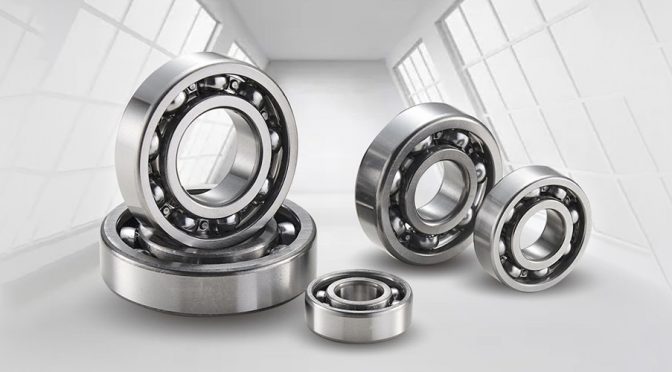
Deep groove ball bearings are the most commonly used bearing type and are used in a wide range of applications. They are everywhere from cars and bicycles to washing machines and refrigerators.

In this blog post, we’ll take a closer look at deep groove ball bearings, their construction, how they work, and some of the different types available. We’ll also discuss some of the benefits these bearings provide and give tips on how to choose the right bearing for your needs.

Before buying deep groove ball bearings, you need to know some information about deep groove ball bearings. Here is an overview of the most important points:

  • Deep groove ball bearings are designed to handle radial and axial loads, as well as moderate thrust loads
  • Available in open and sealed designs
  • The raceways of deep groove ball bearings are made of high-quality steel or chrome steel
  • They generally have low noise levels and long service life
6201-ZZ Small deep groove bearing odm - Yuanhe

What are deep groove ball bearings?

Deep groove ball bearings are used in a variety of applications from automotive to industrial machinery. They are also the simplest type of bearing. Deep groove ball bearings consist of an inner ring, an outer ring, and a set of balls. The balls are separated by cages or cages, and the bearings are lubricated with grease or oil.

Deep groove ball bearings are versatile and can withstand radial and axial loads. They can also operate at high speeds, making them ideal for high-speed applications such as electric motors. They are used in a wide variety of industries including automotive, mining, and manufacturing. Deep groove ball bearings are used in a variety of applications including:

  • Motor
  • Pump
  • Fan
  • Compressor
  • Conveyor
  • Crane
  • Mechanical

Types of deep groove ball bearings

Deep groove ball bearings are one of the most common bearing types in a wide range of applications. As their name implies, these bearings have deep groove raceways in which the balls roll.

This design allows very good radial load capacity as well as axial loads in both directions. They are used in a wide variety of industries including automotive, aerospace, and mining. Deep groove ball bearings are mainly divided into three types: single row, double row, and angular contact.

Single row deep groove ball bearings have the lowest load carrying capacity but are the most popular type due to their low cost. Double row deep groove ball bearings can handle higher loads but are more expensive. Angular contact deep groove ball bearings can handle higher loads but are more expensive.

Features of deep groove ball bearings

Deep groove ball bearings are the most common type of bearing. They are used in a wide variety of industries and applications. Deep groove ball bearings are usually made of steel or other materials, and they have raceways (inner or outer rings) that contain rotating balls. They have single or double-row balls. The balls are housed in metal rings called cages, and the bearings are usually lubricated with grease.

Several features of deep groove ball bearings make them ideal for many applications:

  • They can withstand radial and axial loads in both directions.
  • They have a deep groove that allows them to have a high-speed rating.
  • They are durable and require little maintenance.
  • They are versatile and can be used for many purposes.
Deep Groove Ball Bearing choose - Yuanhe

How do deep groove ball bearings work?

Deep groove ball bearings are named for their deep groove raceways. They have radial grooves that run the length of the bearing, and they have deep circular depressions in the outer ring. The balls sit in the recesses and rotate as the bearing turns.

The balls in deep groove ball bearings are usually made of steel. The balls are hardened to resist wear and remain lubricated through the inside of the bearing. Deep groove ball bearings are the most popular type of bearing and are used in a wide variety of applications. They feature deep groove raceways and a high level of durability and load-carrying capacity.

Deep groove ball bearings work by clamping the balls between the inner and outer rings. The balls rotate freely in the deep groove as the rolling elements of the bearing. The raceways are usually deeper than other types of bearings, allowing for higher load-carrying capacity.

What are the benefits of using deep groove ball bearings?

Deep groove ball bearings are one of the most common bearing types in a wide range of applications. They feature deep groove raceways and a high level of durability and load capacity. They are used in a wide variety of applications, from small electric motors to large machinery.

Deep groove ball bearings are easy to install and maintain and operate at high speeds. They are also relatively inexpensive, making them a good choice for many applications. Compared with other types of bearings, deep groove ball bearings offer several advantages of versatility and high performance, including:

  • Easy to install and maintain
  • Can run at high speed
  • Relatively cheap
  • Widely used in various applications
Deep Groove Ball Bearing solution - Yuanhe

Applications of deep groove ball bearings

Deep groove ball bearings are one of the most common bearing types in a wide range of applications. They are typically used in rotary applications where the load is radial or thrust. Radial loads can be static, such as in a spinning bicycle wheel, or dynamic, such as in a high-intensity electric motor. Thrust loads can be single-acting or double-acting, depending on the direction of the force.

Deep groove ball bearings are also used in other applications such as gearboxes, pumps, and compressors. In these applications, the load is usually radial, but can also be axial.

Deep groove ball bearings are used in radial and axial (thrust) applications to accommodate a wide range of speeds and loads. They are available in a variety of sizes and can be customized to meet the specific needs of an application. Deep groove ball bearings are used in a wide variety of applications, including:

Automotive

Bearings are used in a variety of automotive applications including wheels, transmissions, and differentials.

Aerospace

Bearings are used on airplanes to support loads and keep them spinning at high speeds.

Manufacturer

Bearings are essential components in many manufacturing applications. They are used to support load-bearing components and enable smooth, efficient movement.

Where to buy deep groove ball bearings–Yuanhe Transmission

Deep groove ball bearings are one of the simplest and most versatile bearing types available. Yuanhe Transmission is a leading manufacturer of deep groove ball bearings and other types of bearings for a variety of industries and applications.

Yuanhe Transmission is a leading supplier of deep groove ball bearings and other types of bearings used in various machinery and equipment. We offer deep groove ball bearings in a variety of sizes, styles, and designs to meet customer needs. Whether you need a single bearing for small equipment or multiple bearings for larger machinery.

In addition, Yuanhe also provides customized bearings to meet the specific needs of customers. Our team of experts can help you select the right bearing for your application and provide guidance on installation, lubrication, and maintenance.

This article provides a comprehensive overview of deep groove ball bearings. We’ve seen what they are, how they work, the different types available, and their applications. If you have any questions, please feel free to contact us. Our email address is sales@yuanhecd.com

Bearing: It’s What Makes The World Go Round

Bearing is a word often used in engineering and manufacturing applications. It refers to the ability of a machine or structure to support a load. The term can also be used more broadly to refer to something’s ability to withstand force or pressure. In this blog post, we’ll explore what bearings are and how important they are in the world.

What exactly is a bearing

What exactly is a bearing?

Bearings are an essential part of many machines, allowing two moving parts to move relative to each other with reduced friction. Bearings are usually made of metal, but can also be made of other materials such as plastic or ceramic. Bearings can be found in a variety of applications from automobiles to aircraft.

When selecting a bearing for a specific application, it is important to consider the load the bearing will be subjected to, the speed of application, and the operating environment. Depending on the application, other factors may also need to be considered, such as noise levels, vibration, and reliability.

The most common bearing types are ball and roller bearings. Ball bearings allow smooth rotation of the shaft, while roller bearings are better for high-load applications. Other types of bearings include thrust bearings to support axial loads and sleeve bearings for low friction applications.

The different types of bearings

There are many different types of bearings, each with a specific purpose. The most common type of bearing is the radial bearing, which is used in wheels and other applications that require smooth, fast rotation. Other types of bearings include axial bearings for shafts and other applications that require high precision and roller bearings for heavy machinery.

No matter what type of bearing you need, there is a product to meet your requirements. Bearings are essential components in many applications, and there are a variety of products to meet your needs.

There are many different types of bearings, each with its own advantages and disadvantages. The most common bearing types are ball bearings, roller bearings, and sleeve bearings.

Ball bearings are the most common type of bearing

They are capable of handling radial and thrust loads and can operate at high speeds. However, they are less suitable for heavy loads or high speed.

Roller bearings are similar to ball bearings but can handle higher loads

They are also capable of running at higher speeds than ball bearings. However, they are not as durable as ball bearings and can be damaged by shock and vibration.

Sleeve bearings are the most durable bearing type

They can handle high loads and shocks, but not at high speeds.

The Process of Bearing

The Process of Bearing

The bearing process is an important process for any company as it helps ensure efficient manufacturing and high-quality products. There are several steps involved in this process, from making sure the material is of the correct quality to making sure the assembly process goes smoothly. Let’s take a closer look at each step in the bearing process.

The first step is to make sure the material is of the right quality. This means that they should be able to withstand the loads that will be experienced during the bearing process.

The next step is to make sure the assembly process goes smoothly. This means the parts should fit together correctly and there should be no gaps or inconsistencies. Finally, the last step is to test the product to make sure it meets the requirements.

The importance of bearings

Bearings are critical components in many machines and equipment. They are used to support and reduce friction in moving parts, everywhere from cars and bicycles to roller coasters and elevators. Without bearings, many of the things we use every day would not function properly.

Bearings are usually made of metal or plastic and come in many sizes and types. The most common type of bearing is a ball bearing, which consists of a series of small balls that help reduce friction between moving parts. Another type of bearing is the roller bearing, which uses cylinders instead of balls.

No matter which type of bearing you need, it is important to choose one that is durable and designed for a specific application. The importance of bearings cannot be underestimated. Not only do they play a vital role in the smooth running of machinery, but they also help extend its life and improve its performance.

To wrap things up

In conclusion, bearings are essential components in a variety of applications. They are used to support rotating parts and reduce friction between moving parts. When selecting bearings, it is important to consider load, speed, and operating environment. With proper installation and maintenance, bearings can last for many years.

Selection of angle grinder bearings

The power of angle grinders is constantly increasing with the requirements of end customers. From the earliest 650W to the current highest 1250W. The increase in power also makes the selection of bearing subdivisions much higher. The bearing model is still represented by the Bosch angle grinder 6-100 angle grinder. Use 607 2RS, 607 ZZ, 608 2RS on the rotor, 606 ZZ, 6201 2RS on the head shell.

At present, the rotor speed of angle grinding is about 35000r/min-45000r/min. Under this high-speed working condition, there are higher requirements for the selection of our Yuanhe transmission bearing configuration. Generally, it is necessary to pay attention to the reasonable selection of bearing sealing form, clearance (radial clearance between steel ball and inner and outer rings), grease, steel ball and cage. Let us first talk about the selection of 607 2RS, 607ZZ and 608 2RS on the rotor of the angle grinder.

Selection of 607 2RS and 607ZZ at the rotor commutator end

Heat dissipation

Since the 607 2RS and 607ZZ bearings are wrapped in rubber sleeves, the time from rotor stagnation to running is shorter. 607 2RS, 607ZZ need to quickly dissipate the heat generated in the bearing chamber to avoid damage to the retainer, steel ball and other accessories inside the bearing chamber due to excessive temperature. Under this working condition, we will use high temperature and high speed grease (generally represented by Klüber Germany and Japan synergy) in the selection process to avoid the temperature generated during the high-speed operation of the bearing.

When some customers of the complete machine have done a good job of the dustproof structure at the end of the angle grinder, we will try to use the 607 ZZ product when choosing the commutator end bearing. Solving the problem of heat dissipation of the bearing itself has a very obvious effect. The cover of 607 ZZ bearing is iron, generally made of carbon steel. During the high-speed operation of the bearing, the temperature will be dissipated by the heat conduction of the cover, which has a good effect on the heat dissipation of the bearing.

Clearance

The clearance of 607 2RS and 607ZZ bearings (radial clearance between steel balls and inner and outer rings) should not be too large. The ditch rate of the bearing should not be too large. During the high-speed operation of the rotor, there will be an axial channeling force. 608 2RS bearing will damage the channel and steel ball of 607 2RS and 607Z bearing if the force exists for a long time. There is even a risk of the retainer breaking when the force is too great. Therefore, the selection of clearance and ditch rate must be calculated strictly according to the machining accuracy of the customer of the complete machine.

Selection of rotor blade end bearing 608 2RS

Clearance

The clearance of the 608 2RS bearing (radial clearance between the steel ball and the inner and outer rings) should not be too large, and the ditch rate of the bearing should not be too large. During the high-speed operation of the rotor, there will be an axial channeling force. Under the action of long-term axial force, the 608 2RS bearing will damage the channel and steel ball of the 608 2RS bearing. Even when the force is too large, there is a risk of the retainer breaking, so the selection of clearance and ditch rate must be strictly calculated according to the machining accuracy of the complete machine customer.

light touch

The seal selection of 608 2RS bearings is currently mostly light contact. The rotor blade end and the 608 2RS bearing are in direct contact with the gear box of the angle grinder, and there is grease for the gear in the gear box. During the high-speed operation of the rotor, the rotation speed becomes faster and faster, the grease temperature of the gearbox and the pressure inside the gearbox will also increase, and the state of the grease will also become thinner. The grease of the gearbox will enter the bearing chamber through the groove of the 608 2RS inner ring. When the grease of the gearbox enters the bearing chamber, the life of the bearing will be greatly reduced. Sometimes the grease enters the bearing chamber for 1-2 minutes, and the 608 In the 2RS bearing chamber, there will be damage to the channel, and the retainer will break, causing the bearing to be instantly stuck.

When choosing the rotor end 608 2RS of the fan blade, we must pay attention to the selection of the sealing structure. Sometimes 608 ZZ may not be used at the rotor blade end. If the manufacturer of the whole machine can make a good oil-proof structure to ensure that the 608 2RS bearing and the grease of the gearbox are not in contact, it can be selected.

Woolen material (PA66)

When selecting the 608 2RS bearing in the rotor part of the fan blade, the cage made of woolen material (PA66) should be selected. Because of the high rotational speed of the rotor, the heat generated by the bearing chamber needs to be dissipated. Since this part of 608 2RS is a sealing ring cover, the heat dissipation effect is poorer than that of the iron cover. In this case, we have to find a way to reduce the heat generation inside the bearing chamber. Using the wool retainer, the steel balls will reduce a lot of friction during the operation of the channel, thus reducing the heat generated inside the 608 2RS.

Summarize

In the selection of angle grinding rotor bearings, Yuanhe Transmission has senior complete machine design experts in the industry as selection consultants, and makes accurate selection based on the working conditions of end customers. In this issue, we will share with you the 607 2RS, 607ZZ, 608 2RS bearings on the angle grinder rotor. In the next issue, we will share the selection of angle grinder head shell bearings, so stay tuned.


Reason Why Bearings Fail & Preventative Measures

Operational situations in the bearing industry and production installations occur in many equipments. Operational and production units keep operations up and running. Despite the significant responsibilities being undertaken in the manufacturing process, they are at a critical stage in the process, but before failure occurs. Bearings are often not noticeable until a facility fails.

What is a bearing failure?

Simply put, bearing failure occurs whenever a bearing fails to live up to its expected life or calculated performance level. When a bearing fails to live up to its expected life or performance level, this often leads to machine shaft failure, and the machine it’s in can fail.

The consequences of bearing failure can have far-reaching consequences for your facility. These can include increased downtime, high maintenance costs, missed deliveries, and lost revenue. In some extreme cases, workers can be injured.

A most common cause of bearing failure

In practice, damage or failure of bearings is often the result of the simultaneous operation of multiple mechanisms. Failures can be due to improper assembly or maintenance or manufacturing errors in the bearing or its adjacent components.

Improper lubrication procedure

This should be one of the first reasons to consider when inspecting a failed bearing. To ensure proper lubrication, there must be sufficient viscosity at operating temperature. Lubrication prevents metal-to-metal contact, prolongs service life, and prevents contaminants from entering the bearing housing.

However, using too much grease is as bad as not using lubricant at all. Over-lubrication is often the culprit in bearing failure as it leads to increased energy loss, elevated temperatures and oil seepage.

Improper lubrication procedure

Lubrication failures can also occur when the operator

Using the wrong type

Not enough

Allows lubricant to come in contact with water or other contaminants

It is also important to consider the service life of the grease, which is referred to as “how long a specific quantity and class of grease will maintain normal bearing function”. This is especially important in pumps, compressors and motors.

Lubrication failures can also occur when the operator

Corrosion and pollution

Contamination is caused by foreign matter entering the bearing lubricant or cleaning solution. Contaminants such as dirt, sand, water and chemical compounds can cause many problems in bearing assemblies.

For example, they can degrade lubricants or corrode/erode bearing surfaces, all of which can lead to premature failure. Moisture, acids, poor or damaged grease, poor packaging and condensation from excessive temperatures can cause corrosion, which can erode the finished surfaces of the ball and roller bearings.

Corrosion and pollution

overheat

Overheating is usually caused by excessive operating temperatures and improper lubrication. High temperatures can cause grease to bleed (remove oil), reducing the efficiency of the lubricant. At high temperatures, oxidation can cause the oil in the grease to run off, leaving behind a dry crusty soap that can seize the bearings. Higher temperatures also reduce the hardness of the metal, leading to early failure.

overheat

Improper installation

When installing bearings, be sure to use the correct tool and verify shaft and housing tolerances. When the fit is too tight, too much preload is created. When the fit is too loose, too little preload is created, causing the shaft to rotate in the bearing. Misalignment or shaft deflection should also be avoided.

Bad fit

It is critical that the bearing is properly installed on the dimensionally accurate shaft. If not, it can cause problems in two ways:

  • If the shaft is oversized or expanded, it will result in an overtight fit, reducing the bearing’s internal clearance (see below for details).
  • If the shaft is undersized or the fit is too loose, the bearings will creep on the shaft and wear and generate heat, eventually causing vibration and runout problems.

Bearing Failure Prevention Measures

Bearings have a fairly long life under normal operating conditions, but since they do have a fixed life, it is inevitable that bearings will eventually fail. Knowing why bearing failures occur makes it easier for industry professionals to implement appropriate measures to avoid them.

Why it is important to install and align bearings correctly?

Proper tools, ovens and induction heaters must be used during bearing installation and installation. Consider avoiding misalignment or shaft deflection as this is important when mounting bearings with separate parts. If the components are not properly aligned, the bearings will eventually experience abnormal wear.

The best practice to keep in mind is to solid flush the bearing and clean it with lubricant. Also, be sure to apply the last proper amount of grease before using the machine.

  • Lubricate according to manufacturer’s guidelines

Lubrication is used on bearings to completely cover rolling and sliding surfaces with a thin oil film to prevent metal-to-metal contact. Grease is more commonly used because it is easier to handle, while oil lubrication is often used for high temperature or high-speed applications.

Correct and effective application of lubrication can help reduce problems such as friction and wear, transfer heat from friction, extend service life, prevent rust and corrosion, and keep foreign objects and contaminants away from rolling elements.

  • Prevent operating pressure

Operating pressure on the bearing can affect bearing life. If the load on the bearing is too low, it will result in rolling element slippage and improper loading. If the load is too high, overloading and early fatigue may result.

Lubrication failures can also occur when the operator

Often the first sign of such a problem is unusual noise and/or high temperature. The ideal bearing temperature is below 100 degrees Celsius. It is important to note that bearing temperatures typically increase with startup and remain flat at slightly below startup temperatures (10 to 40 degrees Celsius above room temperature).

This is why it is crucial to ensure that vibrations are isolated in the associated equipment, as if not isolated, they can cause abnormal noise and uneven operation.

Why choose Yuanhe to meet your bearing needs?

Bearings are an essential part of many industrial equipment and systems, so proper selection and maintenance of them are critical. Otherwise, the facility may experience unexpected failures resulting in lost productivity and profits. Since bearing applications vary from company to company, it can be difficult to choose the right product. Fortunately, the experts at Yuanhe Bearing are here to help you.

The Yuanhe team is fully committed to ensuring that every customer gets the right bearing at the right price to meet their needs. To learn more about our bearing products and services, please contact us today. To discuss your application requirements with one of our experts, please request a quote.

Development and Prospect of Electric Drive System of New Energy Vehicles

In the 21st century, driven by national policies and environmental protection needs, new energy vehicles have become a hot object of industry and capital. Unlike traditional vehicles, the most important core system in new energy vehicles has changed from an internal combustion engine to an electric drive system.

On May 19, 2015, the State Council officially issued “Made in China 2025”, which proposed the technical roadmap of key areas: electric drive system technology, breakthroughs in motor and transmission, inverter integration and high-integration electric drive system dedicated transmission and other technical problems.

In 2017, the Ministry of Industry and Information Technology, the Ministry of Science and Technology, and the National Development and Reform Commission jointly issued the “Mid- and Long-Term Development Plan for the Automotive Industry”.

In “Breakthrough in Key Areas and Leading Industrial Transformation and Upgrading”, it emphasized the deployment of tasks in 6 innovation chains including motor drive and power electronic assembly. . It can be seen that the electric drive system will become an important benchmark for competition among new energy vehicle companies.

Development Status of Electric Drive System at Home and Abroad

Foreign mainstream pure electric car companies, such as GM, Volkswagen, Renault, Tesla, Nissan, etc., have all carried out the development and application of electric drive systems. Representative models include BOLT II,E-GOLF E-GOLF, ZOE IIZOE II, Model SModel S, LEAF second generation and so on. Foreign car companies mainly adopt the method of self-integrated design of electric drive systems, but the components are mostly supported by the supplier system.
Domestic auto companies have also carried out relevant research, with integrated electric drive systems as the main direction, outstanding representatives include Changan, BYD, SAIC Motor, Geely, etc.

Changan EV460 rides on its own 100kW three-in-one electric drive system

Changan EV460 rides on its own 100kW three-in-one electric drive system

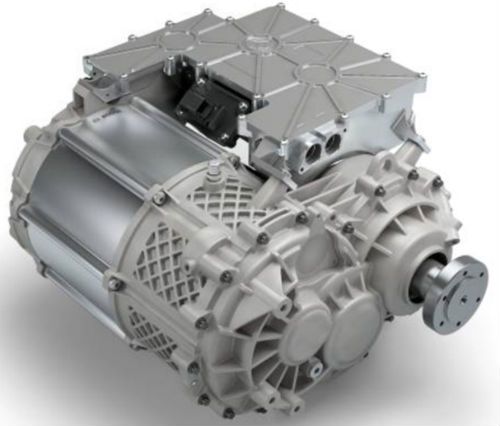
At the same time, major foreign auto parts giants are aiming at the electric drive system market and are racing to launch products. Continental, BOSCH, ZF, MAGNA, Valeo Siemens, etc. have all launched 70~150kW electric drive systems in the Chinese market and won orders from domestic OEMs.

The electric drive system of a foreign component manufacturer

The electric drive system of a foreign component manufacturer

Domestic component companies are not far behind in terms of integrated electric drive systems, including Shanghai Electric Drive, Beijing Jingjin, China CRRC, etc., all launched two-in-one or three-in-one electric drive systems during the same period.

Trend analysis

Integrated integration

The electric drive system includes a motor, a reducer and a motor controller. The previous split-type electric drive system has the disadvantages of large volume, low efficiency and high cost. In the next 3-5 years, the three-in-one integrated electric drive system will become the mainstream.

Foreign integrated electric drive systems will focus on mass production in the next 2 to 3 years and enter the Chinese market substantially, which will have a big impact on the domestic electric drive market. This impact is not only reflected in technology and price, but also in market annexation and corporate alliances.

High-speed motor

At present, the maximum speed of the motor of electric drive products on the market is about 12000rpm. However, with the development of motor technology and consumers’ pursuit of driving experience and driving efficiency, higher-speed motors will become inevitable. Motors with more than 15000rpm have been partially listed, and are gradually applied in some high-positioned models, such as the Tesla series, Weilai ES8, etc.

The large speed ratio of the reducer

The rise of electric vehicles in the Chinese market has lowered the threshold for OEMs to master speed reducers to some extent. Due to the difference between the motor and the traditional internal combustion engine, the electric vehicle can use a single-speed reducer to ensure the effective use of the motor in a large speed range.

The speed ratio of the existing electric vehicle reducer is usually about 10. However, as the motor speed becomes higher and higher, the speed ratio of the reducer will reach more than 15. At this time, the single-speed ratio reducer will be more and more unable to meet the needs of the market. Therefore, a large speed ratio, two-speed or multi-speed reducer will become the development direction of the future electric drive system reducer.

Application of new technology

The rapid development of new energy vehicles directly drives the innovation of upstream and downstream technologies; at the same time, breakthroughs in new technologies will also promote the upgrade of new energy vehicles. Reflected in the electric drive system, related new technologies include motor Pin winding technology, low-loss silicon steel technology, double-sided water-cooled IGBT, silicon carbide precision ceramics, etc.

Epilogue

Domestic new energy vehicle companies and parts companies are currently in a critical period of development.

On the one hand, traditional car companies are gradually transforming, vigorously developing electric vehicles, and striving to gain a firm foothold in the new market war; on the other hand, emerging new energy car companies have sprung up, absorbing a lot of social capital, trying to get a piece of the pie. , there is a lot of momentum. But behind the prosperity, is the collapse of the core technology.

Among domestic car companies, there are not many companies that have mastered the independent design, independent integration and independent manufacturing capabilities of electric drive systems.

Many Internet car manufacturers have “finished” the shortcomings of electric drive systems through outsourcing and outsourcing, but they will inevitably be at a disadvantage in the long-term market competition.

In addition, the core components (such as IGBTs, etc.) in the electric drive system are still in the hands of foreign oligarchs (such as Fuji and Infineon). Domestic auto companies should fully realize the importance of key technologies and master the core technologies independently. Determine their respective seats in the new energy market pattern.