
 English
 French
 German
Why the Mounting Surface Matters as Much as the Bearing
Assembly Desk
Mounting surface flatness decides how much of the bearing you paid for actually reaches the raceway, and it is the one variable most assembly jobs never measure.
A ring that seats on high spots only is a ring that bends. The bearing still turns, still feels smooth by hand, and then runs loud, warm, and short. This page covers what an uneven face does, how to check one, and why the two bearing families respond differently.
01The Surface Is Part of the Bearing
A bearing transfers load through a thin contact band, so anything that distorts the ring distorts that band. The ring is stiff, but it is not rigid. Bolt it against a face that is high in the middle or low at one corner and it takes the shape of the face.
This is why a bearing drawing specifies a seat, a shoulder, and a face, and why a machine drawing specifies a flatness or contact requirement on the same face. Ignore the second half of that pair and the bearing is being asked to correct a machining error with its own elastic deformation.
02What an Uneven Surface Does to the Rings
The effects arrive in a sequence. Each one makes the next worse, which is why a badly seated bearing rarely fails for a single reason.
Point contact instead of a full seat
The ring touches the face at the high spots. Clamp load goes through those spots, and the rest of the ring face is doing nothing. On a thin ring the clamping force bends the ring between the high spots rather than flattening the face.
Local deformation of the ring
A bent ring has a raceway that is no longer a circle in its own plane. The balls or rollers now run over a wave, and the load per rolling element changes as they go around. That is a fatigue cycle added to every revolution.
Preload that leaves and does not come back
A preloaded bearing depends on the ring holding its shape. Bend the ring and part of the preload is spent on the bend. The joint feels tight at assembly and behaves like a loose one under load, which is the hardest kind of fault to find later.
Heat and noise
A distorted ring runs with a changing contact angle, more sliding, and uneven load. The result shows up first as noise at a particular speed, and then as a housing that runs warmer than its twin on the same machine.
03How to Check a Mounting Face
Three checks cover almost every case. They cost less than an hour, and one of them needs nothing but a marker compound and a clean rag.
The blue check
Wipe a thin film of marking compound on the face, seat the ring or a mating straight edge, and turn it a few degrees. Lift it off and read the pattern. Contact at the high spots only, or contact in a ring with a gap in the middle, means the face needs work.
Feeler gauge and straight edge
Lay a straight edge across the face in two directions at right angles and try a feeler gauge at the middle and at each end. This finds a hollow face or a crowned one. It will not find a twist, so repeat the check on the diagonal.
Dial indicator and bolt order
Set a dial indicator on the ring face after the first snug bolt, then bring the bolts up in a diagonal sequence in steps. Watch the needle as each step is taken. A face that lifts the ring as the bolts come down is a face that is not flat, even if it looked flat on the bench.
Bolt order is part of the measurement, not a separate habit. Working around the circle in sequence pulls one side down first and tips the ring. Diagonal steps, brought up evenly, let the face show its true shape before the ring is clamped hard.
04Crossed Roller Bearings Feel This More
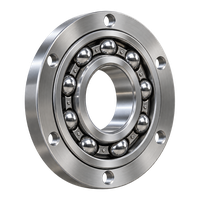
A crossed roller bearing with integrated inner and outer rings is set to a preload at the factory. The rings are thin in section, the rollers are line contacts, and the stiffness the design promises comes from both of those facts.
Thin rings follow a bad face closely, and a line contact cannot average out a wave the way a point contact can. Bend the ring and the preload is no longer shared evenly between rollers, so a few of them carry most of the load while the rest go light and start to skid.
The bore matters too, but the face is the one that gets skipped. A bore can be gauged in seconds. A face needs a straight edge and a marking compound, and neither is usually within reach of the assembly bench.
In a rotary table or a robot joint, that shows up as lost stiffness and a positioning error that changes with the direction of approach. The preload itself is explained in our article on crossed roller bearing preload, and the same page explains why a bent ring cannot be re-shimmed back to health.
05Deep Groove Bearings Tolerate It, Up to a Point
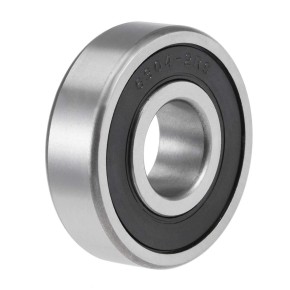
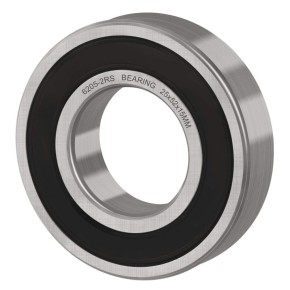
A deep groove ball bearing is more forgiving. The rings are thicker, the contact is a point, and the bearing can absorb a small amount of face error without losing its fits. A 6205 bearing in a machined pump bracket will sit through a small step that a thin section ring cannot. That tolerance is real, and it is also where a lot of noise complaints start.
Thin section sizes are the exception. A 6304 bearing in a cast housing has enough section to resist a small wave. A thin ring in a servo housing does not, and a clamp that is not square will distort it before the first run.
The practical rule is the same for both families. Check the face, correct the face, then fit the bearing. Do not use a bearing to pull a bad face straight, and do not add shims under a ring to compensate for a hollow seat.
06Three Checks Before Assembly
These are the last three things to do with the parts still on the bench. Each one takes minutes and each one closes a failure path.
• Clean and deburr. A chip or a rolled edge at the shoulder is a high spot by definition, and it will mark the ring face on the first clamp.
• Confirm the face with the blue check, in two directions, after cleaning. Read the pattern rather than the size.
• Fit, torque in diagonal steps, then recheck the ring face and the shaft end play with a dial indicator before the machine is closed up.
If a face fails the check, machine it or replace the part. A face that has been hand filed flat is a face with no record and no guarantee, and the next bearing will be the one that measures it.
Engineer note on cast housings
A machined face and a cast face are not the same seat. A cast boss that was never machined can look flat and still be crowned, and a gasket under a bearing cover changes the clamp path. Confirm which face the drawing controls, and check that one. If the arrangement is unclear, send the housing drawing and we will mark the face that carries the preload.
07Frequently Asked Questions
How flat does a mounting face need to be?
Flat enough that the ring seats with contact across its face when clamped, at the preload the design uses. The drawing should state the requirement on the face. If it does not, the blue check tells you whether the face you have is good enough for the duty.
Can I use a gasket or shim to correct a bad face?
A shim corrects a gap, not a shape. Under a clamped ring a soft shim compresses unevenly and lets the ring tilt. Fix the face, then use the shim only for the height the drawing calls for.
Why does the bearing run quiet on the bench and loud in the machine?
Because the machine clamps it. A ring that is free on the bench is round. Bolted against a face that is not flat, it takes the shape of the face and the raceway becomes a wave. That is the most common reason a good bearing sounds bad after assembly.
Does bolt torque matter as much as bolt order?
Both matter, and order comes first. Correct torque applied in the wrong sequence still tips the ring. Bring the bolts up in diagonal steps to the specified value, then check the ring face again.
Do crossed roller bearings need a different check?
They need the same check with less tolerance for error. The rings are thinner and the preload is built in, so a face that a deep groove bearing would accept can cost a crossed roller bearing its stiffness.
Send the housing drawing and the seat measurements, and we will confirm the face, the shoulder, and the fit before the bearing is ordered. Contact our engineers.



Related Products