
 English
 French
 German
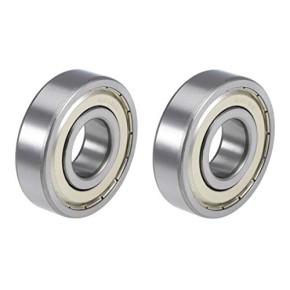
Deep Groove Ball Bearing Catalogue
Reference Document
A deep groove ball bearing catalogue is a reference document, and like any reference it is only as good as the reader using it. Two people can open the same file and come away with different part numbers, because one read the footnotes and the other did not.
This guide covers what a complete catalogue should contain, how to move from a page to an orderable part, what to do when the book and the physical bearing disagree, and the three items to request alongside any file a supplier sends. It applies to printed books, PDFs and web tables equally.

01What a Catalogue Is and Is Not
A catalogue is a map of a product range, whether it covers deep groove ball bearings or a wider portfolio. It tells you what exists, in what sizes, with which options. It does not tell you what is in stock, what the price is, or what lead time applies to your quantity. Those three come from a quote, not from a page.
The confusion costs time on both sides. A buyer picks a row, sends the designation, and expects a price for the exact part. The supplier reads the designation, sees no suffix, and quotes the standard build, which may be open, CN clearance and a general purpose grease.
So treat the catalogue as the input to an inquiry, not the answer to one. That single habit removes most of the back and forth before a first order.
02The Sections a Complete Catalogue Has
A well built catalogue has six sections, and a file missing any of them leaves you guessing later. Use this list as an audit next time.
| Section | What it should contain | What to check |
|---|---|---|
| Designation system | Prefix, series, bore code, suffix | Whether the suffix list matches your options |
| Dimension tables | Bore, outside diameter, width, chamfer, mass | Units and the order of the three figures |
| Load ratings | Dynamic Cr and static Cor per size | Whether ratings are per row or per bearing |
| Speed limits | Grease and oil figures, sealing condition | Whether the figure assumes open or sealed |
| Option tables | Clearance, precision, cage, sealing, lubrication | Whether options apply to every size |
| Tolerance pages | Tolerance class definitions and values | Which class the quoted part actually meets |
The Designation System Page
This page is where most misorders start and where most of them could be avoided. It should list every prefix and suffix the range uses, in one place, with a plain description of each. If the page only shows the base numbers and leaves the suffixes to the sales team, the document is incomplete.
Read it before the dimension tables. A row that says 6204 and a row that says 6204 2RS can sit on the same page with the same dimensions and be different parts in service. The 6205 bearing page works the same way, with sealing and clearance listed as separate fields rather than as part of the size.
The Dimension Tables
Dimension tables are the part everyone reads and the part most often misread. Confirm three things before you trust a row. The unit is millimeters, the order is bore then outside diameter then width, and the width figure includes any flange or snap ring groove that changes the envelope.
A catalogue that lists width without saying whether the figure covers the shield or the seal will eventually produce a part that does not fit a pocket cut to the drawing. That is not a tolerance problem, it is a documentation problem.
03From a Designation to an Orderable Row
The jump from a name to a part number takes three steps, and each one drops information if you let it.
1. Find the size row. Bore from the shaft, outside diameter from the housing, width from the pocket. Match all three, not just the bore.
2. Apply the suffix. Sealing, clearance, cage and precision each change the designation and often the speed limit.
3. Confirm the combination exists. Many catalogues list options that are available only above a certain size, or only in one sealing type.
A part such as the 6004 bearing shows why this matters. The base size is 20 x 42 x 12mm and 69 g, and the sealed version runs to a lower speed limit than the open one. Same row, two different answers, depending on which column you read.
04The Option Pages Buyers Skip
Clearance, precision and lubrication pages look administrative. They are the pages that decide whether the bearing runs at the temperature you designed for, so they deserve a read before the first order rather than after the first failure.
| Option | What the page defines | What to fix before quoting |
|---|---|---|
| Internal clearance | C2, CN, C3, C4 groups and their ranges | The group, not a description of tight or loose |
| Precision | ABEC classes with tolerance values | The class that matches the shaft fit |
| Cage | Steel, brass or polymer, riveted or snap | The type, if the duty is shock or high speed |
| Sealing | Open, shield, contact seal, labyrinth | The type and whether it changes the speed limit |
| Lubrication | Grease grade, fill, oil viscosity | The grade and the fill percentage |
Why the Speed Table Needs a Second Look
Speed limits in a catalogue are conditional even when they look absolute. A single figure usually refers to one lubrication method and one sealing type, and the same size will carry two or three figures when the table is complete.
If the page gives one number, ask what it assumes. A 6305 bearing and a thin section part in the same bore class do not share a limit, and neither do the sealed and open versions of a single size.
Why Load Ratings Need a Footnote
Cr and Cor are defined under test conditions that a real machine rarely reproduces. The footnote tells you what those conditions were, and whether the figure is per bearing or per row in a multi row design. For a double row part, that distinction changes the number by a factor close to two.
05What a Version Number Tells You
Every catalogue should carry an edition or revision date, and it belongs on the page you are reading, not only on the cover. Sizes get added, options get discontinued, and a page from three revisions ago can list a combination that no longer exists.
When two documents disagree, the newer one wins, and the inquiry should say which edition you used. That one sentence prevents a quote built on a superseded row.
06When the Catalogue and the Bearing Disagree
It happens more often than suppliers admit. The bearing in your hand has a suffix the catalogue does not list, or the catalogue lists a width that does not match the part on the bench. Work through four checks before assuming either side is wrong.
• Measure the part, not the label. Bore, outside diameter and width with a caliper. A worn or reprinted label is not evidence.
• Read the suffix again. A stamped mark can be a manufacturer code rather than a standard suffix, and the two are not interchangeable.
• Check the edition. An older catalogue may predate the current build. Compare the revision dates, not the cover designs.
• Ask for the drawing. A dimensional drawing settles what a table cannot, especially where a shield or a snap ring changes the envelope.
If the part is a replacement for an existing machine, send a photo with the caliper reading. It is faster than three rounds of description and it removes the guesswork from the supplier side as well.
07Three Things to Ask For With Any Catalogue
A file on its own is half the information. Ask for these three items at the same time, and the document becomes usable.
1. The version and date. Edition number, revision date and the date of the page you were sent. Without it, nobody can tell whether the row is still current.
2. The table convention. Unit, the order of the three dimensions, and whether the width includes shields or seals. This is where most fit problems begin.
3. The option matrix. Which options exist for which sizes, and which combinations are non standard. A catalogue that lists options without a matrix invites orders that cannot be built.
Ask for the tolerance page too if the application is a spindle or a gearbox shaft. A general tolerance part and a precision part can share a designation and a dimension row and still not interchange in a tight housing.
08Turning a Row Into an Inquiry
A catalogue row becomes a quote request when five fields are present. Miss one and the supplier either asks or guesses, and guessing is the slower path for both sides.
| Field | From the catalogue | What you add |
|---|---|---|
| Designation | Size plus suffix | The exact suffix you need |
| Dimensions | Bore, outside diameter, width | A confirmation that they match the drawing |
| Load | Cr and Cor for the row | Your radial and axial load estimate |
| Speed | Limit for the sealing and lubricant | Your running speed and duty cycle |
| Options | Clearance, precision, cage, grease | The class and grade you want quoted |
Then add the two fields the catalogue never carries: quantity and delivery expectation. A supplier quoting five pieces prices a different part than one quoting five thousand.
A worked example. Row 6004, 20 x 42 x 12mm, sealed, C3, ABEC-3, grease filled, 2,000 pieces per year in batches of 500. That line comes back as a price and a schedule.
09Questions Buyers Ask About Catalogues
Is a catalogue the same as a price list?
No. A catalogue defines what exists and what it measures. Price, stock and lead time come from a quote against a specific quantity and delivery point.
Can I order straight from a catalogue row?
You can start an order from a row, but the row describes a size rather than a finished part. Add the suffix, clearance, precision and lubrication, or the supplier will quote a standard build.
Why do two catalogues list different widths for the same designation?
Usually because one figure includes a shield or a seal and the other does not, or because the editions differ. Compare the revision dates and the footnotes before you assume an error.
What if my part number is not in the catalogue?
Send the drawing or the measurements. A non standard variant is often a standard size with a special feature, and the supplier can confirm whether it can be built from the standard tooling.
Does Yuanhe publish a catalogue for the full range?
Yes. Ask us for the current edition with its revision date, the tolerance pages and the option matrix. If a size you need is not listed, send the drawing and we will tell you whether it can be made.
10Reading It Once, Ordering It Right
Most ordering errors trace back to a document that was skimmed rather than read. The designation page, the width convention and the speed footnote are three pages that decide whether the part on the dock matches the one in the drawing.
Read those three first. Then use the tables for the shortlist, and treat anything beyond it as a conversation with a supplier who can confirm what the page cannot.
Ask for the current catalogue
We will send the latest edition with the revision date, the tolerance pages and the option matrix, so you can check a row before it becomes an order.
If you already have a row in mind, send the designation with the options and the quantity. A part such as the 6804 bearing or any other size in the range can be quoted from that line.



Related Products