
 English
 French
 German
Bearing Vibration Analysis for Early Fault Detection
Field diagnostics
Bearing vibration analysis gets sold as a specialist service with its own vocabulary. Most of what decides the outcome on a plant floor is simpler: a reading taken the same way every time, compared against the same position months earlier.
The instrument is the easy part. The harder question is which change deserves attention and which one is just the machine breathing.

01What a Reading Actually Measures
A sensor on the housing picks up movement in the structure, not the rolling contact itself. Every ball passing a defect, every cage rattle, and every loose fit adds its own rhythm to that movement.
That is why the same number means different things on different machines. A value that is unremarkable on a slow fan can be a warning on a spindle, and the reverse is just as true.
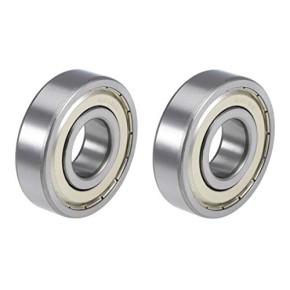
Most of the positions a route covers are deep groove ball bearings in pumps, fans, and conveyors. Those are also the positions where an early signal is easiest to catch, because the machine around them is usually steady.
02Start With a Baseline, Not a Limit
The useful comparison is a position against itself over time. Take a reading when the machine is known good, note the load and speed it was running at, and keep that record with the machine history.
Published severity scales exist and they help with a first sort. They are written for broad machine classes, not for your pump on your foundation. Use them to decide where to look next, never to decide what to replace.
A route does not need many points. Six or eight well-chosen positions on the machines that stop production are worth more than a hundred readings nobody compares against anything.
Take the Reading the Same Way
Same point, same direction, same mounting. A sensor held by hand against a curved casting and a sensor bolted to a flat pad return different numbers, and mixing the two destroys the only thing a trend depends on.
Record the Operating State
Write load, speed, and housing temperature beside every reading. A trend that climbs because the machine moved to a heavier duty is not a bearing problem, and you will only spot that if the state is written down.
03Stage One. Something Changed, Nothing Hurts Yet
Early damage is quiet. A small spall on a raceway or a lubricant film that is thinning changes the high-frequency content long before the housing starts to move in any way a hand can feel.
On a spectrum this shows as a low peak at a frequency that was not there before, while the overall level barely shifts. Teams miss it because they only watch the total number, which is the least sensitive part of the picture. On a common motor size such as the 6204 bearing that change can sit in the spectrum for weeks before anyone hears it on the floor.
What to Do at Stage One
• Recheck the lubrication route and the condition of the grease in the housing.
• Confirm the reading came from the same point, direction, and mounting as the baseline.
• Shorten the inspection interval and keep recording, so the next change is caught early.
• Do not book a shutdown on one reading. A single point is a question, not a conclusion.
04Stage Two. The Pattern Repeats
Once a change repeats across several readings, it is real. The peak at the defect frequency grows, and sidebands appear around it, which usually points at a developing fault on one raceway rather than general wear across the bearing.
This is the window where planning pays. You still have time on your side, enough to book a window, stage a spare, and brief the crew instead of reacting at two in the morning.
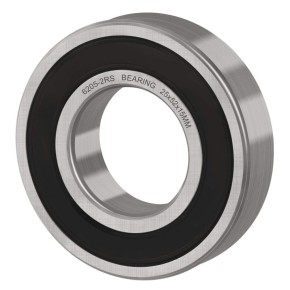
A position running a 6205 bearing on a fan or a small pump is a good example. The part is cheap and the swap is quick, but only if the spare is already on the shelf when the trend bends.
What to Do at Stage Two
• Add the position to the weekly route rather than the monthly one.
• Check the fit and the mounting before blaming the bearing, since a loose housing mimics a fault.
• Confirm the spare part number against the drawing and put one unit aside.
• Agree a trigger with production, so the swap is planned rather than forced.
05Stage Three. The Machine Speaks for Itself
Late stage vibration is not subtle. The overall level climbs, the noise becomes audible over the machine, and the housing runs warm to the back of a hand. Impacts from a broken surface arrive as a train of peaks rather than a clean tone.
At this point the decision is about the machine, not the bearing. Continuing to run risks the shaft, the housing bore, and everything the machine drives. A bearing is a consumable. A shaft journal is not.
Pull the part and look at it before the replacement goes in. The mark on the raceway tells you whether the trend you watched came from lubrication, from the fit, or from load, and that answer decides whether the next one lasts longer than this one did.
06Read the Frequency, Not Only the Level
Two machines can show the same overall level with completely different problems. The frequency content is what separates them, and it usually points at a cause rather than a number.
| Pattern | What it usually points to | Check this first |
|---|---|---|
| Peak at shaft speed | Unbalance, a bent shaft, or a worn coupling | Balance, coupling condition, shaft and hub fit |
| Peaks at multiples of shaft speed | Misalignment or a distorted housing | Shims, soft foot, pipe strain on the housing |
| High-frequency rattle with no clear peak | Starved lubrication or a cage problem | Grease condition, fill level, seal drag |
| Repeating impacts at a fixed interval | A local defect on a raceway or a ball | Repeat the reading at the same load and speed |
| Broad rise across the whole band | Looseness or a worn fit | Housing bore, shaft fit, fastener torque |
This table is a sorting aid, not a diagnosis. It tells you which question to ask next, and the answer still comes from the machine.
07Where Handheld Checks Fall Short
A handheld meter returns a number in seconds, which is genuinely useful on a walk-around. It is not useful for a trend on a machine that matters, because the measurement conditions drift with the person holding it.
Fixed sensors, or route measurements taken with one instrument and one set of settings, are what make a trend readable. If three people share a meter, agree the settings and write them on the case.
Small machines punish sloppy technique hardest. A 6004 bearing in a compact fan runs at high speed with very little mass around it, so a change in mounting pressure shows up as a change in the reading.
08When to Pull the Bearing
The trigger should be a combination, not a single number. A rising trend, a repeatable defect frequency, and a change in temperature or noise together justify a planned replacement.
If the only signal is a level that crossed a line on a chart, wait for the next reading and look at the frequency again. Replacing parts on a number alone is the most expensive habit in a vibration program, and it hides the real fault for another season.
For a heavier position, the same logic applies with more at stake. A 6305 bearing carrying a loaded shaft will show the pattern earlier in the spectrum than in the overall level, which is exactly why the spectrum is worth reading.
09Questions From Maintenance Teams
Can I judge a bearing from the overall level alone?
No. The overall level rises late, after damage is already established. The frequency content moves first, and that is where an early call comes from.
How often should readings be taken?
Often enough that two consecutive readings can be compared on a machine that matters, and rarely enough that the route actually gets walked. Priority and running hours set the interval, not a fixed rule.
Does a noisy bearing always show up in vibration?
Not always. A dry bearing can be loud without a strong structural signal, and a sealed part can hide a cage problem. Treat noise, temperature, and vibration as three views of the same position.
What if the trend jumps and then returns to normal?
Check the operating state first. A change in load, a cold start, or a sensor that moved will produce exactly that pattern. If the state was the same and the jump repeats, treat it as real.
Send the record
If a position has been climbing for months and nobody can agree on what the readings mean, send us the history. Point, direction, dates, and the load and speed at each reading are enough.
Write to sales@yuanhecd.com or use the contact form. We will tell you what the pattern suggests and what to check before the next shutdown.



Related Products