

 English
 French
 German
Deep Groove Ball Bearings for Conveyors and Material Handling
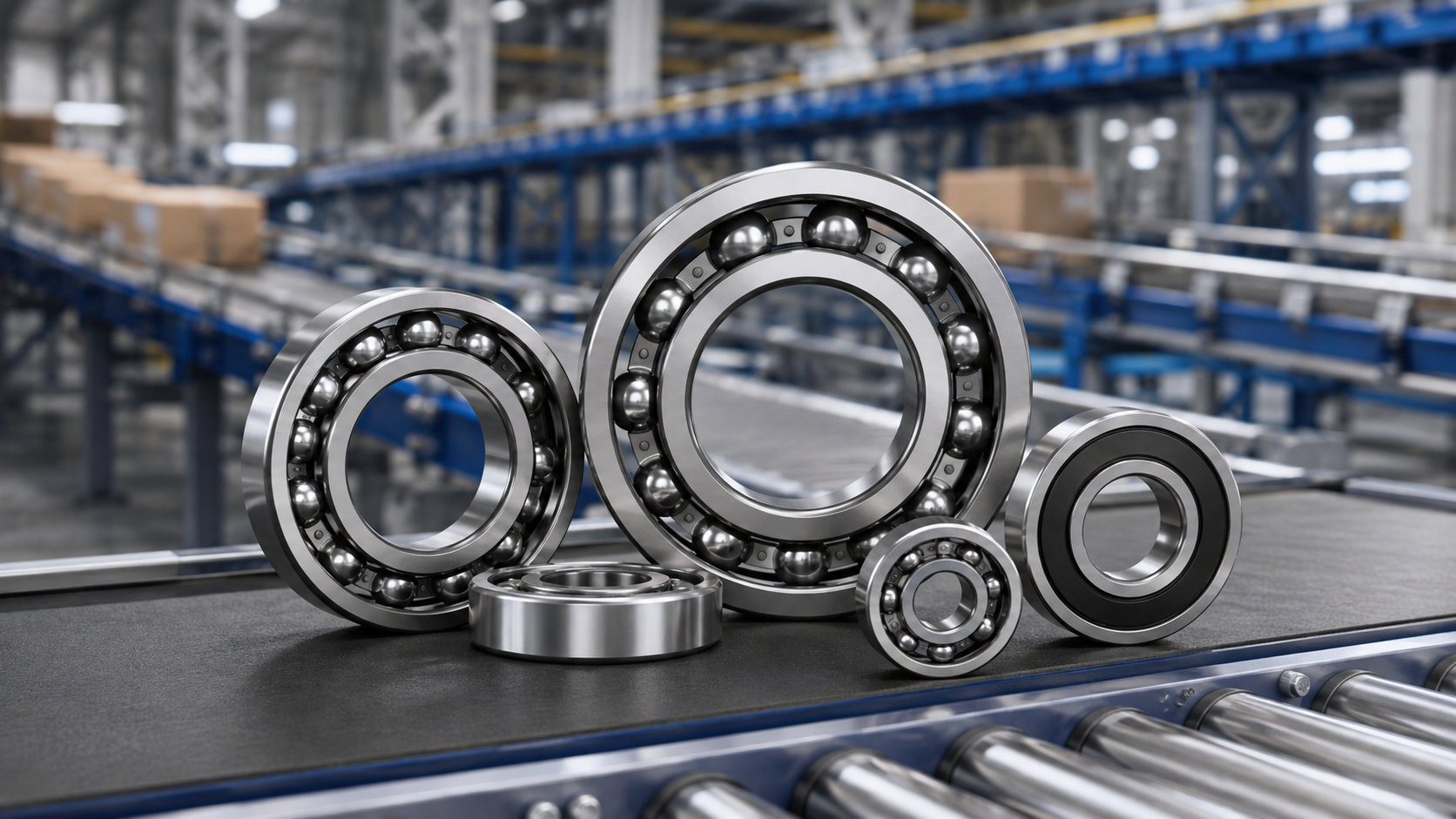
Deep groove ball bearings for conveyors keep rollers, pulleys, and drives turning in some of the dirtiest conditions in a factory or warehouse. Dust, grit, and moisture sit on every moving part, and the line rarely stops. This guide covers where they fit and how to pick bearings that survive the duty.
1Where Bearings Work on a Conveyor
A conveyor has several rotating points, and each one needs a bearing that fits its job.
Head and Tail Pulleys
The head pulley drives the belt, and the tail pulley guides it back. Both spin under belt tension, so their bearings carry a steady radial load. Sealed deep groove ball bearings are the common choice here because they run quietly and hold up to continuous turning.
Idler Rolls
Idler rolls support the belt and the load between the pulleys. A long conveyor can have dozens of idlers, so these bearings see constant light-to-moderate load. They also collect the most dust, which makes sealing the deciding factor.
Drive Units
The drive unit couples a motor to a gearbox to a pulley. The motor and gearbox shafts ride on deep groove bearings sized for the speed and load of the drive. These bearings sit in a cleaner spot than the idlers but still need protection from airborne grit.
2What Conveyor Duty Demands From a Bearing
A conveyor bearing does not fail from one big event. It wears out slowly from the environment it runs in.
Dust and Grit
Bulk material handling throws fine dust everywhere. That dust works into any open bearing and grinds the balls and raceways. A sealed bearing keeps the grit out, which is why open bearings rarely last on a conveyor.
Continuous Running
Many conveyors run for shifts at a time, sometimes around the clock. That steady running generates heat and demands a bearing that stays lubricated. Grease that is packed correctly at the factory lasts far longer than a bearing that needs constant attention.
Load and Speed
The load varies from light on a parts conveyor to heavy on a bulk material line. Speed also varies widely. A deep groove bearing matches both well because it handles moderate radial load and higher speeds without special design changes.
3Seals and Shields for Conveyor Use
The choice between a sealed and a shielded bearing decides how long the bearing lasts in a dusty conveyor.
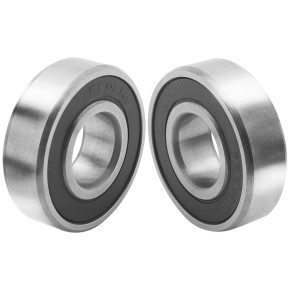
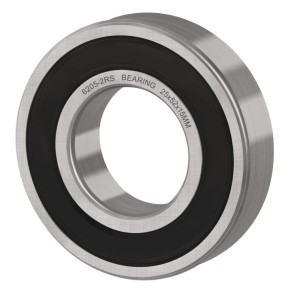
A rubber-sealed bearing, marked 2RS, keeps out dust and moisture best. It holds factory grease inside and grit outside. A metal-shielded bearing, marked ZZ, turns with less friction but does not seal as tightly, so it suits cleaner, higher-speed spots.
For conveyor rollers and pulleys that run in dust, choose a sealed deep groove bearing. The small amount of extra friction is worth it when the alternative is a bearing that grinds itself to failure.
4Choosing the Right Bearing
The table below matches common conveyor locations to a bearing approach.
| Location | Load | Seal Choice | Typical Bearing |
|---|---|---|---|
| Idler roll | Light to moderate | Sealed (2RS) | 6204bearing, 6205bearing |
| Head or tail pulley | Moderate | Sealed (2RS) | 6205bearing, 6305bearing |
| Drive motor shaft | Moderate | Shielded or sealed | 6204bearing, 6205bearing |
The numbers in the table are standard deep groove sizes. A 6204 bearing has a 20 mm bore, and a 6205 bearing has a 25 mm bore. Always confirm the bore against your shaft before ordering.
5Bearing Clearance for Conveyor Duty
Internal clearance is the small amount of free play inside a bearing. The right clearance lets the bearing run without binding as it warms up under load.
A conveyor that runs for long shifts builds heat, and that heat expands the bearing parts. A bearing with too little clearance binds as it heats. A bearing with standard or slightly increased clearance runs cooler and lasts longer on continuous duty.
For most conveyor applications, a standard clearance deep groove bearing works well. If the conveyor runs hot or at high speed, consider a bearing with extra internal clearance. The supplier can recommend the right clearance for your speed and load.
6Extending Bearing Life on a Conveyor
A few habits stretch the life of every bearing on the line.
Keep the Line Clean
Dust is the main killer of conveyor bearings. Keeping the area around the rollers and pulleys clear of buildup reduces what the seals have to fight. Good housekeeping around the line pays off in bearing life.
Check Rollers and Pulleys on a Schedule
A quick inspection walk catches problems early. Listen for rough rollers, feel for hot housings, and watch for wobbly pulleys. A rough bearing replaced during a scheduled stop is far cheaper than one that seizes mid-shift.
Replace With the Right Sealed Bearing
When a bearing fails, replace it with the correct sealed type for the location. Swapping in an open bearing, or the wrong size, only guarantees the next failure comes sooner. Match the seal and the size to the duty.
7Common Bearing Sizes Across Conveyor Types
Different conveyor sections use different bearing sizes, and the pattern is fairly consistent across the industry.
Light roller conveyors and package lines often run on smaller bearings such as the 6203bearing with its 17 mm bore. Heavier belt conveyors and pulleys step up to mid-size bearings like the 6206bearing with a 30 mm bore. Bulk material lines and heavy-duty drives move up again to the 6306bearing and similar larger sizes.
Matching the size to the load keeps the bearing from being undersized, which is the fastest path to early failure. Confirm the bore against your shaft and the load rating against the weight the roller actually carries.
8What Happens When a Conveyor Bearing Runs Dry
Lubrication failure shows up as heat first, then noise, then seizure.
A bearing that loses its grease runs hotter because the balls and raceways touch with less film between them. That heat breaks down what little grease remains, which makes the problem worse quickly. A hot roller or pulley housing is the earliest warning sign.
Catching a dry bearing early, by checking housing temperature on the inspection walk, lets you relubricate or replace before the bearing seizes. A seized bearing stops the line and can spin on the shaft, damaging the shaft itself.
9Common Questions
Which bearing is best for a conveyor roller?
Do I need sealed or shielded bearings on a conveyor?
How do I know a conveyor bearing is failing?
Can I get conveyor bearings from Yuanhe?



Related Products