
 English
 French
 German
Lithium vs Synthetic Grease for Bearing Relubrication
Lubrication Desk
Lithium vs synthetic bearing grease is a question about three things, and brands are not one of them. The base oil, the thickener, and the duty cycle decide the answer.
Most relubrication failures start with a grease chosen out of habit. A technician tops up with whatever is in the gun, the new grease fights the old one, and the housing runs warm within a week.
01Reading the Label Before You Compare
Every bearing grease is a base oil held inside a thickener, with additives for oxidation, wear, and rust. The base oil does the lubricating. The thickener is a structure that releases oil into the contact at a controlled rate, and it is the part that decides how the grease behaves when it meets another grease.
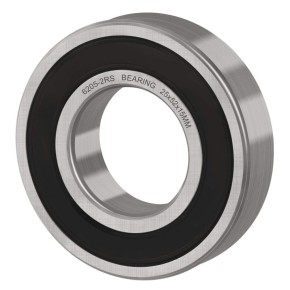
The label gives you the thickener type and a consistency number. Consistency is stiffness, not load capacity. A soft grease pumps easily through a line, a stiff one stays put in a vertical housing, and neither number tells you how long the grease will last in a 6205 bearing on a horizontal pump shaft.
02The Six Dimensions at a Glance
| Dimension | Lithium soap grease | Synthetic grease |
|---|---|---|
| Base oil | Mineral, refined from crude | Built from a chosen molecule |
| Thickener | Lithium soap or lithium complex soap | Often lithium complex, polyurea, or clay |
| Temperature | Ceiling set by soap and oil together | Wider at both ends, hot and cold |
| Water | Soap can soften and wash out | Depends on the thickener, not the oil |
| Speed | Fine for general duty | Lower churning when viscosity is matched |
| Mixing | Mixes with other lithium greases | Rarely mixes with a soap grease safely |
Read the table as a map, not a verdict. A grease that wins one row can lose the next, and the sections below explain why.
03Base Oil and the Temperature Window
The base oil forms the film that keeps rolling elements off the raceway. Its viscosity at running temperature decides whether that film survives the load, and viscosity is the first thing to match to the machine.
Mineral base oil
Mineral oil is the default in general purpose lithium grease. It is inexpensive and works across the range most plants see. Push it past that range and it oxidizes, darkens, and leaves a varnish film on the raceway that later looks like a manufacturing defect.
Synthetic base oils
Synthetic base oils are built to a target rather than refined to one. A polyalphaolefin keeps its viscosity when cold, an ester clings to metal and tolerates heat, and a silicone or PFPE fluid covers cases where nothing else survives.
Synthetic does not automatically mean better. A synthetic grease with the wrong viscosity for the speed churns and runs hotter than a mineral grease chosen correctly.
04Thickener and What It Does Under Load
The thickener is a network of soap fibers. It holds the oil, releases it slowly, and reforms after the bearing passes. Different soaps behave differently, and this is where mixing mistakes begin.
Lithium soap
Simple lithium soap is the most common grease base in the world for good reasons. It covers general duty, holds dust away from the seal, and pumps well through a grease line without separating.
Lithium complex
Lithium complex soap keeps its structure at higher temperature and resists water better than the simple soap. It is the usual step up when a bearing runs warm or sees regular washdown, and it stays compatible with ordinary lithium grease in most cases.
Non soap thickeners
Polyurea and clay appear where the duty asks for them. Polyurea suits sealed electric motor bearings because it survives long residence times without hardening. Clay has no drop point at all, but it gives up water resistance when paired with the wrong oil.
05Heat, Cold, and Oxidation
Heat ages grease in two separate ways. The base oil oxidizes, and the soap structure either softens or hardens. Grease that has oxidized smells sharp and looks dark at the edge of the raceway, and the damage is already done by the time it is visible.
Cold is the other end of the same problem. Mineral oil thickens as it cools, and at some point the bearing cannot pull grease into the contact during startup. Synthetic base oils hold their viscosity better in the cold, which is why cold store equipment and outdoor drives tend to move to them.
Neither family fixes heat caused by the machine. A bearing running hot from misalignment or overfill cannot be greased out of it. Correct the cause, then choose the lubricant.
06Water and Washout
Water arrives as washdown spray, condensate, or steam. What happens next depends on the thickener and on how well the seal keeps water away from the grease in the first place.
Lithium soap softens when it takes on water, and soft grease migrates out of the housing and past the seal. Lithium complex and calcium based greases hold their structure better. A synthetic base oil on its own does not make a grease water resistant, because the thickener is what meets the water.
In food and beverage plants the seal usually matters more than the label. A sealed bearing with a moderate grease beats an open bearing with an expensive one on the first washdown.
07Speed and Churning
Grease in a fast bearing is thrown outward, then pushed back through the rolling elements. The resistance to that circulation is churning, and it appears as heat that no amount of extra grease will cure.
At high speed, a stiff grease with a heavy base oil churns more than the bearing can afford. A softer grease with a lighter synthetic oil stays put without being worked so hard. Use the least grease that still keeps a film, and leave free space in the housing.
Slow bearings are the opposite case. There, a stiff grease with a heavier oil carries the load and stays where it was placed, while a light grease may simply drain away from the contact between shifts.
08Mixing Two Greases
Two greases can each be correct and still fail together. When different soap bases meet, the mixture can soften, bleed oil, or harden into a crust that no longer releases oil at all.
Lithium soap and polyurea are a common bad pair, and lithium with calcium complex goes wrong in some formulations. The safe practice is to purge the old grease completely before a switch, or to get written confirmation of compatibility from both makers.
If a bearing cannot be purged, keep using the grease already inside. A small top up of incompatible grease is worse than running the old grease a little longer.
Send the duty cycle, not just the grease name
Tell us the housing, the speed, the temperature the machine reaches, and whether water is present. We will come back with a base oil and thickener that fit, plus the purge step. Send the details here.
09Relubrication Habits That Matter More Than the Grease
A correct grease applied badly still shortens life. Three habits cover most of the gap between a good choice and a good result.
• Purge before you add. Push new grease until the old grease leaves the relief port, then stop.
• Match the interval to the duty, not to the manual alone. Hot, wet, and fast bearings need shorter intervals.
• Record what went in, with the thickener type and the date, so the next technician is not guessing.
Overfilling is the most common field error. A housing packed solid gives the grease nowhere to expand, and pressure pushes it past the seal. Fill the free space partly and check the relief path.
For a common size such as the 6204 bearing or the 6305 bearing, the right quantity depends on the housing volume and the application method, not on the bearing alone. A grease chart built by bearing size will mislead on both counts.
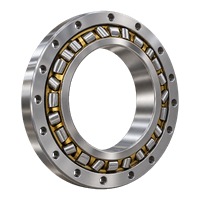
Slow, preloaded units follow the same logic with one addition. Crossed roller bearings in robot wrists and indexing tables sit still for hours and then move through a few degrees. Small oscillating motion pushes grease out of the contact, so a synthetic grease with a lithium complex or polyurea thickener earns its price there.
10Frequently Asked Questions
Can I mix lithium and synthetic grease?
Only when both use the same thickener and both makers confirm compatibility. Synthetic describes the base oil, not the soap, so a synthetic lithium grease and a mineral one usually mix.
Is synthetic grease always the better choice?
No. In a slow, warm, dry bearing, a mineral lithium grease matched to the duty can outlast a synthetic grease chosen for the wrong viscosity.
How do I find out which grease is already in the bearing?
Ask the machine builder, read the lubricant chart on the machine, or send a sample for a thickener test. Guessing is how the mixing problem in section eight happens.
When does a switch to synthetic pay for itself?
When the duty sits outside what a mineral oil handles, at either end of the temperature range, or when the interval has already been shortened twice and the bearing still runs warm.
Relubrication Review
Send the bearing size, the housing, and the conditions the machine runs in. We will reply with a grease family, a fill quantity for your housing, and the purge step before the switch.
Yuanhe manufactures deep groove ball bearings for OEM and maintenance programs, and we keep records of the grease each order shipped with.



Related Products