


 English
 French
 German
Bearing Shelf Life and How to Store Bearings
STORAGE AND SHELF LIFE
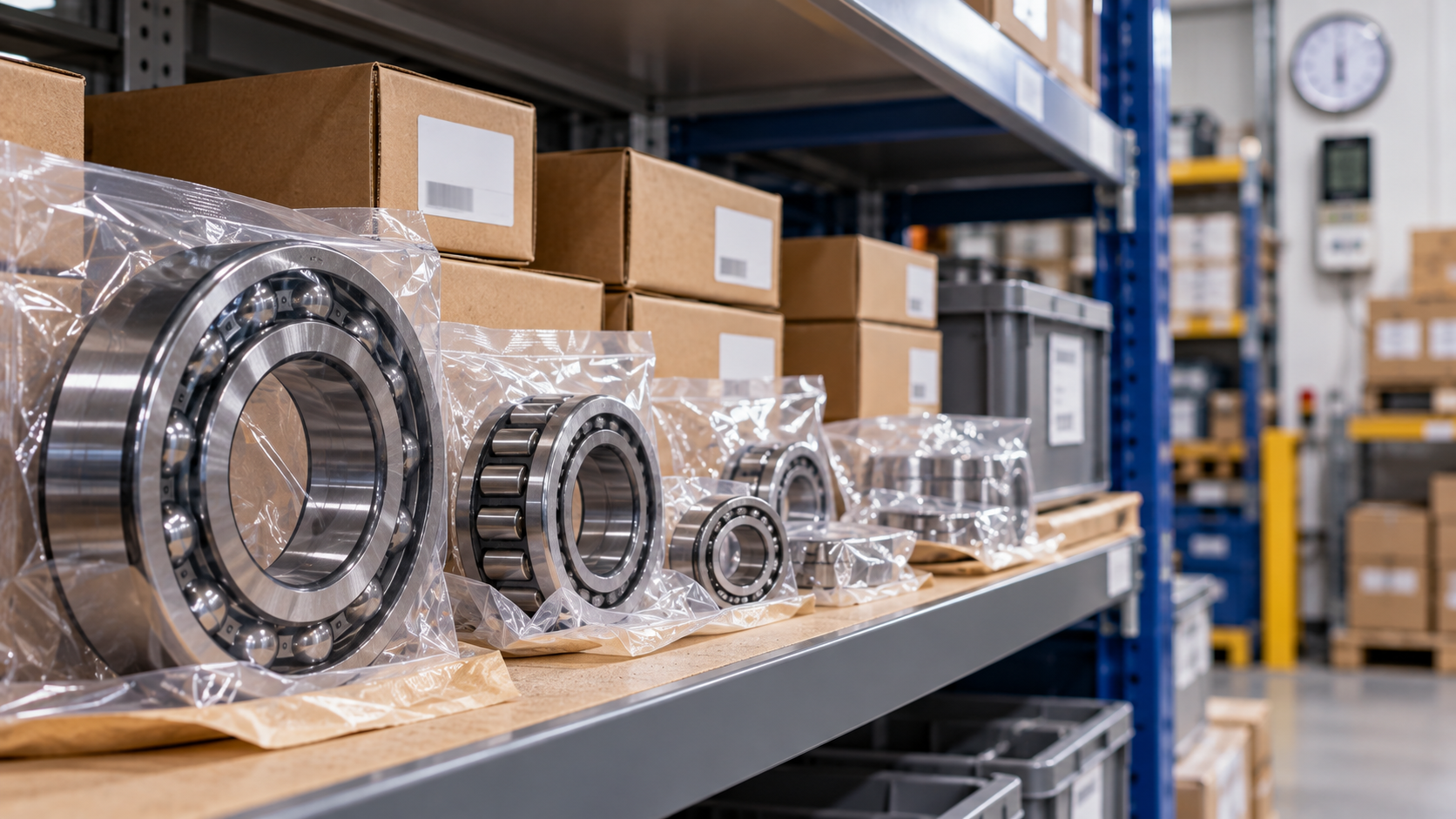
Bearing shelf life is about storage, not the calendar. A box of bearings can sit on a shelf for a year and come out as good as the day it was packed. Another box, stored two bays away, can come out rusty, with hardened grease and a stiff seal. The storage made the difference, not the passing time.
Most plants treat bearings as parts that wait quietly until they are needed. They do wait, but they do not wait unchanged. Grease ages, moisture creeps in, and seals take a set. This guide explains what actually happens to a stored bearing and gives you a storage routine you can put in place this week.
1Do Bearings Have a Shelf Life
Yes, but not in the way most people mean. The steel inside a bearing does not expire. It is not food and it does not spoil with time. What does expire is the grease packed inside it, and that is what gives a bearing its practical shelf life.
So the honest answer is this. A stored bearing stays good for as long as its grease and its packaging stay good. Look after both and a bearing can wait years. Leave it in a damp corner and the same bearing can be scrap in months.
A second point matters more than any single number. The date printed on a bearing is a manufacture date, not an expiry date. It tells you how old the grease is, not how long the part is safe to fit. Use it as a prompt to check the part, not as a reason to throw it away.
2What Actually Changes in a Stored Bearing
Four things change while a bearing sits on a shelf. One of them happens even in a perfect warehouse.
The Grease Ages First
Grease is oil held in a thickener. Over time the oil slowly separates out and the thickener hardens. On a working bearing, rotation keeps the grease moving and spreads the oil back through. A stored bearing never rotates, so nothing stirs it back together.
When hardened grease is fitted into a machine, it may not flow to the raceways at startup. The bearing runs dry for its first few minutes, and that short dry spell does real damage. This is the most common way a stored bearing fails while looking untouched.
Moisture Finds a Way In
Water does not need a hole to get in. It moves with changes in temperature. A warm day pushes air out of the package, and a cool night pulls damp air back in. Over many cycles, moisture builds up inside.
Once moisture meets bare steel, rust starts. Even a light film of rust on a raceway raises noise and shortens life. Rust is the reason a bearing wrapped once and left open on a bench often looks worse than one still in its sealed bag.
Seals and Cages Can Take a Set
Rubber seals and plastic cages are soft materials. Held in one position for a long time, they can stiffen and hold that shape. The seal lips may no longer sit flat against the inner ring, which weakens the seal exactly where you need it most.
Packaging Fails Before the Bearing Does
Boxes get dropped and crushed. Bags get opened, closed, and reopened. A torn bag lets in dust, and dust on an unlubricated raceway acts like grinding paste. Often the package tells you the bearing’s condition before you open it.
3The Conditions That Age Bearings Fastest
Some storage rooms are hard on bearings no matter how careful the staff are. Watch for these conditions.
• High humidity, especially in coastal or rainy regions.
• Large day and night temperature swings that pump air in and out of packaging.
• Vibration from other machines, which can leave marks where the rolling elements rest.
• Direct sunlight and heat, which speed up grease aging.
• Floors and shelves near loading doors, where damp air and dust gather.
Vibration deserves a second look. When a bearing stays still, its rolling elements sit on the same spot on the raceway. Steady vibration from nearby equipment can work a tiny dent into that spot. Engineers call it false brinelling, and it sounds like a defect that appeared out of nowhere.
4A Storage Checklist You Can Use Today
Good storage is mostly about keeping air, water, and movement away from the part. Work through this list.
| Do This | Not This |
|---|---|
| Keep bearings in the original sealed package until fitting | Open several boxes to pick one size |
| Store on a shelf at least 15cm off the floor | Leave boxes on a damp concrete floor |
| Keep the room cool and steady | Store near ovens, heaters, or sunlit windows |
| Keep humidity low and stable | Store in an open shed near a loading door |
| Rotate stock so the oldest batch fits first | Fill the front of a shelf with new stock |
| Store heavy bearings on a low, firm shelf | Stack large bearings high |
| Keep the store away from running machines | Store bearings next to a vibrating press |
A simple first-in, first-out rule does more for your stock than any single product. Fit the oldest batch first, and no bearing sits long enough to age. If you already plan stock levels, this rule fits neatly alongside that plan.
5How to Check a Stored Bearing Before You Fit It
Before a bearing goes into a machine, give it a short check. It takes under a minute and it can save a repair.
1. Look at the package. If the bag is torn or the box is crushed, treat the part with care.
2. Look for rust on the ring faces, the bore, and under the seal.
3. Turn the bearing slowly by hand. It should turn smooth with a light, even feel.
4. Listen. A faint rubbing is normal. A gritty sound or a catch is not.
5. Check the grease. If it looks hard, cracked, or dry, the part is past its effective life.
A rusty or gritty bearing should not go into a machine that matters. The cost of a replacement is small next to the cost of the damage it can do inside a gearbox or a spindle. Record what you check when you accept parts, so a problem is caught at goods in rather than at the machine.
6Handling Rules for the Warehouse Floor
Storage keeps a bearing good. Handling keeps it good once it leaves the shelf.
• Keep new bearings in the package until the moment of fitting.
• Never wash a sealed bearing to clean it. You rinse out the grease that is doing the work.
• Never spin a dry bearing with compressed air. It can run up to damaging speed with no oil.
• Do not drop bearings. A fall can mark a raceway that looks fine from the outside.
• Wear clean gloves. Sweat from bare hands starts rust on bright steel.
• Fit the oldest batch first and record what you take, so the cycle keeps itself honest.
None of these rules cost money. They cost attention, and attention is what separates a stockroom that helps production from one that causes callbacks.
How long can I store a bearing?
There is no single number, because it depends on the grease and the storage conditions. Keep the room cool, dry, and steady, leave the package sealed, and a bearing will stay good for years.
Does the date code on the box mean the bearing has expired?
No. It records when the bearing was made. Use it to apply first-in, first-out and to know how old the grease is, not as an expiry date.
Can I reuse a bearing that has been sitting in a machine?
Sometimes, if it turns smooth, shows no rust, and still holds grease. But any bearing that has run has already used part of its life. For a machine you cannot afford to stop, fit a new one.
Do stainless steel bearings last longer in storage?
They resist rust better, which helps in damp rooms and washdown areas. Their grease still ages the same way, so the storage rules do not change. For wet or food environments, see our notes on stainless steel bearings for food and beverage equipment.
How should I store sealed and shielded bearings?
The same way as open bearings. Keep them in the wrapper, off the floor, in a cool, dry room. Seals slow moisture down but they do not stop it forever.
Keep Your Stock Ready to Fit
If you want a bearing to be ready when a machine stops, treat storage as part of the process, not as a corner of the warehouse. Cool, dry, sealed, and rotated. That single routine removes most of the reasons a new bearing fails in its first week.
If you store bearings in a wet, coastal, or washdown setting, tell us about it. We can recommend the right deep groove ball bearings grade, seal, and grease for your conditions, and we can ship with the protection your site needs. Tell us the sizes on your shelf, from a 6204 and 6205 up to a 6305, and we will match the grade, seal, and grease to your room. Our team can also share the handling sheet we send with every order. Reach out through our contact page and describe where the bearings will live.