

 English
 French
 German
How to Remove a Bearing Without Damaging the Shaft
PULL IT, DO NOT PRY IT
A bearing that has to come off is not a problem until the shaft comes with it. Most shaft damage happens in the last two millimeters of the pull, when the ring breaks free and the tool jumps sideways.
This guide runs as a decision tree instead of one long script. Find your case in the routing table, work that section, then check the shaft before fitting the new bearing.
01Damage Happens in the Last Two Millimeters
A pry bar under the outer ring does not push a bearing off a shaft. It levers the ring sideways, and that load crosses the balls into the raceway.
The dent left behind is small and shows up later as noise or a rough spot at one position. Heat is usually a symptom of that fight, not a tool.
When a bearing needs more force than you expected, look for a burr on the shaft, corrosion on the seat, or a puller that sits off center. Our guide to mounting a deep groove ball bearing explains the same fit logic from the other side.
02Pick Your Method Before You Pick Up a Tool
Look at the shaft, the housing and the space behind the ring before you choose a tool. The table below matches the five cases that cover almost every shop removal.
| Your case | Method to use | What to watch |
|---|---|---|
| Through shaft, room behind the ring | Two or three jaw puller on the inner ring | Jaws that slip and score the seat |
| Blind housing | Blind hole puller or slide hammer | A pull that walks off axis |
| No room for a puller jaw | Split plates or a press with support plates | Load that passes through the balls |
| Seized or rusted bearing | Penetrating oil and time, then heat on the housing | An open flame that warps the shaft |
| Bearing still usable as a spare | Puller with a flat plate, pushed out square | Heat that ruins grease and seals |
If two rows fit your job, pick the method that keeps the pull force on the ring with the interference fit. On a shaft that is the inner ring, in a housing the outer ring.
03The Puller Method
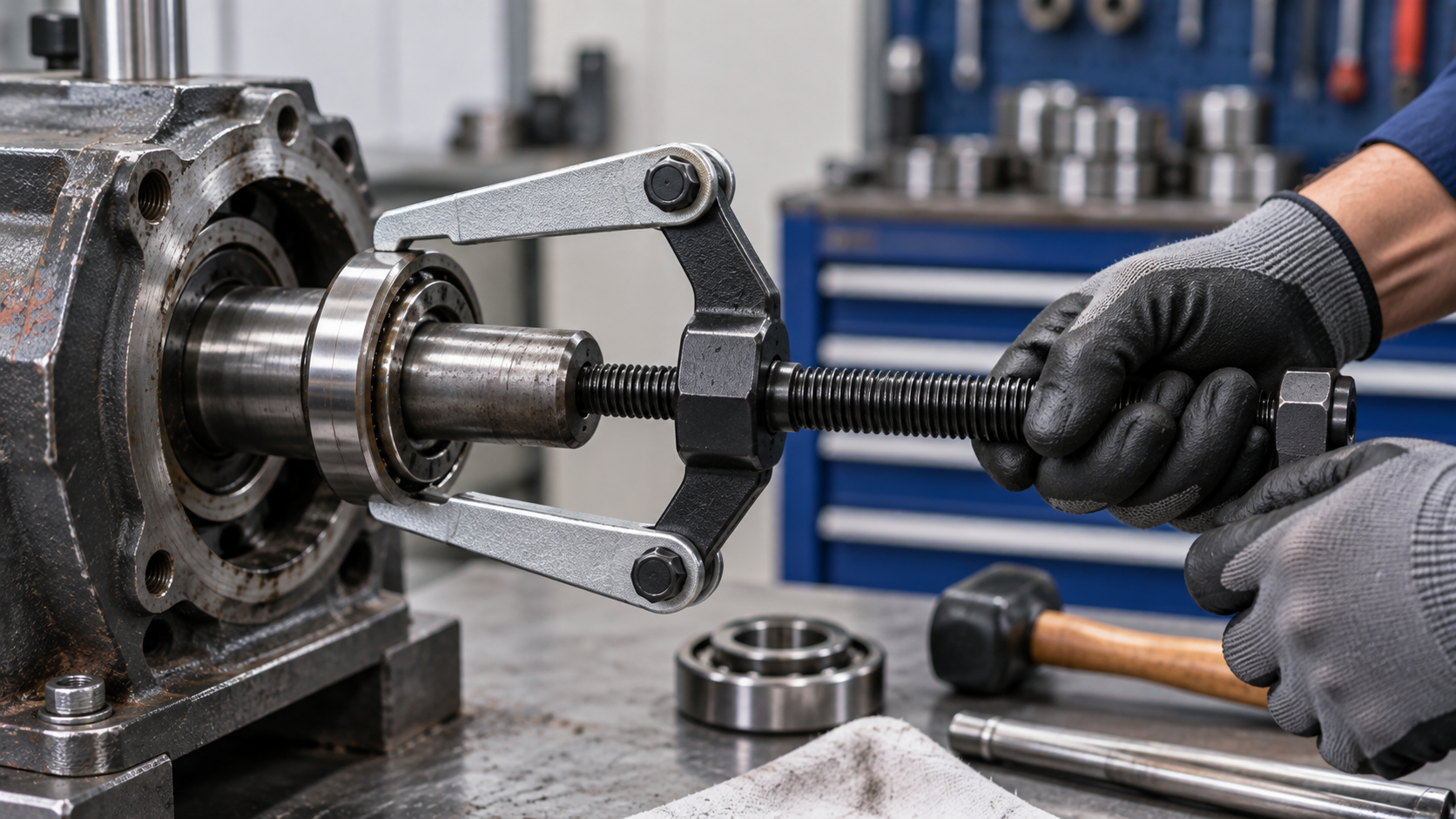
A puller is the default tool when there is space behind the ring and the bearing is not seized. The jaws have to reach the ring that carries the fit, which is almost always the inner ring.
Setting the Jaws
Set the jaws behind the inner ring, never behind the outer ring or the seal. A jaw that slides under a light hand pull will slide off under screw load and score the seat.
Pulling Square and Slow
The screw has to line up with the shaft axis, or the puller cocks the bearing and loads one side of the ring harder. If one side of the gap opens first, back the screw off and reset the jaws.
What to Do When the Inner Ring Stays on the Shaft
A failed bearing often leaves the inner ring on the shaft with no cage to push against. Slide split plates behind the ring and pull on those, or warm the ring with a controlled heater to break the grip.
Replacement rings for common shaft diameters are listed in our deep groove ball bearings range, which is the line we build for motor and pump duty. Match the code on the old ring before you order.
04The Press Method
A press gives even force and good control, but it hides what happens inside the joint. The setup has to line up with the right rings before the ram moves.
Supporting the Right Ring
Support plates must sit under the ring that carries the interference fit. A plate that flexes lets the bearing tilt in the bore, and a tilted bearing grips harder.
Pressing Out Through the Right Bore
Press the shaft through the bore with the ram centered on the axis, and feed the load in slowly. Never press on the cage, the seal or the shield.
Why You Never Press Through the Balls
Force that enters the outer ring and leaves through the inner ring has to cross the rolling elements. Each ball takes that load on a small area of raceway and the surface yields. A crossed roller bearing suffers the same way, and the crossed roller bearings line shows its ring layout.
05Blind Holes and Housings
A bearing in a blind housing gives you nothing to push against from the back. The pull comes from inside the bore, and the housing wall is the easiest part to damage.
Blind Hole Pullers and Slide Hammers
A blind hole puller grips the inner bore with a collet or expanding fingers, and a slide hammer applies the pull. Keep it straight, because a hammer that swings off axis drags the bearing against the wall.
Heat on the Housing Not the Bearing
Steel and aluminum expand at different rates, and that difference frees a bearing from a housing. Warm the housing evenly around the bore with a bearing heater or a heat gun, and never use an open flame on a bearing.
When the Housing Is Aluminum
Aluminum moves sooner and further than steel for the same heat, so a housing warm to a gloved hand is often enough. Never pry against a thin aluminum wall, because the wall deforms and the bore loses its roundness.
06When the Bearing Is Seized
Rust, fretting and hardened old grease can lock a bearing to its seat hard enough that no puller will move it. This is the case where patience saves the shaft.
Penetrating Oil and Time
Soak the joint with penetrating oil and give it time to creep into the seat. Work it with gentle puller pressure between soaks so the oil has a path to follow.
Controlled Heat and What Never to Use
Warm the housing with a controlled heater and let the oil work while it is warm. On a shaft mounted bearing, keep the heat on the ring and away from the shaft. Never heat a sealed bearing until the seals smoke, and wear gloves and eye protection, because a loaded puller can let go without warning.
The Cut Off Method as a Last Resort
When the ring will not move at all, cut it with a thin cut off wheel in a die grinder. Stop the wheel before it touches the shaft, then split the last of the ring with a chisel.
What It Costs You in Shaft Cleanup
Cutting always leaves a mark, and the shaft needs dressing before a new bearing goes on. That cleanup is the price of the method and the reason you reach for it last.
07Check the Shaft Before the New Bearing Goes On
The shaft now decides whether the new bearing lasts. Give it two minutes before the next bearing goes onto the press.
Look for Scoring and Burrs
Run a fingernail along the seat and feel for a raised edge. A burr is worse than a groove, because it lifts the inner ring and lets it rock.
Measure the Seat
Measure the seat diameter in two places at 90 degrees and write both numbers down. Compare them with the fit your application needs, not with the nominal shaft size.
Dress Lightly and Recheck
Remove light burrs with a fine stone or a strip of emery cloth, working around the shaft and never along it, then measure again. If the seat is worn below the range your fit needs, a new bearing alone will not fix it. Our guide to shaft and housing fits for bearings explains how to choose the fit when the seat is out of range.
BEFORE YOU ORDER A REPLACEMENT
A scored or undersized seat changes the fit, and a new bearing pressed onto it fails the same way the old one did. Send the measured seat diameter with your order so we can check the fit first.
08Questions We Hear About Bearing Removal
REMOVAL DONE
The bearing is off and the seat is measured. Send us the shaft and housing dimensions and we will review the fit before you order. For repair kits and spare parts programs, our custom manufacturing team supplies sample bearings before production tooling, so the fit is confirmed before a full run.