


 English
 French
 German
Deep Groove Bearing Grease vs Oil and How to Choose
Deep groove bearing grease vs oil is the key lubrication choice, and each works better in different situations. Every deep groove ball bearing needs a film of lubricant between its balls and raceways, and the two main choices, grease and oil, both separate the moving surfaces. This guide explains the difference and how to choose.
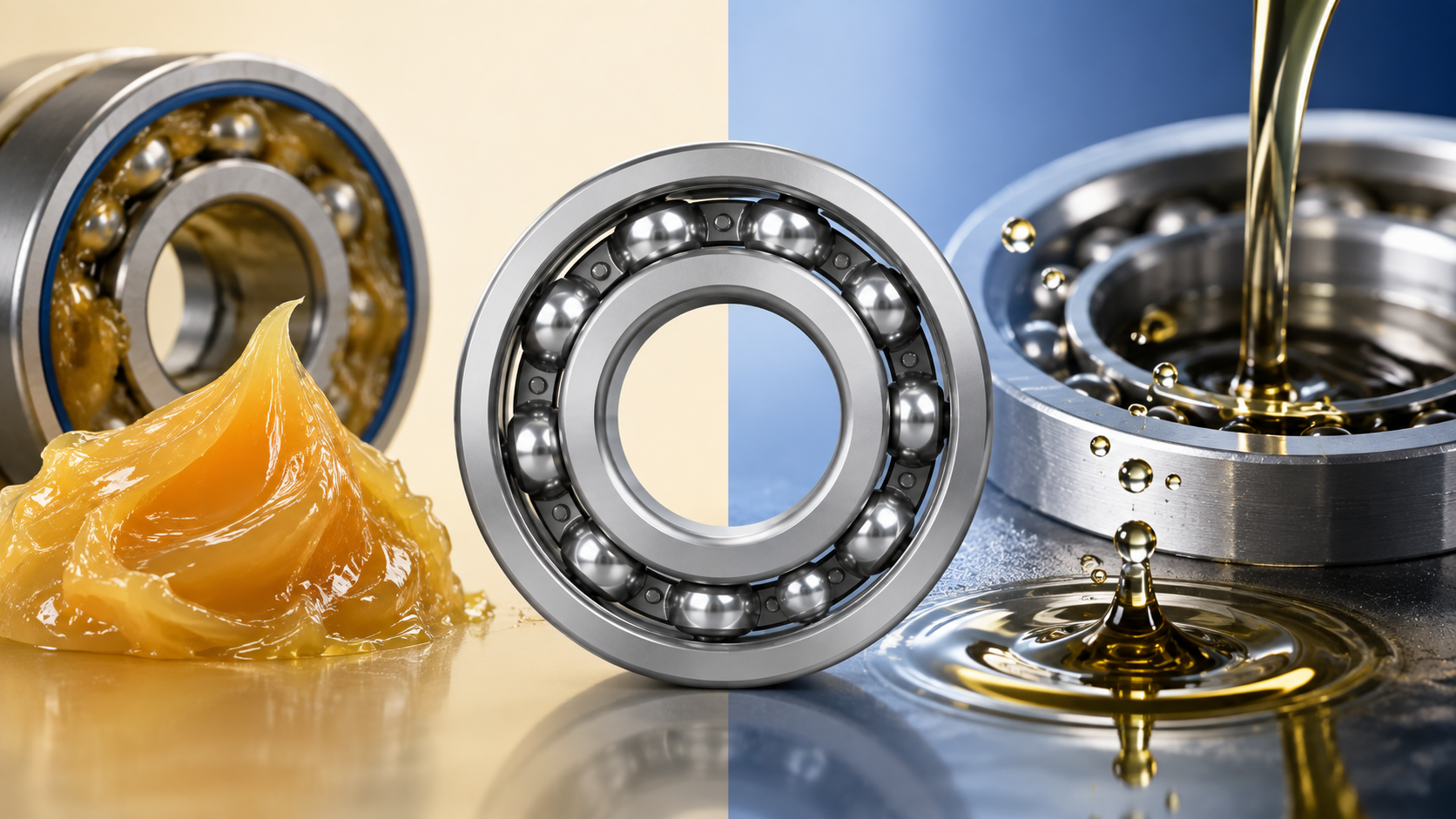
1What Grease and Oil Each Do Well
Grease and oil both separate the moving surfaces. The difference is how they stay in place and how they handle heat.
Grease
Grease is oil held in a thickener, which keeps it in place around the bearing. That makes grease the default for most general-purpose applications. It is easy to contain, needs less frequent attention, and protects against moisture and dirt.
Grease suits lower to moderate speeds and temperatures. Because it stays put, grease works well in bearings that are hard to reach or relubricate often. Most electric motors, pumps, and general machinery run on grease.
Oil
Oil flows freely, which lets it carry heat away from the bearing. That cooling ability is why oil is the choice for high speeds and high temperatures. Oil also circulates through a system, so it can be filtered and cooled.
Oil requires a more involved setup, such as a bath, a circulating system, or a mist feed. It suits high-speed and high-temperature applications where a deep groove bearing runs fast or hot.
2The Deciding Factors
Four factors usually settle the grease-versus-oil question.
| Factor | Favor Grease | Favor Oil |
|---|---|---|
| Speed | Low to moderate | High |
| Temperature | Normal range | High, or needs cooling |
| Relubrication | Hard to reach, less frequent | Circulating or frequent system |
| Sealing | Easy to contain | Needs a sealed housing |
Speed is the biggest single factor. A high-speed bearing generates heat, and oil is better at removing it. A low-speed bearing in a clean environment runs fine on grease for a long time.
3Choosing the Right Grease
Most deep groove bearings run on grease, so getting the grease right matters more in day-to-day work.
Grease Consistency
Grease comes in grades based on how stiff it is. The most common general-purpose grease is NLGI grade 2. Softer grades flow better at low temperatures and in small bearings. Stiffer grades stay put at higher temperatures. Match the grade to the temperature range and the bearing size.
Compatibility
Not all greases mix. Switching between incompatible thickeners can break down the grease and cause it to run out of the bearing. When you change grease, clean the bearing and housing first, or confirm the two greases are compatible.
How Much to Use
Too much grease builds heat and pressure inside the bearing. A common rule is to fill the bearing about one-third full, or follow the machine’s specification. Over-greasing is a frequent cause of hot-running bearings.
4Signs of Over or Under Lubrication
Both too little and too much lubricant shorten bearing life, and the symptoms look different.
Too little grease or oil lets the metal surfaces touch, which generates heat and wear. A bearing running hot, or one that has turned noisy, may be starving for lubricant. In a machine with oil, a low oil level or a clogged feed is the usual cause.
Too much grease builds internal pressure and churning heat. A bearing that runs hot right after being greased is often over-greased. The fix is to remove the excess and let the bearing run at its normal temperature.
5Relubrication Intervals and Schedules
How often a bearing needs fresh lubricant depends on its speed, temperature, and how clean the environment is.
A lightly loaded bearing in a clean, cool machine can run for a long time on its initial grease. A bearing in a hot, dusty, or wet environment needs relubrication more often. The machine’s manual usually gives a schedule, and that schedule should be the starting point.
Watch the bearing’s temperature and noise between services. A rise in either is a signal to relubricate or investigate. Regular checks catch a lubrication problem before it becomes a bearing failure.
6Choosing Oil When Oil Is Needed
When speed or heat rules out grease, the next choice is how to deliver the oil.
An oil bath keeps the lower part of the bearing submerged, which works for moderate speeds. A circulating system pumps oil through the bearing and a cooler, which suits high-speed and high-temperature duty. An oil mist feeds a fine spray to the bearing, useful for very high speeds.
Each method costs more and needs more plumbing than grease. That is why oil is reserved for the applications that truly need its cooling ability. For most general machinery, grease remains the simpler and cheaper answer.
7Lubricating Sealed vs Open Bearings
Sealed and open bearings need different lubrication care.
A sealed deep groove bearing, such as a 6203bearing, 6204bearing, 6205bearing, or 6206bearing with 2RS seals, comes pre-lubricated and is meant to run for its service life without relubrication. Do not try to force grease into a sealed bearing, since that can damage the seals.
An open bearing needs relubrication on a schedule and a housing that holds the grease. Open bearings suit applications where the lubrication can be monitored and renewed. The seal choice and the lubrication plan go together, so decide them at the same time.
8Working Out the Right Lubrication Schedule
The relubrication schedule comes from the conditions, not from a guess.
A clean, cool, lightly loaded bearing can run for a long time between services. A hot, dusty, or wet bearing needs attention more often. Start from the machine manual’s schedule, then adjust based on what you observe, such as temperature and noise between services.
Recording the temperature of the bearing at each check gives you a trend. A slow climb in temperature is an early warning of a lubrication or wear problem, well before the bearing fails.
9Common Questions
Which is better for my deep groove bearing, grease or oil?
What is the most common bearing grease?
Can I mix two different greases?
How much grease should I use?
Lubrication is part of the bigger job of keeping a bearing running. For the bearings themselves, Yuanhe supplies factory-direct deep groove ball bearings and crossed roller bearings with sealed options that retain grease and keep out dirt.
What does NLGI grade mean?
What happens if I use the wrong lubricant?