

 English
 French
 German
Deep Groove Ball Bearings for Farm Equipment
Deep groove ball bearings for farm equipment run in the worst conditions a bearing will ever see. Dust, grit, moisture, and sudden shock loads all hit the same parts at once. Sealed deep groove ball bearings are the workhorse of farm machinery because they handle moderate loads and higher speeds while keeping the grit out.
1The Conditions Farm Bearings Face
A farm is not a clean factory. The bearings under a tiller or behind a harvester deal with conditions that shorten the life of ordinary parts.
Dust and Grit
Plowing, tilling, and harvesting throw fine dust and grit into the air. That grit works its way into any unsealed bearing and grinds the balls and raceways down. Sealed bearings are the first line of defense on farm machinery.
Moisture
Rain, dew, and washdown water all reach the running gear. Moisture causes rust and breaks down grease. A bearing that is sealed against dust but not against water will still fail early. Farm bearings need protection against both.
Shock Loads
Implements hit rocks, roots, and hard ground. Those impacts send sudden loads through the shafts and into the bearings. A bearing matched to the load, rather than an undersized one, survives that abuse far longer.
2Why Deep Groove Bearings Fit Farm Duty
Deep groove ball bearings are the standard on farm equipment for a few practical reasons.
Sealed Options
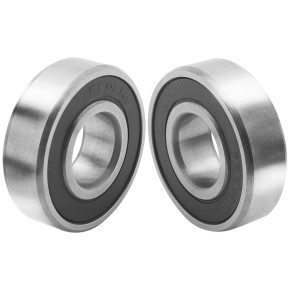
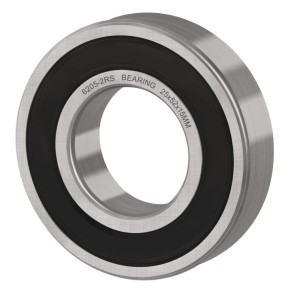
A double-sealed deep groove bearing, marked 2RS, keeps dust and moisture out far better than an open bearing. For a machine that works in the field all day, that sealing is what keeps the bearing alive. Sealed bearings also hold their factory grease, so they need less attention in the field.
Common Sizes
Deep groove bearings come in the standard bore sizes that farm machinery already uses. A 6205bearing bearing with its 25 mm bore and a 6305bearing bearing with its 25 mm bore cover many gearboxes, idlers, and drive shafts. This wide availability keeps replacement simple.
Speed and Load Range
Farm drives span a wide range of speed and load. Deep groove bearings handle both moderate radial load and higher speeds, which is why they appear in gearboxes, power take-off shafts, and electric motors across the machine.
3Where They Work on the Machine
Deep groove bearings show up in several places on a typical farm machine.
Gearboxes and Power Take-Off
Gearboxes and PTO shafts turn under real load and transmit power to implements. Deep groove bearings support those shafts and keep the gearbox quiet and cool.
Idlers and Rollers
Belt and chain drives on balers and conveyors ride on idlers and rollers. Sealed deep groove bearings keep these turning through dust and crop residue.
Electric Motors
Pumps, fans, and auger motors all run on deep groove bearings. These sit in cleaner spots but still need sealed bearings to survive field dust.
4A Simple Maintenance Routine
A few minutes of attention extends bearing life through a whole season.
Check for play and noise at the start of each season. A bearing that rumbles or has side play is on the way out. Grease fittings should be topped up on a schedule, but do not over-grease, since too much grease builds heat and pressure.
Keep seals intact. A torn seal lets grit in and shortens the bearing’s life immediately. Replace a bearing with a damaged seal rather than running it. When a bearing does fail, replace it with the right sealed type for the job.
5Matching the Bearing to the Load
The right bearing for a farm machine depends on the load it carries and where it runs.
A light idler or a small motor shaft takes a standard deep groove bearing. A heavier drive or a gearbox shaft may need a larger bearing or one with a higher load rating. The point is to match the bearing to the actual load, not to reuse whatever fits.
Undersizing is the common mistake. A bearing that is too small for the load fails early, often in the middle of the season. When in doubt, move up a size or choose a bearing with a higher load rating. The small extra cost is far less than a breakdown in the field.
6Off-Season Storage and Care
Farm equipment often sits idle for months. How it is stored decides whether the bearings survive to the next season.
Before storing a machine, clean the dirt and crop residue off the running gear. Dried mud holds moisture against the seals and encourages rust. A quick wash followed by drying helps, especially on the shafts and housings.
Turn or run the machine briefly before the season starts. This redistributes grease inside the bearings after months of sitting in one spot. It also gives you a chance to listen for rough bearings before they fail in the field.
7A Bearing Replacement Checklist
When a bearing on farm equipment fails, a short checklist keeps the replacement simple and correct.
Measure the old bearing’s bore, outside diameter, and width before ordering. Check whether it is sealed or shielded, and match the seal to the location. Common sizes on farm drives include the 6203bearing, 6206bearing, and 6304bearing deep groove bearings.
Note why the bearing failed, since the reason guides the replacement. A bearing that failed from dust needs a better seal. One that failed from overload needs a larger or higher-rated size. Matching the replacement to the failure prevents repeating the same job.
8Working With a Bearing Supplier
Ordering the right farm bearing is easier when the supplier has the full size range in stock.
A factory-direct supplier can confirm the bore size, seal type, and load rating for your machine. If the exact part number is gone, send the measured bore, outside diameter, and width, and the supplier can match the bearing. This is how most farm rebuilds are handled when the original paperwork is long gone.
Yuanhe keeps the common deep groove ball bearings used on farm equipment, from small motor bearings to larger drive sizes, with sealed options for field duty.
9Common Questions
Why do farm equipment bearings fail so often?
Should I use sealed bearings on farm equipment?
How do I know a bearing is about to fail?
Can I get farm equipment bearings from Yuanhe?



Related Products