
 English
 French
 German
Bearing Inquiry Checklist. What to Send for a Fast Quote
Quote Ready
A bearing inquiry that gets a fast answer is not a longer email. It is a complete one. Most quote requests that stall are missing two or three fields, and the supplier has to come back before any price can be worked out.
This is the checklist we use on the other side of the desk. Work down it once and you will get a firm number in the first reply instead of a third email asking what clearance you wanted.

01Why Inquiries Slow Down
Every bearing can be built in more than one configuration, and a quotation has to name one. Two buyers asking for the same size can need very different parts, and the price reflects that.
When a field is missing, the supplier has three options. Guess, ask, or quote the standard build and hope. All three add time, and two of them add risk for you.
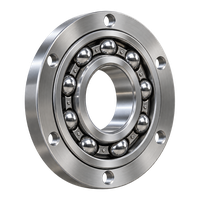
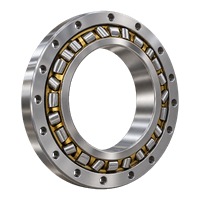
The same fields decide the price on both ranges we build, whether the part is a deep groove ball bearing or a crossed roller bearing, because both are built to the configuration the request names.
The list below is long, but most of it takes minutes to assemble. Anything you cannot answer is still worth saying, because a supplier who knows the gap can point you to the right question.
02The Ten Fields a Quote Needs
These are the items that decide the price and the part number. If you only send part of the list, send the first five.
| Field | Why the supplier needs it |
|---|---|
| Size or marking | Fixes the basic geometry and the series |
| Quantity | Sets the price break and the production plan |
| Tolerance class | Decides which grade comes off the line |
| Clearance group | Decides the internal fit for the duty |
| Seal or shield type | Decides the protection level and the speed limit |
| Cage and lubrication | Decides the running behaviour and the life |
| Application | Confirms the bearing suits the machine |
| Load and speed | Confirms the rating covers the duty |
| Drawing or sample | Removes any doubt about a special build |
| Paperwork and packing | Decides what travels with the shipment |
03The Dimensional Fields
The most common gap is the size itself. A bore diameter alone is not a size, because several different bearings share a bore and they are not interchangeable. A 20mm bore could be a 6004, a 6204, or a 6304, and each needs a different housing.
Send the bore, the outer diameter, and the width. That set of three pins down the part. If the old marking is legible, send it as well, along with a photo.
When the size is genuinely unknown, measurements are the fastest route. Our guide on how to measure a bearing walks through the three readings and the traps in taking them.
04The Build Fields
These fields do not change the outside dimensions, so a bearing that fits can still be the wrong bearing. This is where most third and fourth emails come from.
Seal or Shield
An open bearing, a shielded bearing, and a sealed bearing share the same envelope and behave differently. Say which one you want, or describe the environment and let the supplier choose.
Clearance Group
Internal clearance decides how loose the bearing is at running temperature. A machine that runs hot needs a different group from one that runs cool, even at the same load.
Cage and Lubrication
If the machine runs fast, hot, or with reversing loads, the retainer and the grease are part of the specification rather than an afterthought. Name them, or say how the machine runs.
05The Quantity and Order Pattern
Unit price depends on volume, so a quantity that is close to real is more useful than one that is padded. Suppliers price on the production run, not on the wish.
If you order in cycles, say so. A first order of a few hundred pieces and a repeating order every month are different conversations, and the second one is worth mentioning in the first email.
A stock size such as the 6205 bearing or the 6305 bearing is quoted from a price list, so on a first order the configuration shapes the price more than the quantity does. Volume still moves the number, and the price breaks follow it.
1. First order quantity. Sets the price for the trial build.
2. Repeat quantity. Shows whether this is a project or a stock item.
3. Order pattern. Monthly, quarterly, or one off, stated plainly.
4. Annual volume. Useful when you have a forecast, optional when you do not.
06The Application Fields
A short description of the machine does more work than most buyers expect. It tells the supplier which configuration is standard for that duty and which questions to ask next.
Three sentences are enough. What the machine is, what the bearing does in it, and what conditions it runs in. Add the load direction and the running speed if you have them, and mention anything unusual, such as washdown, dust, or frequent starts.
07What a Good Inquiry Looks Like
A Complete Request
Size. Bore, outer diameter, and width, or the marking and a photo.
Configuration. Sealed or shielded, the clearance group, and the cage if it matters.
Quantity. First order, repeat order, and annual volume if known.
Application. The machine, the duty, the environment, the load, and the speed.
Delivery. Where it ships to and when it is needed.
08Missing Fields and What They Cost
| Missing field | What the supplier has to do | Time added |
|---|---|---|
| Size | Ask for measurements or a photo | One round trip |
| Quantity | Quote the smallest price break or guess | One round trip, price may be wrong |
| Seal type | Quote the standard build | One round trip if you needed something else |
| Clearance | Quote the common group | One round trip, or a wrong part |
| Application | No way to sanity check the choice | Risk that lands later |
09After You Send It
A complete inquiry moves through four stages, and knowing them makes it easy to tell whether a reply is on track or whether a field is still missing.
The First Reply
The first reply should restate the size and the configuration as a part number, with a price, or ask one specific question about something that was left out. A reply that only asks whether you are still interested usually means the message has not reached anyone technical.
Sample and Approval
For a new application or a special build, a sample part is a cheap way to confirm the choice before committing to volume. Use the sample to check the fit, the running behaviour, and the sound on the machine that will use it.
Production and Paperwork
Production starts once the part number is agreed. At that point the inspection record, the packing, and the shipping documents are fixed, which is why the last two fields on the checklist matter even though they never move the price.
When Something Changes
Say so as soon as the size, the quantity, or the delivery date moves. An early change is a schedule adjustment. A late change is often a rebuild, and nobody wants to discover that after the rings have been ground.
A short update is enough. One line saying the quantity has doubled, or that the first delivery is needed a week earlier, gives the supplier something to work with. Silence until the day the order is due is the one thing that cannot be absorbed.
• A firm date. Say when the first delivery has to arrive, rather than when it would be nice to have it.
• A shipping address. Country and city are enough for a first quote, and they change the packing.
• A technical contact. One name who can answer a follow up question saves a day on every revision.
• Anything unusual. Heat, washdown, dust, and frequent starts all change the recommended build.
10Questions Buyers Ask
What is the minimum I need to send?
Bore, outer diameter, width, quantity, and a one line description of the machine. Those five fields are enough for a first price.
Do I need a drawing?
Only for a special build. For a catalog size the three dimensions and the configuration are enough. A drawing is the fastest way to remove doubt about a custom part.
Can I send a photo of the old bearing instead of measurements?
Yes, and a photo of the marking usually helps. Send the three measurements as well, because a photo cannot show the bore accurately.
How do I describe the duty if I do not know the loads?
Describe the machine instead. What it drives, how often it starts, how hot it runs, and what the environment is like. That is enough to pick a starting configuration.
Will you tell me if I have asked for the wrong bearing?
Yes. If the size or the configuration does not match the duty you describe, we say so before quoting. That conversation costs less than a wrong order.
Send the Drawing or the Description
Use the checklist above and send what you have. If a field is missing we will ask a specific question rather than send a generic email, and you get a firm price with the part number spelled out.