
 English
 French
 German
Why Electric Motor Bearings Overheat and How to Stop It
SIX CAUSES OF A HOT MOTOR BEARING
Electric motor bearings that run hot announce themselves early. The housing feels warm to the back of a hand, the grease darkens, and within a few weeks the bearing is noisy. Replacing it restores quiet running for a while, and then the same thing happens again.
That pattern is the useful clue. Bearings rarely overheat on their own. Something in the motor or the way the motor is mounted is loading them, and until that cause is found, the replacement bearing is a scheduled repeat.
01What Overheating Looks Like Before It Fails
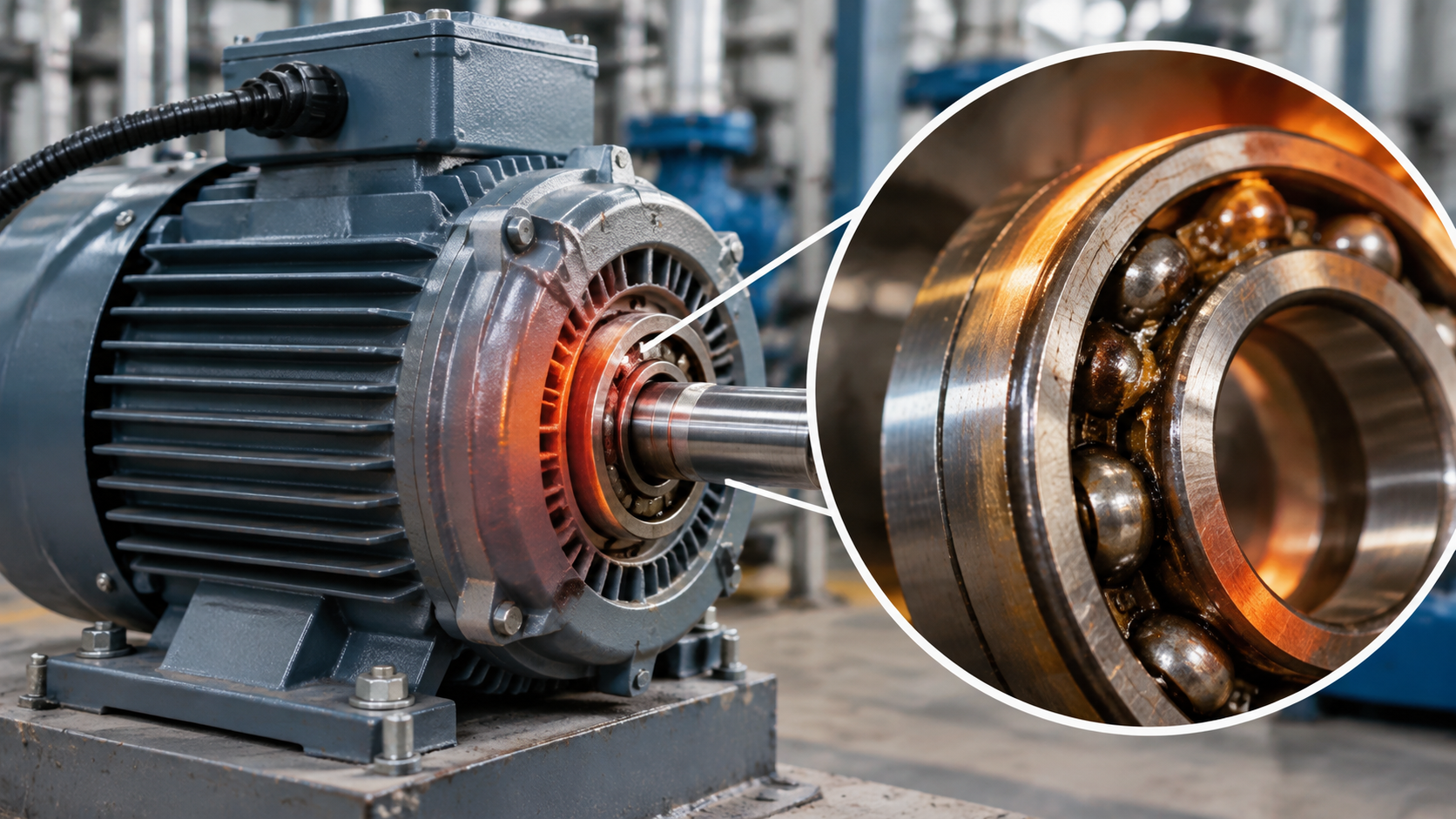
Technicians usually notice one of four signals first.
- Housing temperature well above the rest of the machine, hot enough that it is uncomfortable to hold
- Discolored or hardened grease around the seal, with a burnt smell
- Whining or a low pulsing growl that changes with speed
- Radial play that appears within weeks of a rebuild
Any of these is worth a scheduled inspection. Two together mean the bearing is already in distress.
02Cause One, Overgreasing
How much grease belongs in the housing
Fill guidance is published by bearing makers for a given speed and housing volume, and it is usually expressed as a percentage of the free space rather than a weight. Follow the published figure for your speed range, and if the housing has a relief path, confirm it is clear before the motor goes back into service.
What churn damage looks like
Grease that has been churned by the rolling elements appears as a dark, hardened mass that has separated from its base oil. The bearing may still turn smoothly by hand at that point, which is why the problem returns after the next service.
Overgreasing is the most common cause of a hot motor bearing, and it is entirely self inflicted.
When the free space in the housing is packed with grease, the rolling elements have to churn it. Grease is not a liquid oil bath. Churning thick grease generates heat, the heat thins the grease, and the thin grease churns faster. The temperature climbs until the base oil separates and the bearing runs dry.
A few signs that point to overgreasing:
- Heat builds immediately after a service visit
- Grease is pushed out past the seals
- The bearing is quiet when cold and noisy once warm
The fix is a measured fill. Most bearing makers publish a fill percentage for a given speed and housing. Follow it, and confirm the relief path is open if the housing has a grease fitting.
03Cause Two, The Wrong Internal Clearance Group
A motor shaft warms faster than the surrounding housing. The shaft grows, the housing lags, and the difference takes up internal clearance inside the bearing. Add a light interference fit on the shaft, which removes a little more, and a CN clearance group can be running with almost no play at steady state.
When clearance approaches zero, friction climbs and temperature climbs with it. This is one of the reasons C3 is the common specification for electric motors. If a motor was rebuilt with a standard clearance bearing and the housing runs hot at normal load, clearance is the first thing to check.
04Cause Three, Fit Problems That Load the Bearing
A loose end bell or an out of round housing distorts the outer ring. Once the ring is no longer round, the balls are loaded unevenly around the raceway, and the loaded side runs hotter than the rest.
Related problems with the same signature:
- A housing bore worn by a creeping outer ring
- A shaft shoulder that does not sit square, tilting the inner ring
- A shaft seat machined undersize, letting the inner ring slip
Fit problems are diagnosed on paper. Measure the shaft and the housing, compare against the intended fit, and check for a wear groove or polish marks on the seat.
05Cause Four, Shaft Currents
Variable frequency drives can induce a voltage across the motor shaft. When that voltage finds a path through the bearing, tiny electrical discharges pit the raceway. The damage shows as a regular rippled pattern across the running surface, often called fluting.
The bearing gets blamed for overheating, but the heat is a consequence. If a motor on a drive fails repeatedly with a rippled raceway pattern and no obvious mechanical cause, shaft currents belong on the list. Grounding brushes, insulated bearings, and drive settings are the usual discussion points with the motor builder.
06Cause Five, Misalignment
Misalignment between the motor and the driven machine loads the bearing continuously. The bearing does not sit still under the load, it is worked back and forth on every rotation, which is exactly what generates heat.
Look for:
- Coupling wear or a coupling that has been shimmed more than once
- Soft foot on the base plate
- A bearing that runs hot on one end of the motor only
A laser alignment check answers this question in an hour and often removes the bearing from the problem entirely.
07Cause Six, Belt Tension and Overhung Loads
An overhung belt or pulley load multiplies the force on the bearing, and an overtightened belt multiplies it further. Belt drive motors that keep eating bearings usually have a tension problem, not a bearing problem.
08A Short Diagnostic Sequence
Work through these in order. Each step removes a cause from the list.
| Symptom | First suspect | First check |
|---|---|---|
| Hot after a service visit | Overgreasing | Grease fill amount and relief path |
| Hot at steady state, quiet when cold | Internal clearance | Clearance group on the bearing, shaft fit |
| Heat on one side of the raceway | Misalignment | Coupling alignment, soft foot |
| Rippled raceway pattern | Shaft currents | Drive setup, grounding path |
| Heat plus visible play | Fit | Shaft and housing measurements |
| Heat plus belt squeal | Overhung load | Belt tension against spec |
09Fix the Cause, Not the Bearing
Two habits separate a permanent repair from a cycle of replacements.
First, keep the failed bearing. The raceway tells you what happened. A single worn band says misalignment or a fit problem. Rippled damage says electrical. Dark, hardened grease with a full housing says overgreasing. Blue tinged rings say the temperature ran hot for a long time before failure.
Second, log the running temperature after the repair. A motor that settles at a steady temperature close to its previous value has been repaired properly. A motor that climbs again within days was never the problem.
10Setting a Temperature Baseline After the Repair
Measure the housing temperature at a fixed point, on the same duty cycle, about an hour after start up. Write that number into the machine record.
That single figure is the most useful early warning available. A bearing that climbs above its own baseline over the following weeks is reporting a change, long before it becomes noisy.
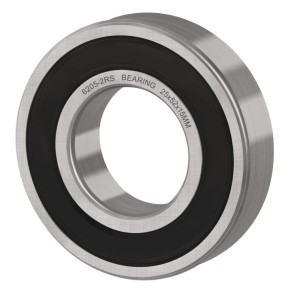
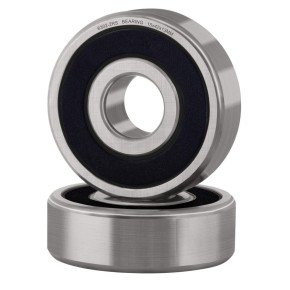
Matching the original specification is the fastest route to a stable repair. A 6205 bearing at 25 mm bore, 52 mm OD and 15 mm width, or a 6302 bearing at 15 mm bore, 42 mm OD and 13 mm width, can be supplied with the clearance group, seal type and grease matched to the application. The replacement is then a known quantity rather than a generic part with an unknown internal group.
11FAQ
What temperature is too hot for a motor bearing?
Compare against the same motor on the same duty rather than against a single number. A bearing that runs much hotter than the rest of the machine, or that keeps rising after an hour of running, needs attention.
Can I use a high temperature grease to solve this?
Grease rated for higher temperature buys time, it does not remove the cause. Find out why the heat is there.
Does a sealed bearing overheat more than an open one?
Seals add friction, so yes, a little. In a contaminated environment the sealed version still usually runs cooler over its life because the raceway stays clean.
The bearing was replaced twice this year. What now?
Stop replacing bearings and start measuring. Fit, alignment, grease quantity, and drive setup cover most repeat failures.
Will a C3 clearance bearing fix my hot motor?
Only if clearance was the cause. It is one of six common causes, and it is easy to confirm before ordering.
12Send Us the Failed Bearing
A raceway photograph usually tells the story faster than a description. Send us the failed bearing with the motor details, the duty cycle, the grease type, and the running temperature you measured, and our engineers will tell you what the surface is showing. Use our contact page for the shipping details.
Next Step
For repeat failures, a custom manufactured bearing with a specified clearance group, seal, and grease is often the fastest route to a stable repair. We build against deep groove ball bearing standard sizes, including a 6205 bearing and a 6302 bearing for smaller frames, and supply sealed versions when the environment demands it. Yuanhe works with more than 500 B2B clients, and a failure analysis is a normal starting point for a repair program.



Related Products