


 English
 French
 German
How to Choose the Best Bearings for High-Speed Applications
Choosing bearings for high-speed applications comes down to friction, heat, and precision. At high speed, the bearing has less margin for error. A little too much friction becomes heat, and heat breaks down the grease and changes the internal clearance. This guide walks through what to look for and which bearing types hold up when the speed climbs.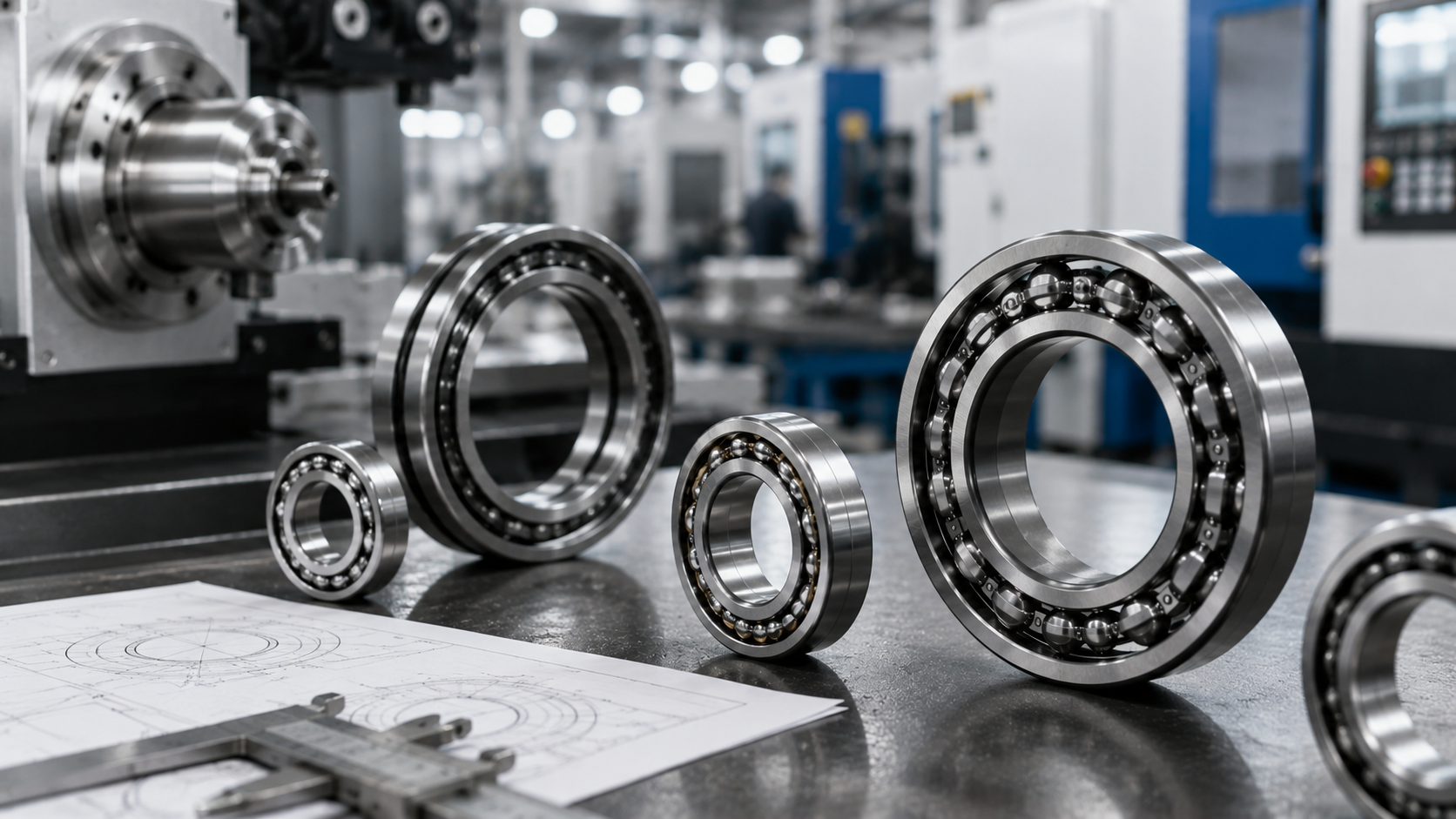
1Why Speed Changes the Rules
At low speed, a bearing has time to shed heat and the load is the main concern. At high speed, friction dominates. Every rolling element drags a little against the raceway, and that drag turns into heat. Run the bearing too fast and the heat builds faster than it can escape.
Heat is the enemy of lubrication. Grease thins or oxidizes, oil loses viscosity, and the bearing runs dry. Heat also expands the rings and rollers, which closes up the internal clearance. A bearing with too little clearance binds as it warms, and that binding creates more heat, in a loop that ends in seizure.
2What to Look For in a High-Speed Bearing
Four properties matter most when the speed climbs.
Low friction. A deep groove ball bearing is the natural choice here. Its point contact produces the least rolling friction of the common bearing types, which is why it dominates electric motors, fans, and high-speed spindles.
Correct clearance. High-speed bearings often use increased clearance to allow for heat expansion. The exact clearance depends on the operating temperature, so it is worth confirming with the supplier rather than guessing.
The right lubricant. Oil carries heat away better than grease at very high speed, while grease is simpler and seals better at moderate speed. The choice follows how hot the bearing runs.
Balance and roundness. At high speed, small defects become large vibrations. A higher accuracy grade and good roundness keep the bearing running smooth instead of shaking the machine apart.
3Bearing Types for Speed
Not every bearing type belongs at high speed. Here is how the common options sort out.
| Bearing Type | Speed Suitability | Why |
|---|---|---|
| Deep groove ball bearing | Excellent | Low point-contact friction |
| Crossed roller bearing | Limited | Line contact and higher friction |
The crossed roller bearing is a precision positioning bearing, not a speed bearing. It trades speed for stiffness. When the job is a joint that stops precisely, it is right. When the job is a shaft spinning fast, the deep groove ball bearing is right.
4Lubrication for High Speed
Grease and oil each have a place. Grease is the default for sealed bearings at moderate speed, because it stays put and protects against dust. Oil circulates and carries heat away, which matters when the bearing runs continuously fast.
The grease vs oil guide walks through that decision in detail. The short version is that a sealed, greased deep groove bearing covers most high-speed applications, while oil lubrication steps in for the very fastest spindles.
5A Checklist for High-Speed Selection
1Confirm the operating speed and the limiting speed of the bearing.
2Pick a low-friction type, usually a deep groove ball bearing.
3Set the clearance for the expected operating temperature.
4Choose the lubricant that keeps the bearing cool.
5Confirm the accuracy grade keeps vibration in check.
6Cage Material and Balance
The cage, or retainer, keeps the balls evenly spaced. At high speed, the cage is under real stress, because it whips around with the balls and must not bind. Steel cages are strong and common. Brass and polymer cages run quieter and handle higher speed in many cases.
Balance is the other hidden factor. At low speed, a tiny imbalance is invisible. At high speed, that same imbalance becomes a vibration that shakes the machine and shortens bearing life. A higher accuracy grade and careful assembly keep the bearing balanced enough to run smooth.
7Common Mistakes at Speed
The biggest mistake is ignoring the limiting speed. Every bearing has a maximum speed beyond which it overheats no matter how good the lubrication. Running past that limit shortens life sharply. Check the limiting speed against the operating speed before ordering.
The second mistake is using too much grease. Overpacking a high-speed bearing causes churning, which heats the bearing and breaks the grease down. A sealed bearing comes filled correctly from the factory, and that is usually the right amount.
8Examples by Application
An electric motor spinning a fan is the simplest high-speed case. The shaft runs fast, the load is mostly radial, and a greased deep groove ball bearing handles it with ease. A power tool spindle is a harder case, where the speed is higher and the vibration matters more, so the accuracy grade and the cage material step up.
A machine tool spindle is the hardest case of all. It runs at very high speed under cutting load, and heat is the limiting factor. That is where oil lubrication, a higher accuracy grade, and a carefully chosen cage come together. The same principles apply from a small fan motor to a machining center, only the margins tighten.
9Putting It All Together
A high-speed bearing selection is a small stack of decisions. Start with a low-friction type, usually a deep groove ball bearing. Set the clearance for the operating temperature. Choose the lubricant that keeps it cool. Pick a cage that handles the speed, and confirm the accuracy grade holds vibration in check.
Get those five right and the bearing runs its full life. Get one wrong and the bearing fails early, no matter how good the rest are. The limiting speed is the hard ceiling, and everything else is about staying cool and smooth below it.
10Key Points to Remember
Friction becomes heat. At speed, every bit of drag turns into heat that breaks down the grease and closes the clearance.
Stay under the limiting speed. Every bearing has a ceiling beyond which it overheats no matter the lubrication.
Pick a low-friction type. A deep groove ball bearing is the default for high-speed shafts.
11The Bottom Line
High-speed bearing selection is about managing heat. Pick a low-friction deep groove ball bearing, set the clearance for the operating temperature, choose a lubricant that carries heat away, and confirm the limiting speed. Get those four right and the bearing runs its full life. The speed limit is a hard ceiling, and everything else is about staying cool and smooth below it.
12Frequently Asked Questions
What is the best bearing for high speed? +
Why does heat matter at high speed? +
Grease or oil at high speed? +
What happens if I exceed the limiting speed? +
Need a bearing matched to your speed and load? Send your spec for a quote.