


 English
 French
 German
Top Bearing Choices for Heavy Machinery
Choosing bearings for heavy machinery means maximizing durability and load capacity. Heavy equipment runs long shifts, takes shock loads, and punishes a bearing that is undersized or under-protected. The right bearing survives dust, vibration, and constant load, while the wrong one fails early and stops the line. This guide covers which bearings fit heavy duty and how to choose them.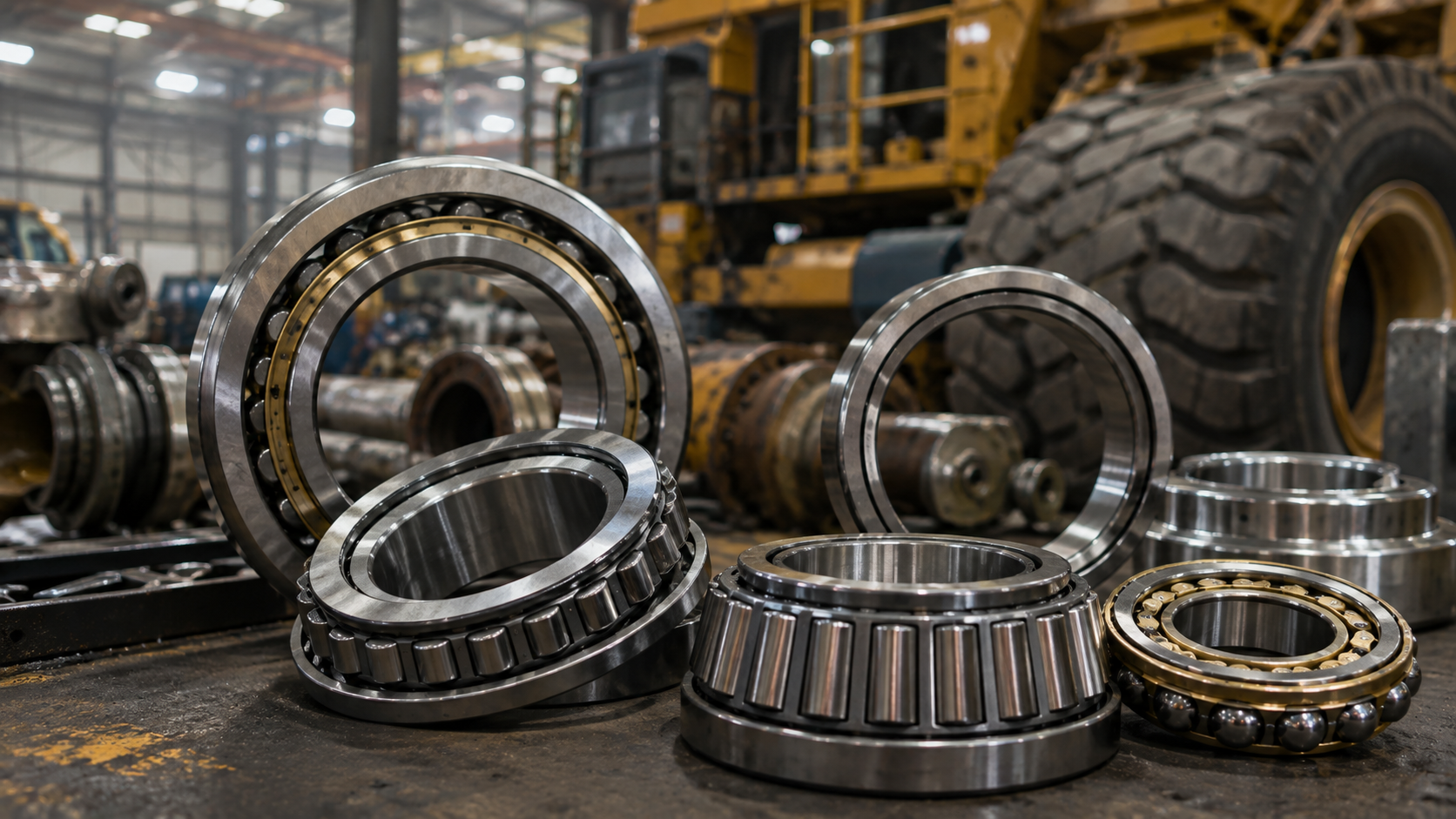
1What Heavy Duty Demands
Heavy machinery loads a bearing in ways light equipment never does. The loads are higher, the shocks are harder, and the environment is dirtier. A bearing in a crusher or a conveyor takes repeated impact, not just steady weight.
Three demands stand out. The bearing must carry a high radial load without deforming. It must absorb shock without cracking. And it must stay sealed against the dust and grit that heavy equipment throws around. Miss any one of these and the bearing fails early.
2The Workhorse Bearing for Heavy Duty
The deep groove ball bearing is the workhorse of heavy equipment. It carries high radial load, runs reliably at speed, and its sealed versions keep grit out of the raceways. Conveyors, pumps, gearboxes, and drive units all lean on sealed deep groove bearings.
The sealed version, marked 2RS, matters most in heavy duty. Heavy equipment runs in dust, and an open bearing in that environment grinds itself to failure. A rubber-sealed bearing holds factory grease in and dirt out, which is exactly what a conveyor roller or a drive unit needs.
3When the Load Needs More Stiffness
Some heavy machinery positions as well as spins. A crane, a rotary table, or a heavy robotic arm needs a bearing that carries a big moment without flexing. That is where the crossed roller bearing steps in.
Its line contact and crossed layout carry radial load, axial load, and tilting moment in one ring. For a heavy rotary joint that must hold position under load, the crossed roller bearing gives the stiffness a ball bearing cannot match. The tradeoff is speed and cost, which is fine for slow, stiff positioning duty.
4Matching Bearing to Equipment
| Equipment | Bearing Choice | Key Property |
|---|---|---|
| Conveyor rollers and pulleys | Sealed deep groove (2RS) | Dust protection |
| Pumps and compressors | Deep groove | Speed and radial load |
| Farm equipment | Sealed deep groove | Shock and grit |
| Heavy rotary joint | Crossed roller | Moment stiffness |
The pattern is consistent. If the part spins and must resist dirt, use a sealed deep groove bearing. If the part positions under a heavy moment, use a crossed roller bearing. Most heavy equipment mixes both.
5Extending Bearing Life in Heavy Duty
Durability is not just about picking the right bearing. It is also about how the bearing is used. Sealed bearings keep grit out, but they still benefit from a clean surrounding area. Regular inspection catches a rough roller before it seizes.
Sizing matters too. A bearing that is undersized for the load flexes and wears fast. Matching the load rating to the actual weight the bearing carries, with a margin for shock, is the cheapest way to buy long life. The conveyor guide and the farm equipment guide cover these duties in detail.
6Handling Shock and Impact
Heavy equipment does not load a bearing gently. A crusher bites down, a loader hits a bump, and the bearing absorbs the shock. A bearing that is sized only for the steady load will crack under the impact. The load rating must include a margin for shock, not just the running weight.
Sealed bearings help here too, but for a different reason. Impact sends debris flying, and a sealed bearing keeps that debris out of the raceways. The combination of a shock margin in sizing and a sealed design is what keeps heavy equipment running through abuse that would kill a lighter bearing.
7Common Mistakes in Heavy Duty
The most common mistake is undersizing the bearing. A bearing that is too small for the load and shock flexes, wears fast, and fails early. The downtime on heavy equipment is expensive, so the correct bearing always pays for itself.
The second mistake is using an open bearing in a dusty environment. Grit gets into the raceways and grinds the bearing down. In heavy equipment, sealed is almost always the right call. The seal adds a little friction, but the protected grease more than pays it back in life.
8Examples in the Field
A quarry conveyor is a classic heavy-duty case. The rollers and pulleys run in dust and grit, under steady load, for long shifts. Sealed deep groove bearings are the standard choice because they keep the grit out and the grease in. A failure here stops the whole line, so the bearing is chosen for reliability first.
A farm tractor is another. The bearings behind the tiller and the harvester take shock loads from the ground and dust from the field. Sealed deep groove bearings handle the abuse, which is why they are the workhorse across agricultural machinery. In both cases, the winning formula is the same: a sealed bearing sized with a shock margin.
9Putting the Choice Together
The heavy-duty bearing choice is a formula, not a guess. A spinning shaft in a dusty, high-load environment calls for a sealed deep groove bearing sized with a shock margin. A positioning joint under a heavy moment calls for a crossed roller bearing. Most heavy machinery uses both, each where its strength is needed.
Confirm the load rating against the real load, choose sealed for dirty duty, and inspect on a schedule. Those three habits, repeated across every bearing on the machine, are what turn a heavy-duty design from a maintenance headache into a reliable workhorse.
10Key Points to Remember
Size for the shock. The load rating must include a margin for impact, not just the steady weight.
Seal against the dirt. Heavy equipment runs in grit, so sealed bearings are almost always the right call.
Inspect on a schedule. Catching a rough roller early is cheaper than a seized bearing mid-shift.
11The Bottom Line
Heavy machinery punishes the wrong bearing and rewards the right one for years. Size every bearing for the load plus a shock margin, choose sealed bearings for dusty duty, and use crossed roller bearings where a heavy joint must stay stiff. Match the bearing to the role, inspect on a schedule, and heavy equipment runs through abuse that would kill a lighter bearing.
12Frequently Asked Questions
What is the best bearing for heavy machinery? +
Why do heavy machines use sealed bearings? +
How do I maximize bearing durability? +
Should I use sealed or open bearings in heavy duty? +
Need bearings built for heavy duty? Send your load spec for a quote.