


 English
 French
 German
How To Selecting the Right Bearings for Robotics and Automation
Selecting bearings for robotics and automation is about precision and low friction. A robot joint must move smoothly, stop exactly, and hold position without play. Automation equipment runs thousands of cycles, so a bearing that drifts or grinds wears out the whole machine. This guide explains what to look for and which bearings fit the duty.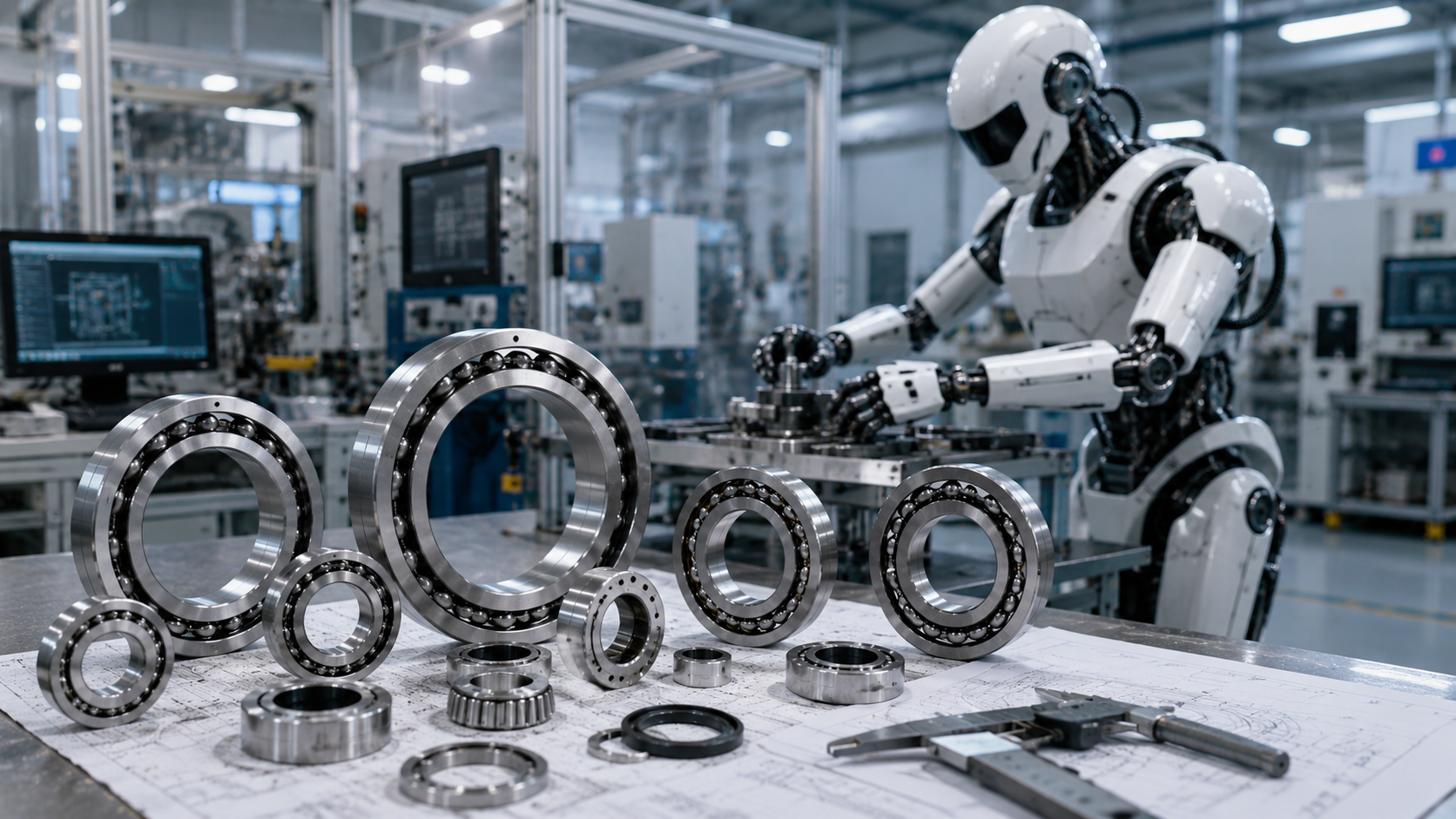
1What Robotics Needs From a Bearing
A robot is a positioning machine. Every axis rotates to a commanded angle and holds it while the arm does its work. That means the bearing at each joint must be stiff enough to hold position under load, and accurate enough to repeat the same position every cycle.
Precision and low friction are the two headline requirements. Precision means the joint lands in the same spot every time. Low friction means the joint moves smoothly without dragging, so the motors do not fight the bearings. A bearing that has both keeps a robot accurate and efficient over millions of cycles.
2The Crossed Roller Bearing in Robot Joints
The crossed roller bearing is the standard for robot joints that carry a moment. Its crossed rollers hold the joint stiff against the tilting force of a long arm, and its line contact keeps deflection low. The result is a joint that rotates true and stays put.
Factory-set preload removes the internal clearance that would otherwise let the joint wobble. A preloaded crossed roller bearing resists from the first newton of load, which is what a robot needs when it reverses direction constantly. The robot joints guide covers this in depth.
3Where Deep Groove Bearings Fit in Automation
Not every bearing in an automation cell is a crossed roller. The motors, gearboxes, and feed drives still spin shafts, and those shafts run on deep groove ball bearings. Their low friction keeps the drives efficient, and their speed handles the fast rotation a positioning bearing cannot.
A robot arm is a mix of the two. The joints that rotate and tilt use crossed roller bearings for stiffness. The motors that drive those joints use deep groove bearings for speed. Picking the right bearing for each role is what keeps the whole machine accurate and efficient.
4Matching Bearing to Role
| Role | Bearing | Why |
|---|---|---|
| Robot joint rotation | Crossed roller | Moment stiffness |
| Drive motor shaft | Deep groove | Low friction, speed |
| Linear feed stage | Crossed roller | Straight, repeatable motion |
5Low Friction and Long Life
Automation equipment runs for thousands of hours, so bearing life is a direct cost. Low friction means less heat and less wear, which means the bearing lasts longer and the motors draw less power. A smooth, preloaded bearing also runs quieter, which matters in a cell full of precise equipment.
Sealing plays its part too. A robot in a dusty factory needs sealed bearings to keep grit out of the joints. A clean semiconductor cell can run open bearings for the lowest friction. The semiconductor guide shows how the cleanest environments trade sealing for speed.
6Accuracy Grades and Repeatability
Repeatability is the measure that matters most in automation. The joint must return to the same position, cycle after cycle, without drifting. That repeatability comes from the accuracy grade of the bearing and the preload.
Accuracy grades run from P5 down to P4 and P2, where a lower number means tighter runout. A general robot joint uses P5. A precision stage or a semiconductor handler steps up to P4 or P2. The accuracy grades guide explains what each grade buys you.
7Common Mistakes in Robotics
The most common mistake is using a ball bearing where a crossed roller bearing belongs, in a joint that carries a moment. The joint deflects and the robot loses position. The fix is to look at the moment load before picking a bearing, not after the first accuracy test fails.
The second mistake is ignoring preload. A bearing with internal clearance rattles and drifts as the load changes direction. Factory-set preload removes that play, so the bearing resists from the first newton of load. For a robot that reverses constantly, preload is not optional.
8Examples Across Automation
A six-axis robot is the clearest example. Its wrist, elbow, and shoulder joints rotate and tilt under the weight of the arm, so each one uses a crossed roller bearing with factory preload. The motors that drive those joints use deep groove bearings for speed. The mix gives the robot both stiffness and efficiency.
A semiconductor wafer stage is the precision extreme. It moves a wafer in tiny, exact steps, so its crossed roller bearings run at a high accuracy grade, usually P4 or P2. A few microns of runout scrap a wafer, so repeatability is everything. The same bearing type serves both, with only the accuracy grade changing.
9Putting the Selection Together
A robotics bearing selection starts with the role. Rotating joints carry a moment and need stiffness, so they use crossed roller bearings with factory preload. Drive shafts spin fast and need low friction, so they use deep groove bearings. Matching each bearing to its role is what keeps the whole robot accurate and efficient.
Then set the accuracy grade to the repeatability the process demands, and pick sealing based on the environment. Those three decisions, role, grade, and sealing, cover almost every bearing in an automation cell. The rest is sizing the load rating so the bearing runs its full life.
10Key Points to Remember
Precision and low friction. A robot needs both, and they come from different bearings in different roles.
Factory preload is not optional. A preloaded crossed roller bearing resists from the first load and holds position.
Match the grade to the process. General joints use P5, precision stages use P4 or P2.
11The Bottom Line
Robotics and automation reward precision and low friction, and they punish a bearing that drifts or grinds. Use crossed roller bearings with factory preload in the joints that carry a moment, and deep groove bearings in the drives that spin. Set the accuracy grade to the process, seal for the environment, and the machine holds position over millions of cycles.
12Frequently Asked Questions
What bearing is best for a robot joint? +
Why does low friction matter in automation? +
Do I need sealed bearings in a robot? +
What accuracy grade do robot joints need? +
Building a robot or automation cell? Send your joint spec for a quote.